Some of the links in this story are affiliate links, which means we may earn a commission if you choose to purchase, helping us continue to share mindful, inspiring content.
We all know the feeling: you finally get your routine down at home, then the second you travel, go to the gym, head into a long workday, or leave for the weekend, everything starts to fall apart. Your skincare leaks. Your supplements get tossed into a bag. Your essentials are suddenly everywhere.
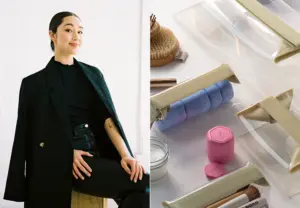
That very everyday frustration is what led Steph Hon to create Cadence, a design driven system for carrying the products and routines that help us feel like ourselves wherever we are. Before founding the brand, Steph’s life was shaped by movement, from dance to documentary work to constant travel. That background now shows up in the way Cadence is built: precise, intuitive, and quietly obsessed with making daily life feel easier.
We spoke with Steph about the problem that inspired Cadence, what it took to develop the first Capsule through 207 prototypes, how she thinks about hiring and building a team, her real life packing system, and what living well means to her now.
Explore more from our Living Well series, where founders, creatives, and wellness leaders share the routines, rituals, and ideas shaping how they live
Living Well with Steph Hon
For those meeting you and Cadence for the first time, how would you describe what you’ve created and the everyday problem that inspired it? Cadence is for people going places. It's a design company that makes product systems for people doing cool things in their life. We help you bring your daily essentials with you, because we believe that when everything has a place, you have space.
When someone's meeting Cadence for the first time, I like to start by asking: what's something important to you that you're pursuing right now? Maybe you're training for a marathon, or you're dating someone new you're excited about, or you're just trying to be a good mom. Then I ask: what's hard about that? Maybe it's staying organized, or it's tough to get to the gym before work. That mental burden is what Cadence supports. We make it easier to get up and go, to pack for a day out with your family, to feel less like you have to remember everything.
The problem, tactically, was that the products in my life would leak, break, and sit in ugly plastic bags. I wanted the products I carried every day, including my skincare and my supplements, to match everything else in my life, and to hold together in a way I didn't have to think twice about.
Your path to Cadence did not begin in consumer products. It began with dance, documentary work, and a life that required a lot of movement. Looking back, what do you think those chapters taught you that business school never could that still show up in how you design, lead, or make decisions today? For me, business school teaches a linear way to do things. Cadence is about creativity, artistry, and breaking the mold. We never source products that already exist, we design everything from the ground up. That's not a rejection of anyone else's path; it's just been common sense to me: if you want to be a design company with real excellence and a loyal community, you design something great, full stop.
Dance and documentary work taught me to draw conclusions based on what I was actually trying to build, not to fit a mold. Dance especially shows up in our product design. I'm hyper focused on how we move and how movement impacts how we feel. Our products are magnetic, so you can attach the cap to the bottom or the side and always keep one hand free. If you're doing your makeup in a car, on a train, or with your kid nearby, the product is designed to move with you, and that's what makes you feel good.
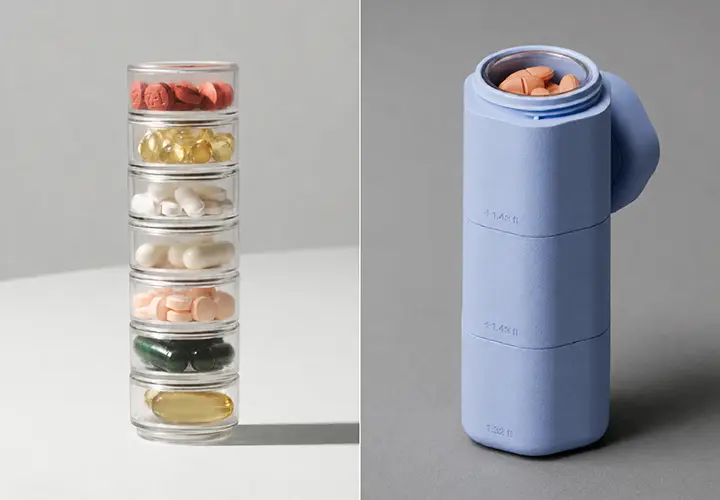
Cadence started with a very everyday frustration, trying to take your skincare, supplements, and personal routines with you without the usual mess. What was the part of that problem that felt bigger than just “better travel bottles”? Ultimately, the problem is that we all have our own unique routines, the things that make us feel most like ourselves. Every routine is different, and that's foundational to how Cadence is built. Those routines are hard to bring with you when you leave home, and honestly, hard to keep organized even at home. That feels small, but it has a real impact on how you show up.
Whether it's a gym day, a big day at work, or a first date, those are the moments you want to feel your best. That's the problem we're solving: how do you feel like yourself when you're out of your zone and away from your normal things, and how do you keep that sense of groundedness?
The first Capsule went through 207 prototypes, 4 patents, and at least 8 target launch dates before it came to market. What was that development process really like behind the scenes, and what did it teach you about building something from scratch without compromising the original vision and adapting along the way? At Cadence, we dream first and figure out the details second, which is counterintuitive to almost everyone I talk to about it. But if you don't dream first, you'll never build something great.
I believe a founder's job is to be flexible 99% of the time and unwavering 1% of the time, and my team will tell you, I'm unwavering about the product. A lot of people today have taken the Silicon Valley "launch at 80%" philosophy and applied it everywhere, but there's a fundamental difference between a digital product and a physical one. You cannot apply that thinking to something physical.
We wanted to create something that had never been made before, so we had to invent it from scratch. People told us no one would pay for it, that you couldn't even embed magnets into bottles because of manufacturing constraints. We didn't market plan our cost of goods or run some deep analysis upfront. We followed the problem, and then we solved it.
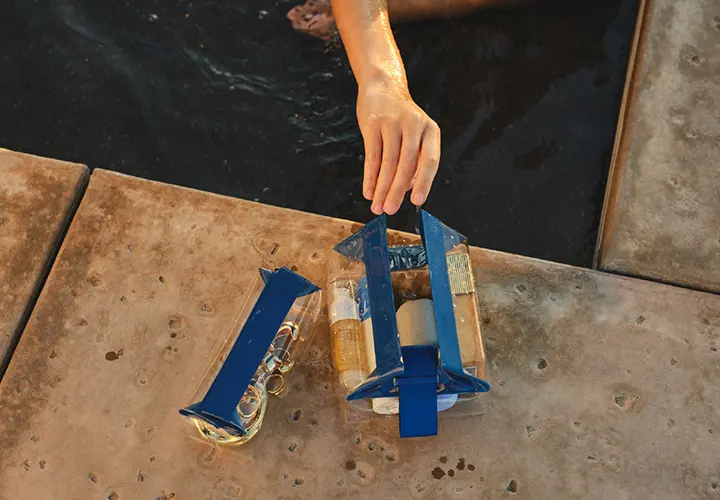
The Capsule had to be beautiful, leakproof, refillable, magnetic, durable, TSA compliant, and easy to use. Which of those requirements created the biggest design challenge? Honestly, all of it was a huge design challenge. That's why we have our design team in house and work with family owned manufacturers in Thailand and Canada, who are, in a way, investors in Cadence too. But if I had to pick, it was the leakproof, magnetic, and refillable pieces that were hardest.
We hold ourselves to high manufacturing standards, so we chose factories that produce medical grade products to meet them. The tricky part is that our products need to be universal. A lot of products on the market force the customer to make sacrifices. For example, traditional travel bottles can't hold oils or serums because the silicone absorbs the product. We needed something chemically resistant to every product on the market. That's hundreds of thousands of formulas.
For the magnetic piece, we had to reinvent the injection molding process itself. That's one of the things we've patented. And for the leakproof, refillable piece, we modified industrial seals to be airtight and resistant to pressure well beyond airline standards, over 16 PSI, above what's required to fly without leaking.
You’ve said one of your biggest learnings has been hiring the right people at the right time. What does “right” mean to you: the right skill set, the right personality, the right timing, or the right relationship to the brand? And for other entrepreneurs, how can they get better at recognizing that before they are desperate for help or hiring the wrong people? Our team often says they've never felt so comfortable anywhere else. They found their people, and nothing means more to me than this. I think we know who our people are: they're obsessed with their area, the kind of person who was nerding out about one thing in high school and now gets to do it alongside other passionate people. A lot of them also have some love of art or design, no matter their role. Our digital engineer majored in math, computer science, and art history, and that's very "Cadence."
This is genuinely hard, and it's taken me a while to trust my gut on it. As Glennon Doyle says, it's about tapping into your own sense of knowing. That's difficult because when you need help and want to support your team, it's tempting to say yes to someone even when your gut is raising a flag. What I've learned is there's almost always a stopgap, some form of quick support for your team, while you wait for the right person.
In interviews, I've noticed the people who do well here are genuinely excited about the product itself, not just the idea of making money. So my advice: follow your gut, trust your knowing, and move fast if someone is great at their job but making the rest of the team feel bad. That's never going to be a fit.
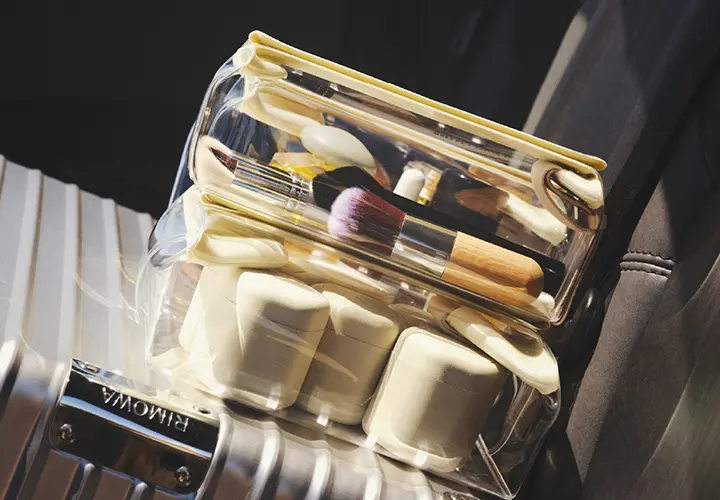
When you’re packing for a longer trip now, how do you use Cadence in real life? What goes into your system, what have you learned to edit down, and what tips would you give someone who wants to get the most out of theirs?
There are levels to using Cadence, and I have perfected my system over the years.
My system now: a medium Parcel holds all my liquids, connected to my Emergency Parcel with tampons, bandages, mints, Advil, Lactaid, extra contacts, and all my essentials. That sits magnetically connected to my Tech Parcel, with cords and cables. When I leave the house, I fold them together and pop the whole thing in my bag.
For capsules, I organize by color and type. I use one set for liquids like shampoo, conditioner, body wash, and lotion, and smalls for skincare. A few tips: push cotton rounds into a capsule and add micellar water for makeup removal when you are out. Use our adapters for hair care, since they create a controlled pour for shampoo and body wash. And if you don't want to touch your product directly, our spatula is magnetic, durable, and hygienic for transferring things. My last tip: get a few extra labels in a color you love for your everyday products, and a different color for supplements. Then everything's ready to go, always.
Has your idea of sustainability changed as you’ve gotten deeper into manufacturing? It's stayed pretty consistent, because we've always believed the best thing we can do to be sustainable is make products you can hand down to your kids, things still around in ten, fifteen, twenty years. That's why Cadence offers a lifetime guarantee on the capsule system: if anything happens to it, we replace it, no problem.
Sustainability is about using the right material for the right application. We don't make tote bags for events. If I'm going to make a tote bag, it's going to be the best one you've ever used, solving a real problem, made to last. Otherwise, I'd rather give you something made of recycled material that's meant to be easy to dispose of responsibly.
For the capsules, longevity is priority number one, alongside using as high a percentage of recycled material as possible. In manufacturing, we save all of our scrap material, regrind it, and put it right back into new capsules.
Outside of Cadence, are there any brands right now that you think are doing something genuinely interesting? I love any brand with a truly excellent product. I'm obsessed with Fishwife (read our Living Well Interview with Fishwife here). I'm close friends with Becca, and it's one I reach for. It has that same quality Cadence aims for: I know I can reach for it and do a million things with it without overthinking. Same with Dianna. We started our businesses around the same time and have stayed close over the years, and I'm obsessed with her dry shampoo. It's excellent in every way. Really, it just comes down to products that are fantastic.
What does living well mean to you at this stage of your life? Living well means being in the moment. Anything that helps me stay in the moment is well worth my time, money, and energy.
The post Living Well with Steph Hon, Founder and CEO of Cadence: On Better Routines, Smarter Packing, and Building Cadence appeared first on The Chalkboard Mag.
from The Chalkboard Mag https://ift.tt/cb5Bp9o
via IFTTT

No comments:
Post a Comment