Wednesday, September 23, 2026

Dyson Supersonic vs. Supersonic r: We Used One for Years. Is It Actually Worth the Upgrade?

Dyson Supersonic r hair dryer review

There are certain things you replace because they stop working. A hair dryer that cost several hundred dollars and is still working perfectly is generally not one of them.

We had been using the Dyson Supersonic for years, most recently the Supersonic Nural, and genuinely loved it. It was fast, reliable and one of those beauty tools that quietly became part of the routine because it simply worked. Still, we had been eyeing the Dyson Supersonic r for a long time, mostly because the smaller curved shape looked so different from anything we had used before and kept showing up in the hands of professional stylists.

Eventually curiosity won.

The question was not whether the Supersonic r would be good. We already expected that. What we really wanted to know was whether someone who already owned and loved a Dyson hair dryer would notice enough of a difference to make the switch feel worthwhile.

For us, the answer was yes, and not because of one flashy feature. It was because the r made the entire process of drying and styling hair feel noticeably easier.
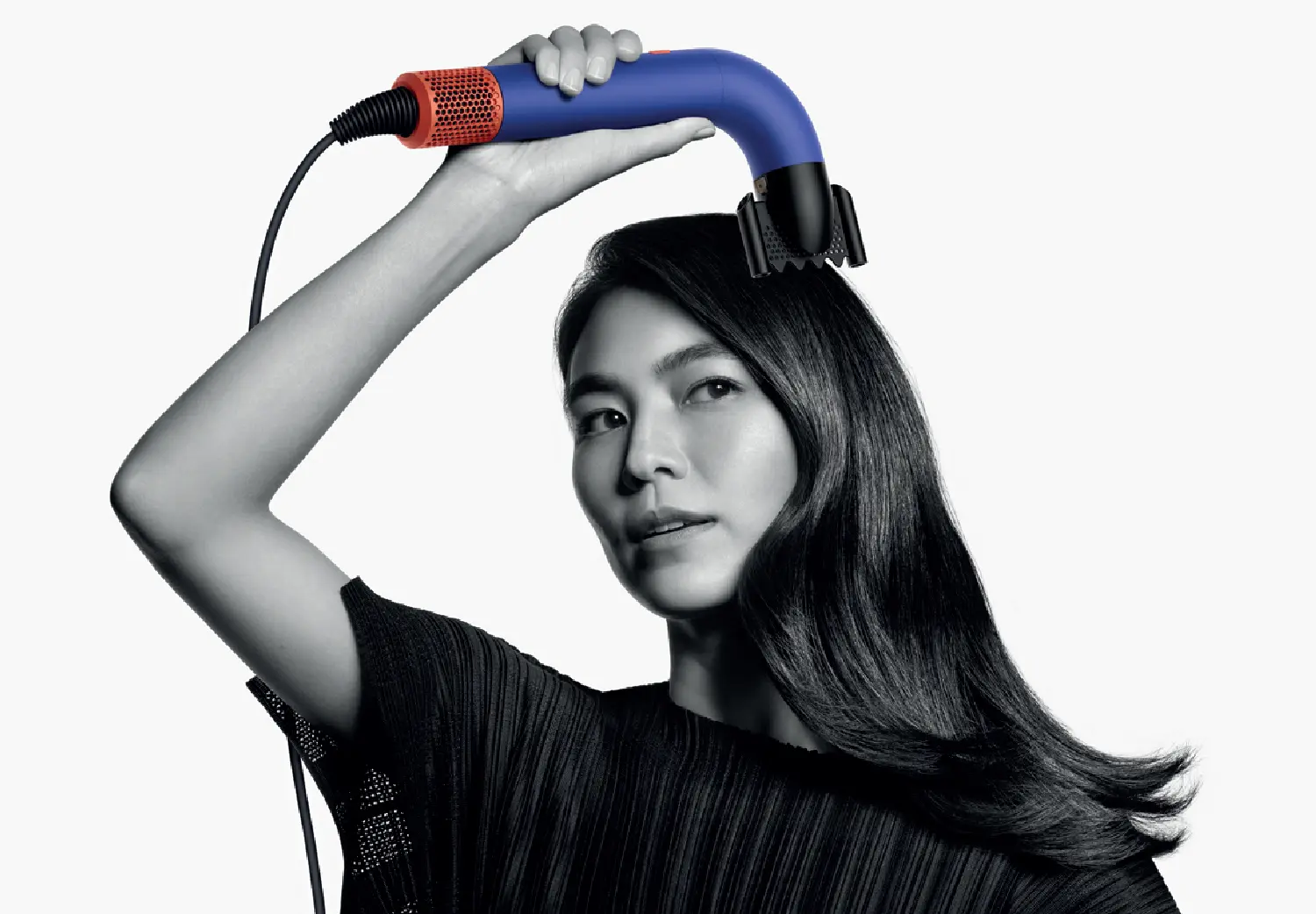
Styling hair with the Dyson Supersonic r hair dryer

The First Thing You Notice Is the Weight


Before you even turn it on, the Supersonic r feels completely different in your hand. It is significantly lighter and less bulky than the Supersonic Nural, and that difference becomes even more obvious once you start moving it around your head.

Dyson designed the r with professional stylists in mind, particularly people who may be holding a dryer for hours at a time. The body weighs about 0.7 pounds, while the Supersonic Nural is listed at 1.8 pounds. The measurements are not perfectly identical because Dyson measures the r body separately, but you really do not need numbers to understand the difference.

Our Nural never felt particularly heavy until we started using the r.

The curved shape also makes much more sense once you are actually holding it. Reaching the back of the head, getting closer to the roots and changing angles all feel more natural, with less awkward wrist positioning. That sounds minor until you blow dry your hair several times a week, at which point lighter and easier to maneuver suddenly matters a lot.

I Thought I Would Use the Concentrator Most


The Supersonic r comes with several intelligent attachments designed for different types of drying and styling, and I initially assumed the Pro concentrator would become my favorite. It seemed like the obvious choice for a polished blowout because the airflow is narrow, precise and easy to direct with a brush.

In reality, the attachment I reach for most is the Powerful air attachment.

It creates a concentrated, high velocity stream of air that gets hair dry quickly while still feeling controlled. For my everyday routine, it sits in the perfect space between rough drying and actual styling. I can remove most of the moisture quickly, direct the airflow where I want it and still end up with hair that looks smooth and put together.

That also feels much more realistic for the way most of us actually do our hair. Not every wash day involves a round brush, sectioning clips and the patience for a full blowout. Sometimes you want your hair dry, smooth and looking good so you can get on with your day, and the Powerful air attachment is exceptionally good at that.

The Attachments Are Smarter Than They Look


One of the more interesting features of the r is what happens when you attach one of its styling tools. Each intelligent attachment communicates with the dryer through an RFID chip, allowing the r to recognize what you have connected and adjust the available heat and airflow settings.

Even better, it remembers what you like.

If you use one combination of temperature and airflow with the Powerful air attachment and something different with the concentrator, the dryer remembers those preferences the next time you attach each one. It is the sort of technology that sounds slightly unnecessary on paper but becomes useful precisely because you eventually stop thinking about it.

The dryer simply starts adapting to the way you use it.
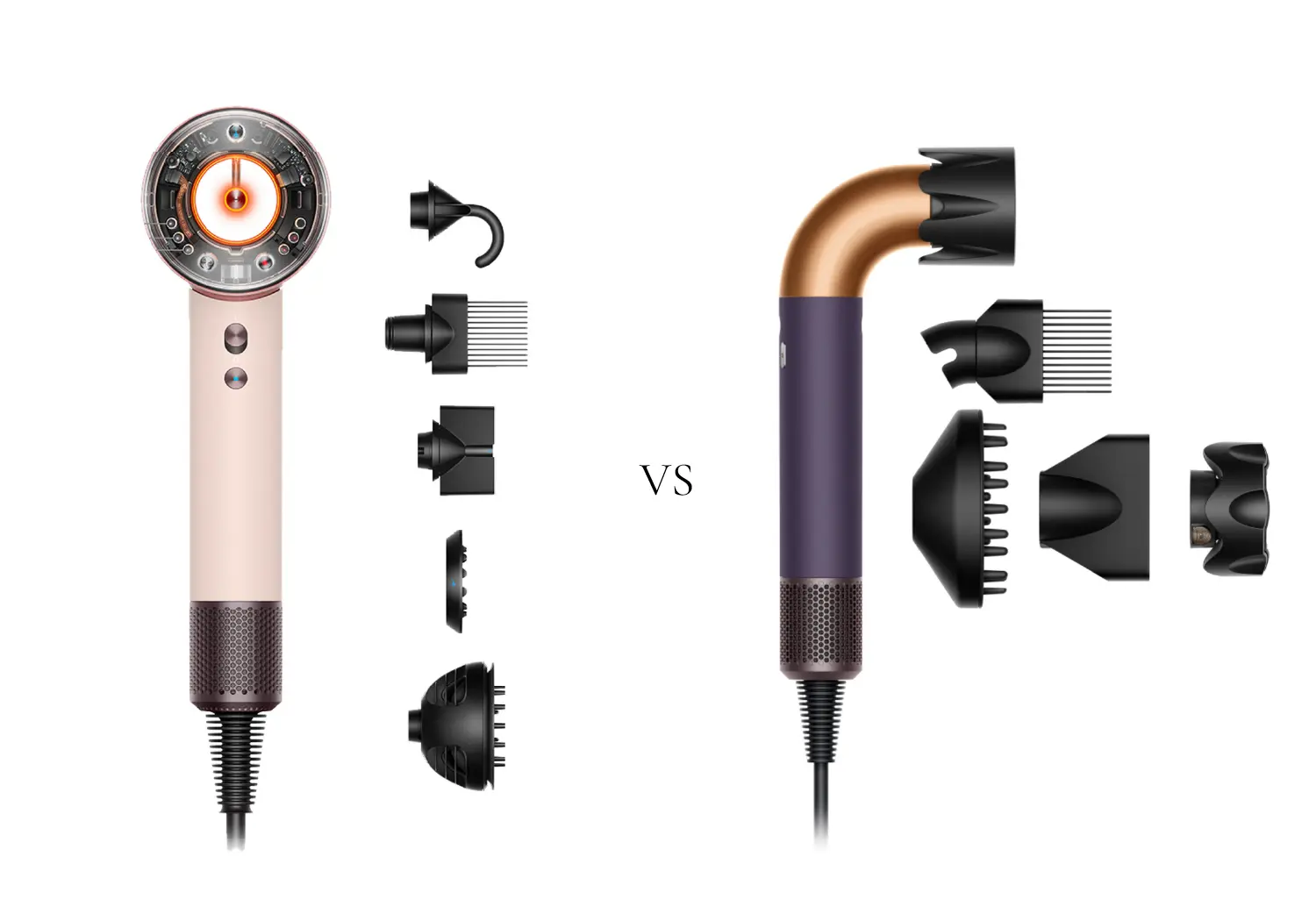
Dyson Supersonic r vs Dyson Supersonic Nural with styling attachments

The Technology Inside the r Is Very Different


Comparing the Supersonic r with the Supersonic Nural gets especially interesting when you look at how differently Dyson approached the two dryers.

The Nural introduced features like Scalp Protect mode, which senses how close the dryer is to your head and adjusts the heat, along with Pause Detect, which lowers airflow and temperature when you set the dryer down. The Supersonic r puts more of its engineering into making the dryer smaller, lighter and more precise without sacrificing power.

At its center is Dyson's Hyperdymium motor, which spins at up to 110,000 rpm and creates a high pressure stream of controlled air. The Professional model is rated at 1,700 watts compared with 1,600 watts for the Nural, while the heating system has also been completely redesigned.

Inside the curved body are 10 heater foils positioned along the shape of the machine. They are designed to heat the airflow more evenly as it moves through the dryer, while temperature sensors monitor the air more than 20 times a second and continually regulate the heat.

That all sounds highly technical, but what you notice as a user is much simpler. The dryer feels extremely powerful without feeling aggressive, the airflow is more controlled and it is easier to place exactly where you want it.

It Feels More Like a Styling Tool


This may be the biggest change in how we think about the r after actually using it.

The Supersonic has always been an excellent hair dryer. The r feels more like a styling tool that happens to dry your hair very quickly.

Because the body is so light and the airflow is easier to direct, working around the roots, front pieces and crown feels much more intuitive. You can change angles quickly, move from one side of the head to the other and get closer to specific areas without feeling like you are fighting the dryer.

You also do not have to be particularly skilled at blow drying to appreciate that difference. If anything, it helps more when you are not. Anything that makes the dryer easier to control makes the whole process feel less tedious.

The Professional Design Works Surprisingly Well at Home


The Supersonic r was originally designed for professional stylists, so there are a few details that make its salon roots obvious. The Professional model has an extra long 12.5 foot cord, which makes perfect sense when someone needs to move around a salon chair.

At home, it is admittedly more cord than most people need, but it is also surprisingly convenient if your bathroom outlet is nowhere near where you actually want to stand. The dryer also has a professional grade filter designed to withstand heavier use, which adds to the feeling that this is a tool built for consistent performance.

One thing worth knowing is that the US Supersonic r Professional is designed for 120V, so it is not something we would bring to Europe with a simple travel adapter. For us, this is very much the hair dryer that lives at home.

Is It Actually Faster?


The Supersonic r is very fast, but the biggest improvement for us is not necessarily a dramatic reduction in drying time. The Nural was already fast, so this was never going to feel like going from an old drugstore dryer to a Dyson for the first time.

What changed is how effortless those minutes feel.

The r is lighter, easier to maneuver and more comfortable to move around the head, while the Powerful air attachment gets a lot of moisture out quickly. There is less switching hands, less awkward positioning and less of that point halfway through where you start wondering whether your hair is dry enough to just stop.

Even when the total drying time is not wildly different, the experience feels quicker because there is less effort involved.

What About the Nural's Smart Features?


The Supersonic Nural is still one of the most impressive dryers Dyson has made, and features like Scalp Protect and Pause Detect are genuinely clever. We expected to miss them more than we actually did.

The r simply has a different appeal.

Rather than focusing as heavily on automatic adjustments, it gives you more physical control. The lighter body, compact shape, strong airflow and intelligent attachments all work together to make styling feel easier and more intuitive.

For us, that ended up being the upgrade that mattered more.
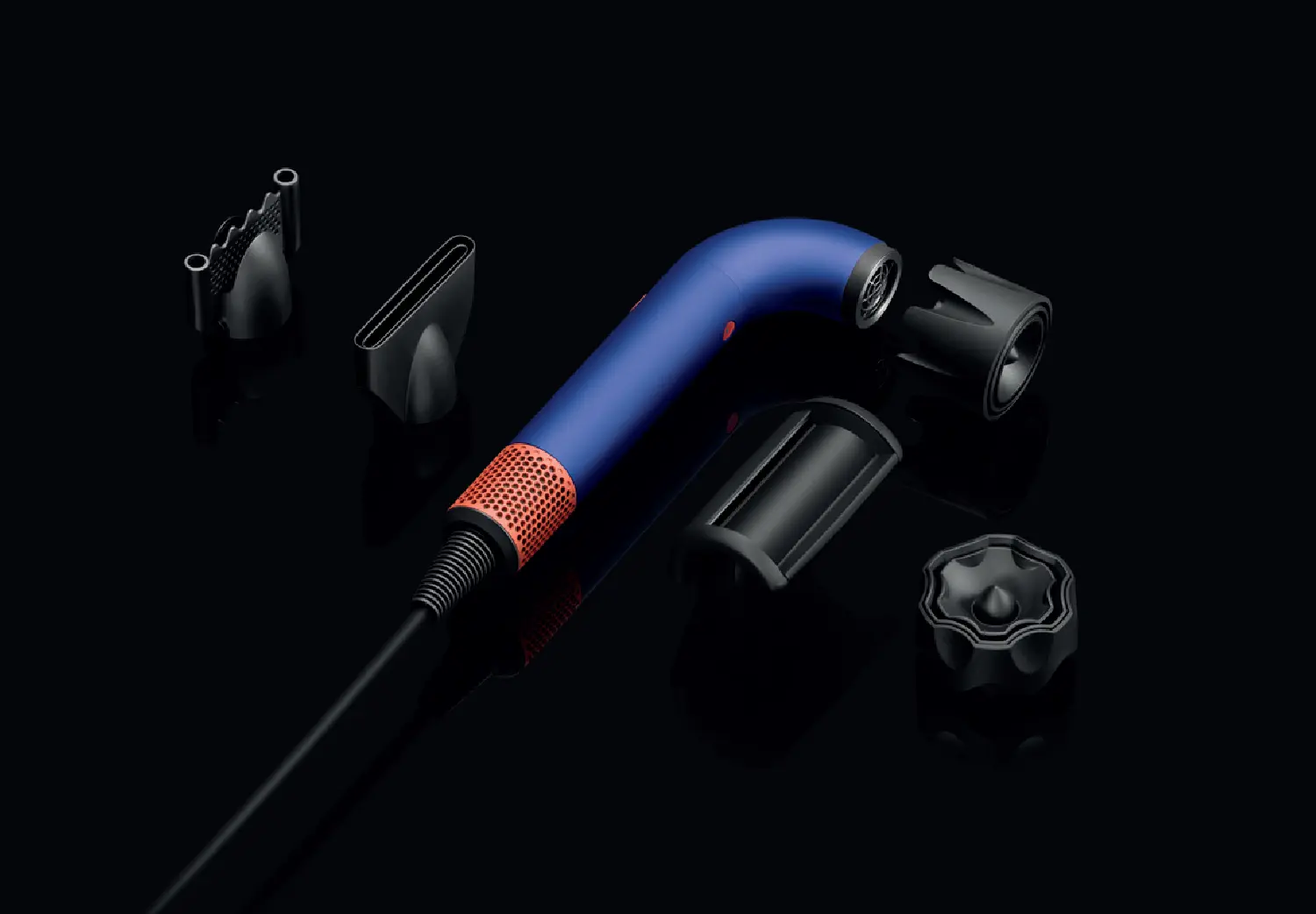
Dyson Supersonic r hair dryer with styling attachments

So, Is the Dyson Supersonic r Worth the Upgrade?


If you already own a Dyson Supersonic that you love, you probably do not need to rush out and replace it. That is exactly why we waited so long.

We had been eyeing the Supersonic r for years, but our existing Dyson still worked beautifully and there was never a moment when we urgently needed something new. Eventually we made the switch because we were curious whether the difference would actually feel substantial.

It did.

The biggest selling point is not one specification or one piece of technology. It is the overall experience. The r feels dramatically lighter in the hand, less bulky, easier to maneuver and more intuitive to style with. The attachments are useful without feeling gimmicky, and the Powerful air attachment has become the one we reach for most.

Most importantly, doing our hair simply feels easier.

That is ultimately what makes an upgrade worthwhile. Not because the thing you owned before suddenly became bad, but because the new version improves something you do all the time in ways you actually notice.

After years with a Supersonic, we are very glad we finally made the switch. We certainly did not need a new hair dryer, but now that we have the r, we would not want to go back. GET YOURS HERE

The post Dyson Supersonic vs. Supersonic r: We Used One for Years. Is It Actually Worth the Upgrade? appeared first on The Chalkboard Mag.


from The Chalkboard Mag https://ift.tt/Ed5HASC
via IFTTT

Monday, September 21, 2026

Cycle Syncing Guide: How to Work With the Four Phases of Your Menstrual Cycle

Gentle movement as part of a cycle syncing routine

How to work with your body through the menstrual, follicular, ovulatory and luteal phases without turning cycle syncing into another wellness rulebook.

Your menstrual cycle is not one static hormonal state. Estrogen and progesterone shift throughout the month, and with them, some people notice changes in energy, appetite, sleep, mood and the way exercise feels.

That is the basic idea behind cycle syncing: adjusting certain habits according to where you are in your menstrual cycle. Research on cycle syncing as a complete lifestyle program is still limited, so a more useful approach is to understand what is happening during each phase, notice your own patterns and make adjustments when they actually feel helpful.

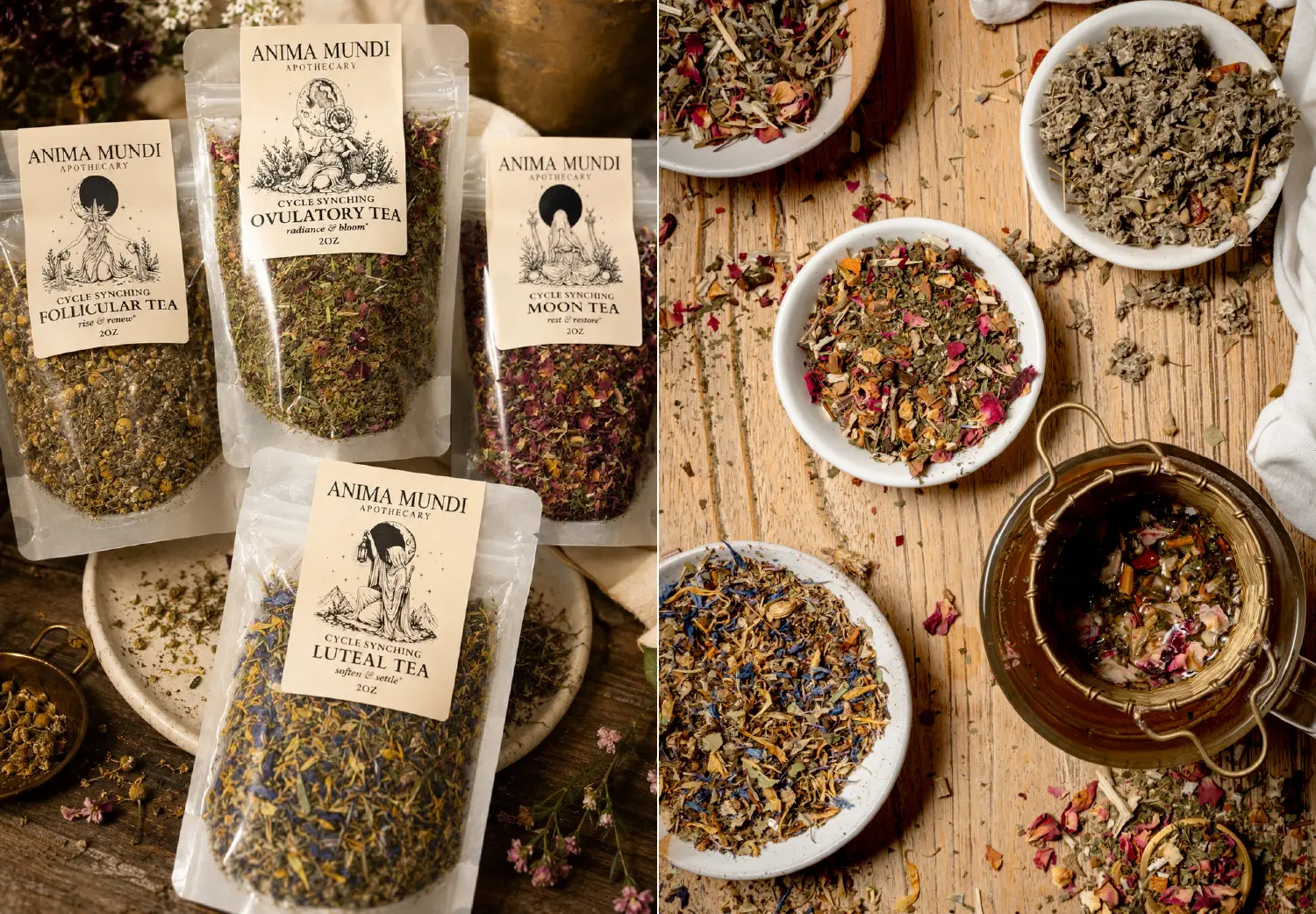
Herbalism has long taken a similarly phase aware approach to the menstrual cycle. Anima Mundi applies that idea through its Menstrual CycleTea Kit, with four loose leaf blends for the menstrual, follicular, ovulatory and luteal phases. We wanted to look more closely at why certain herbs appear in each formula, where traditional use comes in and what modern research can actually tell us.

What Are the Four Phases of the Menstrual Cycle?


A menstrual cycle begins on the first day of your period and continues until the next period begins. Although 28 days is often used as the textbook example, real cycles vary, and ovulation does not automatically happen on day 14.

There are four commonly discussed phases in cycle syncing: menstrual, follicular, ovulatory and luteal. Estrogen is relatively low around menstruation, then rises as the body approaches ovulation. After an egg is released, progesterone increases during the luteal phase before both hormones eventually fall if pregnancy does not occur.

Those hormonal shifts are real. What they mean for your energy, appetite or mood is much more individual, which is why paying attention to your own cycle matters more than following an exact calendar.

Anima Mundi Menstrual Cycle Tea Kit with four herbal blends for cycle syncing

Menstrual Phase: Focus on Restoration


During menstruation, estrogen and progesterone are relatively low and the uterine lining is being shed. Some people feel completely normal, while others experience lower energy or simply feel better scaling things back.

There is no reason to automatically stop exercising during your period. A large systematic review of menstrual cycle phases and exercise performance found only small average differences across phases and emphasized the importance of an individualized approach. If movement feels good, keep moving. If your body is asking for less intensity, walking, stretching or a gentler workout may make more sense.

For this phase, Anima Mundi uses Moon Blend | Rest + Restore, made with nettle, motherwort, rose, orange peel, cinnamon and clove. Nettle has a long reputation as a nutritive herb, while cinnamon and clove bring warmth to the blend.

Cinnamon is particularly interesting because it has also been studied for primary dysmenorrhea. A systematic review of cinnamon and ginger for menstrual discomfort found promising evidence for reducing pain compared with placebo. Those studies tested specific cinnamon preparations rather than this tea, but they help explain why the spice continues to appear in traditional menstrual formulas.

Follicular Phase: Think Nourishment and Returning Energy


After menstruation, estrogen generally rises as the body moves toward ovulation. Some people notice energy, motivation or exercise capacity beginning to pick back up, while others feel little difference.

The research does not support prescribing a universal follicular phase workout, so this is less about forcing yourself to become more active and more about noticing whether you naturally feel ready for greater intensity. Balanced meals with protein, complex carbohydrates, healthy fats and plenty of plants remain more useful than a complicated phase specific diet.

Anima Mundi pairs this stage with Follicular Tea | Rise + Renew, a blend of raspberry leaf, moringa leaf, chamomile, ginger, burdock root and rosehips. The formula leans heavily into nutritive and digestive herbs. Moringa is particularly interesting because its leaves contain a broad mix of vitamins, minerals and plant compounds, and a 2025 review of moringa leaf describes it as a nutrient dense botanical while noting that stronger human research is still needed for many of its broader health claims.

Ginger and chamomile also have long histories of digestive use, while raspberry leaf has been used traditionally in women's herbalism. Taken together, the blend fits naturally into a phase often associated with returning energy and nourishment without asking the tea to do more than the evidence supports.

Ovulatory Phase: Work With the Energy You Actually Have


Ovulation happens when an ovary releases an egg after a rise in luteinizing hormone. Estrogen is generally high leading into this point, and cycle syncing advice often describes ovulation as the most energetic and social part of the month.

That may be true for you, but it is not a guarantee. Sleep, stress and everything else happening in your life still influence how you feel. If you consistently notice more energy around ovulation, it may be a great time for a harder workout, social plans or a demanding workday. If you do not, there is no reason to force it.

Anima Mundi's Ovulatory Tea | Radiance + Bloom combines damiana, lemon balm, oatstraw, rose and lavender, a group of herbs that leans more toward calm and nervous system support than anything intended to influence ovulation itself.

Lemon balm has some of the stronger human research in the blend. A systematic review and meta analysis of lemon balm found improvements in anxiety and depression measures across clinical trials, although preparations, doses and study populations varied. Lavender has also been studied extensively for relaxation, while modern human evidence for damiana remains more limited.

That calming profile makes the blend an interesting counterpoint during a phase some people already experience as more social, energetic or outward facing.

Luteal Phase: Pay Attention to Appetite, Stress and Recovery


The luteal phase begins after ovulation. Progesterone rises, then both progesterone and estrogen eventually decline as the next period approaches. For many people, this is where shifts in appetite and energy become easier to notice.

There is good reason to pay attention to hunger here. A 2025 systematic review and meta analysis found that energy intake was higher on average during the luteal phase than during the follicular phase. There was considerable variation between studies, so this does not mean everyone will suddenly become hungrier, but it does suggest that an increase in appetite before your period can be a real physiological pattern.

This is a good time to make sure meals contain enough protein, fiber, complex carbohydrates and healthy fats to actually satisfy you. If you also notice that intense exercise feels harder as your period approaches, adjusting intensity or prioritizing recovery may feel more supportive than forcing yourself through the exact same schedule.

Anima Mundi's Luteal Tea | Soften + Settle combines tulsi, linden, schisandra berry, calendula and blue cornflower, botanicals traditionally associated with calm and resilience. Tulsi has particularly interesting research around stress. In an eight week randomized, double blind, placebo controlled trial, adults experiencing stress who took a standardized tulsi extract showed improvements in perceived stress and sleep measures compared with placebo.

A standardized extract is different from a cup of tea, but the research offers useful context for why tulsi appears so often in formulas centered around stress support. Schisandra also has a long history as a tonic in Traditional Chinese Medicine, while linden has traditionally been used as a calming herb.

Anima Mundi cycle syncing herbal teas for the menstrual, follicular, ovulatory and luteal phases

Where Herbal Tea Fits Into Cycle Syncing


You do not need a different supplement routine, workout plan and grocery list for every phase of your cycle. That kind of complexity starts to defeat the purpose.

What works well about Anima Mundi's Menstrual Cycle Tea Kit is the simplicity of the format. The ritual stays the same while the herbs change. The kit contains all four loose leaf blends along with the brand's 80 plus page digital A Woman's Herbal Guide to Cyclical Living, with additional phase specific herbal guidance, recipes and rituals.

The evidence behind the ingredients varies. Some, including cinnamon, lemon balm and tulsi, have human research behind them, while others are supported more heavily by traditional herbal practice. Rather than expecting a botanical to change the course of each phase, the tea can simply become a cue to check in with yourself. How is your energy? Are you hungrier? Do you need more intensity or more recovery? Over several cycles, those observations can become far more useful than blindly following a generic 28 day schedule.

So, Does Cycle Syncing Work?


The biology behind the menstrual cycle is established. The idea that everyone needs a completely different lifestyle for each phase is not.

Cycle syncing makes the most sense as a tool for body awareness. Your appetite may change. Your workouts may feel different. Your energy or mood may shift, or they may barely change at all. Understanding those patterns gives you the option to respond instead of expecting your body to feel exactly the same every day.

The goal is not perfect synchronization. It is knowing your own patterns well enough to work with them.

SHOP: The Menstrual Cycle Tea Kit by Anima Mundi

All material on The Chalkboard Mag is provided for educational purposes only. Always seek the advice of your physician or other qualified healthcare provider for any questions you have regarding a medical condition, and before undertaking any diet, exercise or other health-related programs. The Menstrual Cycle Tea Kit is not recommended during pregnancy or breastfeeding. Herbal ingredients can interact with medications and may not be appropriate for everyone, so speak with a qualified healthcare professional if you have questions about regular use.

The post Cycle Syncing Guide: How to Work With the Four Phases of Your Menstrual Cycle appeared first on The Chalkboard Mag.


from The Chalkboard Mag https://ift.tt/vMh9yiX
via IFTTT

Wednesday, September 16, 2026

8 Clean Foundations That Give You Coverage Without Looking Like Foundation

best clean foundations

Some of the links in this story are affiliate links, which means we may earn a commission if you choose to purchase helping us continue to share mindful, inspiring content.

Foundation has gotten a lot better at not looking like foundation. Today’s best formulas sit somewhere between skincare and makeup, using serum like textures and skin friendly ingredients to blur redness, uneven tone and texture without covering everything up.

If you want a little more than a skin tint but hate the feeling of a full face of makeup, these are the clean foundations worth knowing now.

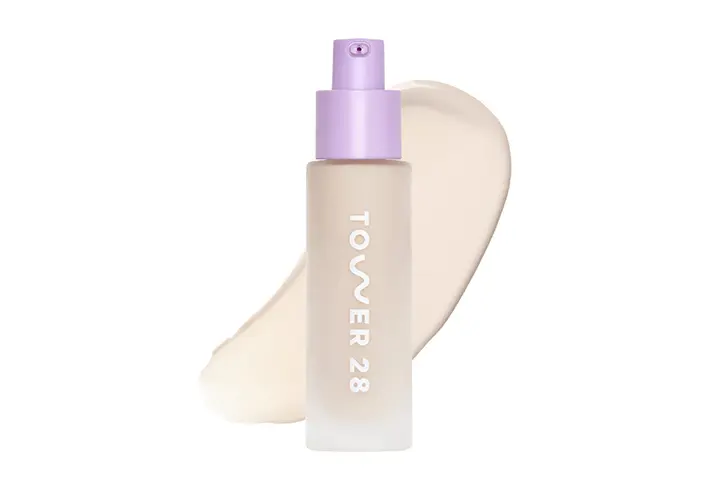
Tower 28 Swipe Serum Foundation


Best for sensitive and breakout prone skin

Tower 28 Swipe Serum Foundation

Tower 28’s Swipe Serum Foundation is one of the newest additions to the category and arguably one of the most interesting. The featherweight serum starts sheer but can build to medium coverage, giving you considerably more correction than a traditional skin tint without the feeling of a conventional foundation.

The silicone free formula is made with 82 percent skincare ingredients and includes fermented oat, lactobacillus ferment, squalane and portulaca extract. It is also noncomedogenic and nonacnegenic and was created with sensitive skin in mind. The finish is natural rather than overtly dewy, which means it smooths and evens things out without leaving skin looking overly glossy. It is now available in 36 shades.

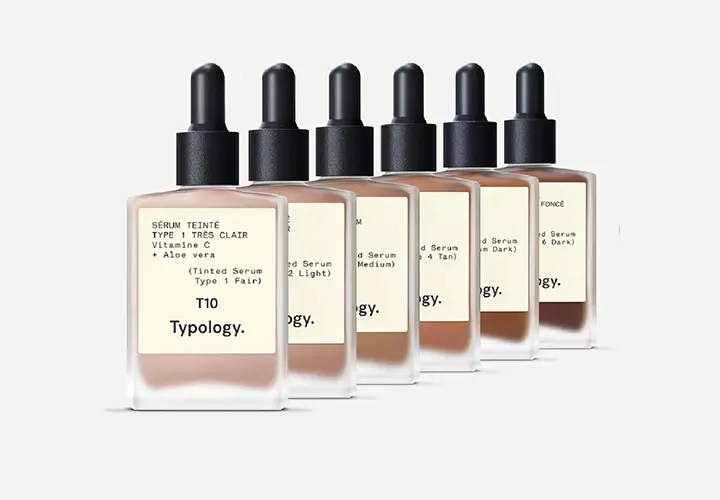
Typology Tinted Serum


Best for the ultimate no makeup look

Typology Tinted Serum

French skincare brand Typology approaches complexion makeup almost exactly like skincare, which is why its Tinted Serum feels so appropriate here. The silicone free formula is 99 percent naturally derived and combines a vitamin C derivative with plant based squalane and aloe vera.

Coverage is deliberately light. This is the one to reach for when you want to soften redness and uneven tone without being able to identify where the makeup begins and ends. The finish is naturally radiant rather than shiny, and the formula is also noncomedogenic. The biggest drawback is the shade range, which currently consists of only six shades. The sheer pigment makes those shades more flexible, but we would still like to see considerably more options.

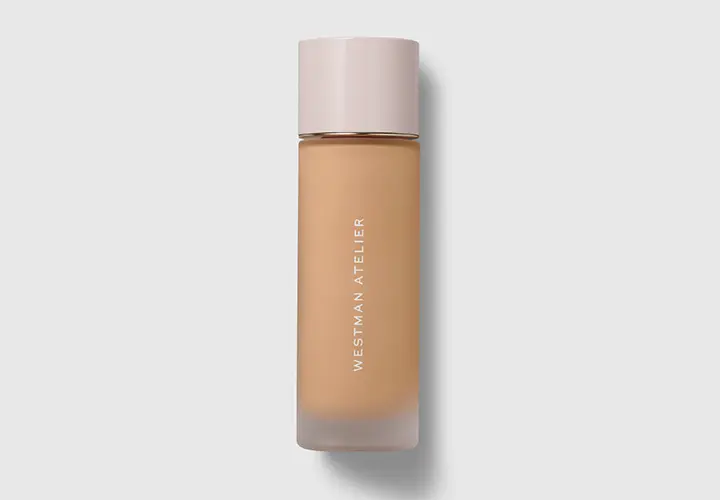
Westman Atelier Suprême Bio Complex Liquid Foundation


Best clean luxury foundation

Westman Atelier Suprême Bio Complex Liquid Foundation

If you want your foundation to behave a little more like an expensive serum, Westman Atelier’s Suprême Bio Complex Liquid Foundation is the splurge on this list.

The silicone free formula gives medium coverage while maintaining a hydrated, second skin finish. Its skincare complex includes niacinamide and multiple peptides, along with hyaluronic acid, sunflower oil, rosemary and algae extract. Amino acid based powders help blur without pushing the finish into flat matte territory. It is exactly the kind of foundation we want from Gucci Westman: polished enough for a proper makeup look, but almost impossible to detect once it has been blended into the skin.

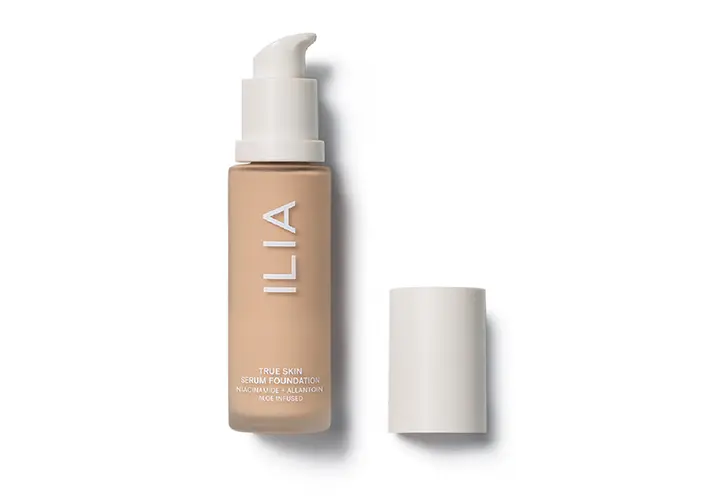
ILIA True Skin Serum Foundation


Best overall

ILIA True Skin Serum Foundation

ILIA True Skin Serum Foundation remains one of the strongest arguments for swapping a traditional foundation for a skincare makeup hybrid. It offers legitimate medium coverage, but the silky texture moves with the skin rather than sitting visibly on top of it.

The current formula includes niacinamide and allantoin at levels the brand says are intended to visibly improve uneven tone and texture while helping soothe skin. Aloe, jojoba oil, marula oil and squalane round out the formula. It is fragrance free, dermatologist tested and noncomedogenic, with a natural finish that hits the sweet spot between matte and overly luminous. If you want one foundation that can reasonably take you from everyday makeup to a more finished evening look, this is probably our pick.

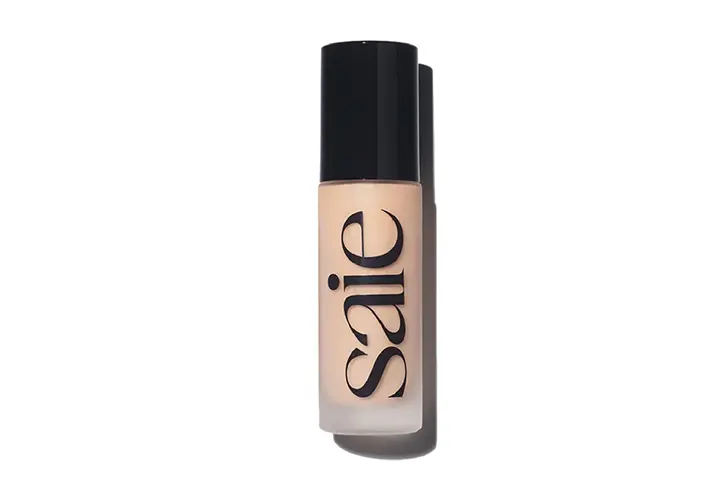
Saie Glowy Super Skin Tint Foundation


Best for dry and dehydrated skin

Saie Glowy Super Skin Tint Foundation

Despite “tint” being in the name, Saie Glowy Super Skin Tint Foundation provides medium coverage. The brand describes the formula as 85 percent skincare serum and 15 percent pigment, which explains the unusually fluid texture.

Hyaluronic acid, polyglutamic acid, squalane and glycerin give this one its distinctly juicy finish, while rice bran and amla extracts add to the skincare heavy formula. It is luminous without being a liquid highlighter and works particularly well when you want dry or tired skin to look fresher without layering on several complexion products. If you love the appearance of well moisturized skin more than a perfected matte base, this is the one.

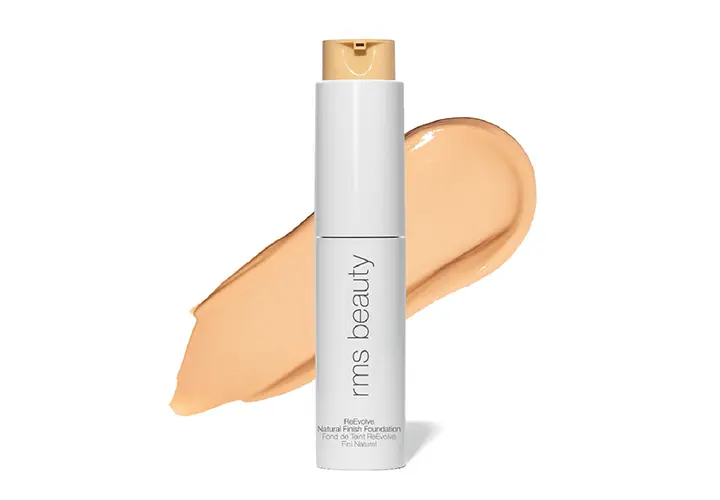
RMS Beauty ReEvolve Natural Finish Liquid Foundation


Best natural satin finish

RMS Beauty ReEvolve Natural Finish Liquid Foundation

RMS Beauty ReEvolve Natural Finish Liquid Foundation is for the person who wants more polish without sacrificing the natural skin effect. The silicone free formula offers medium coverage with a soft satin finish, so it sits between the glowier serum foundations and more traditional complexion makeup.

Vegetable squalane and organic aloe help support hydration, while RMS also incorporates its proprietary botanical blend and Tightenyl into the formula. It is noncomedogenic, water resistant and housed in a refillable package. We particularly like this one when you want skin to look finished but not obviously dewy.

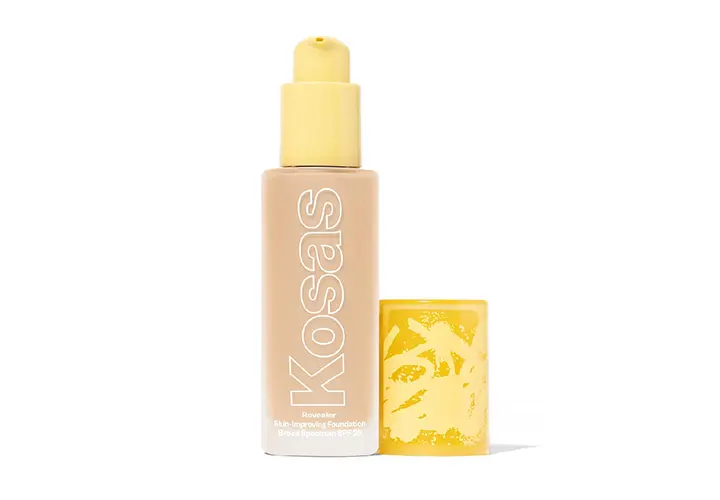
Kosas Revealer Skin Improving Foundation SPF 25


Best for smoothing and evening skin

Kosas Revealer Skin Improving Foundation SPF 25

Kosas Revealer Skin Improving Foundation SPF 25 lands at the more perfected end of this roundup, but that is exactly why it earns a spot. You get medium coverage and enough pigment to noticeably even discoloration and redness, while the finish still reads as natural skin.

Its skincare focused ingredient list includes niacinamide, sodium hyaluronate, panthenol, squalane, caffeine and a peptide, along with zinc oxide for mineral SPF 25 protection. It is especially useful when a barely there tint simply is not going to do the job but you still do not want that unmistakable foundation finish.

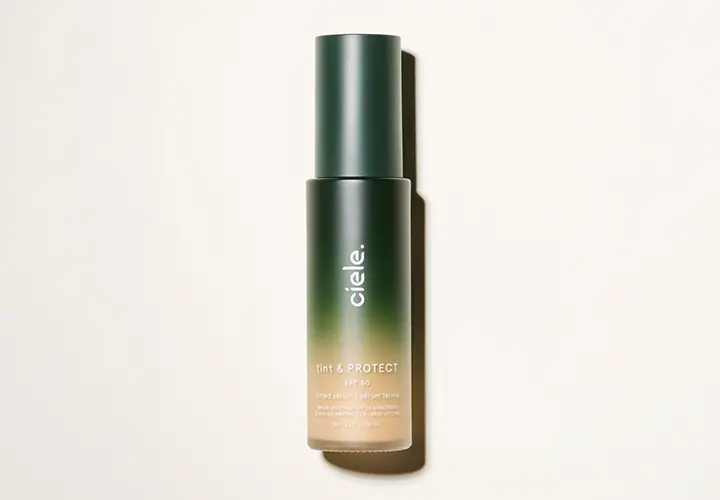
ciele tint & PROTECT SPF 50+


Best foundation with mineral SPF

ciele tint & PROTECT SPF 50+

Part serum foundation, part mineral sunscreen, ciele tint & PROTECT SPF 50+ makes a lot of sense for daytime. The featherweight formula starts with light coverage and can be built toward medium, with a natural finish that is far less sunscreen like than you might expect from a mineral SPF 50+ formula.

It uses non nano mineral UV filters and is formulated to be noncomedogenic and acne safe. We would still treat your regular sunscreen as the foundation of your sun protection routine rather than depending on makeup alone, but for an extra layer of mineral SPF in a complexion product, this is one of the more elegant options we have found.

The trick to making foundation look like skin


Even the best foundation can start looking like makeup when you use too much. Start with skincare and give it a few minutes to settle, then apply foundation primarily through the center of the face or wherever you actually need evening out. Blend outward and add another thin layer only over redness, discoloration or blemishes.

The goal is not perfectly uniform skin. Leaving some natural variation visible is precisely what keeps foundation from looking like foundation.

The post 8 Clean Foundations That Give You Coverage Without Looking Like Foundation appeared first on The Chalkboard Mag.


from The Chalkboard Mag https://ift.tt/0skuQlH
via IFTTT

Tuesday, September 15, 2026

Are We Doing Too Much to Our Faces? Dr. Karam on What Works and What’s Hype

Dr. Amir Karam Skincare and aesthetic treatment advice for healthy aging

There have never been more ways to “do something” about aging. Botox starts earlier, collagen banking is everywhere, at home devices promise professional level results, and the line between prevention and simply doing too much can get blurry fast.

So we went back to Dr. Amir Karam, one of the most recognized names in facial rejuvenation. The double board certified facial plastic surgeon has spent more than two decades studying how faces age, performed thousands of facial procedures, and built an audience of nearly one million on Instagram for his refreshingly direct approach to what actually works.

We’ve previously talked to him about aging, identity, and what it means to still feel like yourself and how to future proof your face. This time, we asked him to cut through the noise: What’s worth doing, what’s being oversold, and where can we all afford to do a little less?

So, What’s Actually Worth Doing to Your Face?

When someone says, “I just want to look younger,” what are the first things you look at before recommending any treatment?


It always starts with improving the quality of their skin. Youthful, bright, glowing skin plays a huge role in the appearance of youth. This is always where I start.

But it realistically depends on their age, of course. If they’re on the younger side, say in their early 40s and younger, improving their skin quality, a little bit of Botox, and possibly a touch of volume can do the trick. Once you’re in the late 40s and early 50s and structural laxity is present, a facelift would be in the near future to make a meaningful change.

Dr. Amir Karam in an interview about facial aging

“Collagen banking” is being promoted earlier and earlier. Is there real evidence that starting lasers, RF microneedling, ultrasound, or injectables before visible aging appears changes how someone ages long term, or is much of this prejuvenation hype?


As a concept, this does make a lot of sense. However, the particular application doesn’t have to be so complicated. Botox and injectables have nothing to do with collagen banking. The concept is that collagen production decreases year over year starting in our mid-20s.

The most effective way to address this is by reducing the breakdown of existing collagen with sun protection and by using skincare actives like retinol and vitamin C as some examples of topicals that help with collagen production and protection. To take it one step further, in-office treatments like regular microneedling can help stimulate collagen. The name of the game is to try to outpace collagen loss. With consistency, this can be achieved for the most part.

Some patients find that Botox, Dysport, or Daxxify stops lasting as long or no longer produces the same effect after years of injections. When that happens, what should they actually do next? Should they change the dose or placement, switch products, take a break, or be evaluated for true treatment resistance?


It’s very unlikely that the neuromodulators stopped working. I almost never see this. However, the expectations of what they can achieve as you age definitely change, and the distribution and dosage you use should also change with age.

When you’re younger, in your 30s and 40s, a little bit of Botox around your eyes and forehead can make you look significantly more refreshed. But if you use that same distribution when you’re in your 50s or 60s, oftentimes the change will be significantly less impressive because of the overall changes that are happening with laxity around the eyes, brows, etc. In fact, in many cases as you age, you want to avoid putting Botox in your forehead altogether to keep the brows from drifting down. So the tactical approach changes with age.

However, if there’s truly a resistance that happens to a particular neuromodulator, for example, if Botox stops having any impact, then it is reasonable to try a different neuromodulator.

From your perspective, which nonsurgical treatments produce a genuinely noticeable result, and which are marketed as far more transformative than they really are?


My honest opinion is that there really isn’t a nonsurgical treatment that can meaningfully lift the face.

At-home red light masks, microcurrent tools, gua sha, and facial devices are now treated almost like essentials. Which can meaningfully support the skin over time, and which mainly create a temporary effect that disappears within hours?


The foundation to beautiful, youthful skin that improves year over year starts with sun protection and the use of active skincare ingredients such as retinol, vitamin C, niacinamide, ceramides, lipids, and hyaluronic acid. This is responsible for well over 90% of the changes you can ever hope to expect.

Only if you have covered these bases should you venture into at-home devices to give you a few extra percentage points of improvement. The best category here would be red light devices, in my opinion. They are safe and have some science to back them up.

I like microneedling as well, but I get nervous with people doing it at home because of the risk of infection if they don’t clean the needles correctly.

Under-eye filler was once the go-to treatment for hollowness, but more patients are now turning to PRF as a more natural alternative. What is your take on that shift, and when does PRF make more sense than filler?


PRF is not a volume-enhancing tool. It does help with improving skin quality, but it does not bring any meaningful volume back to the lower eyelids. For somebody who has moderate to severe volume loss, they’ll be very disappointed if they’re using PRF to help them with lower eyelid hollows.

For somebody whose primary concerns are crepiness and thinning of the skin, with perhaps an extremely mild appearance of hollows, they may see an overall improvement with this approach.

Fat transfer and filler using HA are still the most reliable ways of addressing lower-eye hollowing.

Dr. Amir Karam discussing facial aging and aesthetic treatments

What are the three most worthwhile things women over 35 can do for their faces, and the three things they can confidently stop spending money on?


Sun protection.
KaramMD Trifecta. Botox.

They can confidently stop spending money on everything else.

Let’s talk skincare. Doctor-founded skincare has become its own crowded category. You have been very clear that KaramMD was not created from a white-label formula. What formulation decision in KaramMD could only have come from spending two decades studying how faces and skin age instead of just a list of trending ingredients?


I formed a deep understanding of how skin ages over the years. I’ve been treating skin from the day I started practicing. Combining different categories to address the key changes that were happening with age was a fundamental starting point.

I knew that everyone is losing collagen. The skin is getting thinner, leading to lines and wrinkles. I knew that pigment is increasing, leading to sunspots and discoloration. I knew the skin is becoming dehydrated and flaccid. I also knew that the skin barrier was changing for the worse as we age. Ultimately, aged skin would be characterized by fine lines and wrinkles, discoloration, dullness, roughness, and sensitivity.

I’ve been actively addressing all of these regions, but with separate bottles for each ingredient. The results were fine, but patients were unable to remain consistent with these products because oftentimes the routines would be six to ten steps.

So my goal was to combine everything into as few steps as possible while still addressing every aspect of skin aging. That’s what led to the KaramMD Trifecta.

The KaramMD Trifecta combines 24 active ingredients and is designed to replace several separate skincare categories. For someone who already has a vitamin C serum, retinoid, peptide product, and moisturizer they like, what does the system offer that a pieced-together routine may not, and when is it actually worth clearing the counter and making the switch?


If somebody is already using every category of skincare, the Trifecta may not plug any holes. But it’s extremely uncommon for somebody to be using everything that’s already in the
 KaramMD Trifecta.

If we assume that they are, then what they would be getting is a streamlined system that takes them a minute or two and just three steps, as opposed to a significant amount of time and energy to apply all the different steps. But I can always find something that is lacking in someone’s skincare routine that can be covered with the Trifecta.

The post Are We Doing Too Much to Our Faces? Dr. Karam on What Works and What’s Hype appeared first on The Chalkboard Mag.


from The Chalkboard Mag https://ift.tt/qWSfKjJ
via IFTTT

Monday, September 14, 2026

DedCool’s New Mocha Magic Is the Cozy Gourmand We’re Wearing Into Colder Weather

DedCool Mocha Magic

Some of the links in this story are affiliate links, which means we may earn a commission if you choose to purchase helping us continue to share mindful, inspiring content.

We have had DedCool Mochi Milk in heavy rotation since it launched, so when we got a sneak peek of the brand’s newest fragrance, Mocha Magic, we were immediately curious.

Launching today at DedCool and Sephora, Mocha Magic is the brand’s most decadent gourmand yet, built around freshly ground espresso, creamy mocha and tonka bean. It is warm, addictive and arriving at exactly the right time as we start transitioning into colder weather. Think sweaters coming back into rotation, dinners moving indoors and that first moment you find yourself reaching for something a little richer.

This is also the kind of fragrance that is going to have people stopping you to ask what you are wearing.

What Does DedCool Mocha Magic Smell Like?

Mocha Magic opens with the unmistakable richness of freshly ground espresso and mocha, softened almost immediately by cream. Biscotti and toffee add sweetness, while bourbon gives the fragrance a little more depth.

As it settles on the skin, vanilla, tonka bean and sandalwood come through, creating a warmer, smoother finish.

For a fragrance with coffee, chocolate, toffee and vanilla in the mix, it could easily have gone very sweet. Instead, there is enough depth to keep everything feeling balanced and sophisticated.

It is gourmand, but not overly sugary. Cozy, but not sleepy. Rich, without becoming heavy.

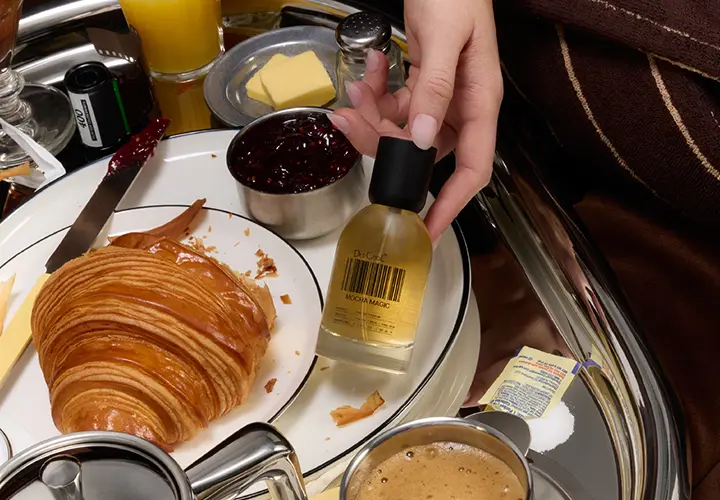
DedCool Mocha Magic perfume with croissant and coffee at breakfast

There Is More to the Coffee Note


Mocha Magic also features DedCool’s
Balance Note™, a fragrance technology developed with perfumers around coffee’s ability to feel both energizing and grounding.

It is an interesting idea because coffee is rarely just about caffeine. There is the lift you get from it, but there is also the ritual. Making it in the morning, sitting down with a cup in the afternoon or walking into a coffee shop and immediately recognizing that smell.

Mocha Magic plays with both sides. Espresso gives the fragrance an initial energy, while creamy mocha, tonka bean, vanilla and sandalwood bring in that warmer sense of comfort.

DedCool even translated the concept into something you could taste ahead of the fragrance launch, with drink collaborations at Erewhon in Los Angeles and The Elk in New York.

Why We’re Reaching for It as the Weather Cools Down


There is something about cooler weather that naturally makes us want to switch up fragrance too. The airy, barely there scents we gravitate toward during warmer months start making room for something with a little more depth.

Mocha Magic hits that sweet spot.

The espresso and bourbon give it richness, while cream, vanilla and tonka bean keep everything soft and inviting. Sandalwood grounds it enough that the fragrance never feels like you are wearing a literal coffee drink.

It is easy to imagine wearing this to dinner, on a night out or simply during the day once temperatures start dropping. There is a coziness to it that feels especially good heading into colder months without making it a fragrance you can only wear during one specific season.

We will be wearing it on its own, but we are also planning to layer it with Mochi Milk when we want to make the combination even softer and creamier.

The Gourmand We’ll Be Wearing Next


Gourmand fragrance is having a serious moment, but Mocha Magic does not feel like another vanilla forward scent trying to capitalize on it.
Coffee gives it personality. Toffee and biscotti bring in just enough sweetness. Bourbon, tonka bean and sandalwood give the dry down more dimension.

The result feels comforting and familiar while still having enough intrigue to make someone lean in a little closer. And as we trade warmer days for cooler nights, that is exactly the kind of fragrance we want in rotation.

DedCool Mocha Magic launches September 14 at DedCool and Sephora. Get it here.

The post DedCool’s New Mocha Magic Is the Cozy Gourmand We’re Wearing Into Colder Weather appeared first on The Chalkboard Mag.


from The Chalkboard Mag https://ift.tt/GBvy8g1
via IFTTT

Friday, September 11, 2026

Is There Actually a Best Time to Sleep and Wake Up? Here’s What the Research Says

Best time to sleep and wake up for a healthy sleep schedule

We hear a lot about getting seven to nine hours of sleep, but there is another question worth asking: does it matter what time you actually go to bed and wake up?

Increasingly, research suggests it might. There is no scientifically established perfect bedtime for everyone, but several large studies have found better health outcomes among people who consistently fall asleep around 10 to 11 PM and wake around 6 to 7 AM.

That does not mean everyone needs to be in bed by 10 sharp. The bigger takeaway is that sleep timing, sleep duration and consistency all matter, and routinely pushing bedtime much later may not be the same as getting those same eight hours earlier.

What Is the Best Time to Go to Sleep?


One of the largest studies looking at bedtime and heart health analyzed sleep data from more than
100,000 UK Biobank participants.

Published in European Heart Journal Digital Health, the study found that people who fell asleep between 10:00 and 10:59 PM had the lowest incidence of cardiovascular disease.

Those who regularly fell asleep at midnight or later had a 25 percent higher adjusted risk of cardiovascular disease compared with the 10 PM group. Interestingly, going to bed much earlier was not necessarily better either, suggesting there may be a sweet spot rather than a simple rule that earlier is always healthier.

Because this was an observational study, it cannot prove that going to bed at 10 PM prevents heart disease. Still, researchers accounted for factors including sleep duration, sleep irregularity, chronotype, smoking, diabetes and blood pressure, making the pattern worth paying attention to.

What Is the Best Time to Wake Up?


A separate 
study published in the Journal of Clinical Sleep Medicine looked at both bedtime and wake time.

Researchers found the lowest estimated risk of all cause and cardiovascular mortality around an 11 PM bedtime, while the lowest mortality risk associated with wake time landed around 7 AM.

That does not mean waking at 7:01 suddenly becomes unhealthy. Wake time is tied to everything from work schedules and exercise to daylight exposure and overall health, but the fact that several studies land in a similar window gives us a useful place to start.

And when you wake may only be part of the equation. How you wake up can matter too, particularly when it comes to morning light, cortisol and being jolted out of deeper sleep.

Is 11 PM to 7 AM the Ideal Sleep Schedule?


For someone with a traditional daytime schedule,
11 PM to 7 AM is a very reasonable target. It gives you eight hours of sleep opportunity while keeping most of your sleep within the biological night.

An equally reasonable schedule could be 10:30 PM to 6:30 AM or 10 PM to 6 AM, depending on how much sleep your body actually needs. The important part is not chasing an exact clock time at the expense of getting enough sleep.

The National Heart, Lung, and Blood Institute recommends roughly seven to nine hours of sleep for adults, while the American Academy of Sleep Medicine recommends regularly getting at least seven hours.

If you want to go deeper on why sleep matters beyond simply feeling rested, we recently looked at what the science of sleep tells us about health and performance. For most adults, though, seven to nine hours remains a useful target.

Does Sleeping Late Matter If You Still Get Eight Hours?


It is easy to assume that eight hours from 2 AM to 10 AM is biologically identical to eight hours from 11 PM to 7 AM. Sleep researchers are increasingly questioning that assumption.

Your body does not just measure sleep in hours. Sleep is tied to your circadian rhythm, the internal clock that helps regulate sleepiness, hormones, metabolism, body temperature and alertness throughout the day.

Light is one of the strongest signals controlling that clock. According to the National Heart, Lung, and Blood Institute, bright light earlier in the day can help shift sleep and wake times earlier, while bright light at night can push the circadian system later.

If your sleep schedule has slowly started drifting later, resetting your circadian rhythm can start with something as simple as reconsidering your light exposure throughout the day.

That helps explain why researchers are interested in very late sleep. Going to bed at 2 or 3 AM often means more artificial light late at night and less light exposure early in the morning, which can continue shifting your internal clock later.

What If You Are Naturally a Night Owl?


Chronotype is real. Some people naturally feel sleepy earlier and wake easily in the morning, while others feel more alert and productive later at night.

But being a night owl may not completely erase the effects of consistently late sleep. A 2024 study of nearly 74,000 UK Biobank participants found that later sleep timing was associated with poorer mental health even among people who identified as evening types.

Based on their findings, the researchers suggested avoiding routinely starting sleep after 1 AM. That does not mean every night owl needs to suddenly force a 10 PM bedtime, but regularly drifting into 1, 2 or 3 AM territory may be worth reconsidering.

Of course, sometimes being a night owl has less to do with chronotype and more to do with revenge bedtime procrastination, that very familiar habit of staying up because nighttime finally feels like your own.

Consistency May Matter Just as Much


If there is one sleep habit worth paying more attention to, it is keeping your bedtime and wake time relatively consistent.

A large study published in Sleep analyzed more than 10 million hours of wearable sleep data from nearly 61,000 people. Those with more consistent sleep schedules had significantly lower mortality risk than people with highly irregular sleep patterns.

In the researchers’ models, sleep regularity was actually a stronger predictor of mortality than sleep duration. That does not mean sleep duration suddenly matters less, but it does suggest that healthy sleep is about more than simply hitting an eight hour total.

Another study published in the Journal of the American College of Cardiology found that people whose sleep onset varied by more than 90 minutes from night to night had roughly twice the risk of developing cardiovascular disease compared with those whose sleep timing varied by 30 minutes or less.

Practically, your body likely prefers a fairly consistent 11 PM bedtime over going to bed at 10 PM during the week and 2 AM every weekend.

What a Realistic Sleep Schedule Looks Like


Taken together, the research gives us a surprisingly simple starting point. For most adults with a daytime schedule, aiming to fall asleep around
10:30 to 11 PM and wake around 6:30 to 7 AM is reasonable, adjusting earlier if you need more sleep.

Just as importantly, try to keep that window fairly consistent. You do not need to go to bed at exactly the same minute every night, but regularly shifting your sleep schedule by several hours makes it harder for your circadian rhythm to stay anchored.

Morning light can help too. Getting outside shortly after waking gives your brain a strong daytime signal, while reducing bright lighting and screen exposure later at night can make the transition into sleep easier.

So, What Time Should You Actually Go to Bed?


If you are looking for a practical answer, current research points toward
sleeping around 10 to 11 PM and waking around 6 to 7 AM as a strong general range for adults on a traditional daytime schedule.

But the goal is not to obsess over a perfect bedtime. A healthier sleep routine is about getting enough total sleep, keeping your sleep and wake times fairly steady, getting daylight earlier in the day and avoiding making 1 or 2 AM your regular bedtime.

The bigger shift may be thinking beyond the question, “Did I get eight hours?” Research increasingly suggests that when you sleep and how consistently you keep that schedule matter too.

For most of us, that is probably a lot more useful than another sleep hack.

The post Is There Actually a Best Time to Sleep and Wake Up? Here’s What the Research Says appeared first on The Chalkboard Mag.


from The Chalkboard Mag https://ift.tt/r3NB0OQ
via IFTTT

Thursday, September 10, 2026

Peptides, Growth Factors and Minoxidil: The Best Hair Growth Treatments, According to a Dermatologist

Dermatologist Amy Forman Taub discussing the best hair growth treatments

Hair growth is a crowded category, but the treatments with the strongest science behind them are still relatively few. Minoxidil and finasteride remain two of the most established options, while peptides and growth factors are emerging as newer ways to support the hair cycle.

We asked board-certified dermatologist Amy Forman Taub, MD, FAAD, and clinical researcher for KeraFactor, to break down what actually works, who each treatment is best for, and where newer scalp-focused formulas fit in.

Hair growth has become such a crowded category. When a patient comes to you concerned about thinning or shedding, how do you determine what is actually causing it before recommending a treatment?


This is a very complicated question. It is best diagnosed by your dermatologist. But in very simplistic terms the most common causes are androgenetic alopecia and telogen effluvium. The former is classic male and female pattern hair loss, onset is gradual. Males have a receding hairline at the front and temples and loss of hair on the crown, and females traditionally have hair loss on the top of their head and crown, but can have frontal or temporal loss too. Telogen is more sudden shedding and is not in a pattern, but is diffuse. There can be combos. There is also a whole list of scarring and inflammatory hair loss that has different findings. 

When we talk about the “best” hair growth treatments, which options currently have the strongest evidence behind them, and how do you decide which treatment is right for which patient?


Most hair loss treatments are typically focused on androgenetic alopecia. The ones with the best literature are minoxidil and finasteride, but this hasn't changed for many years. There is some good evidence that platelet rich plasma is helpful, but it is hindered by pain with injection, the need to remove and prepare blood properly to get the plasma, and inconsistent quality due to donor health and age.  There is some emerging data that certain combinations of growth factors and other peptides can stimulate hair regrowth, and these can be manufactured biomimetically so that the dosage can be controlled in a finished product. 

What is the difference between topical and oral minoxidil when it comes to effectiveness, side effects and who is a good candidate for each?


Compliance is a big issue with topical minoxidil. Applying a serum that can be oily and/or messy every day can be a challenge for many. Many women, particularly, don't shampoo every day. It is easier to take a pill daily. There appears to be no difference between the two in terms of effectiveness. 

Finasteride, commonly known by the brand name Propecia, is another established treatment for male pattern hair loss. How does it work differently from minoxidil, and who is the best candidate for it?


Finasteride blocks dihydrotestosterone, the molecule responsible for the miniaturization of hairs, ultimately leading to the hair's disappearance. This is not the only factor causing hair loss, as it is quite complex. Minoxidil increases some growth factors that resist the miniaturization of hairs. Finasteride cannot be taken by women of childbearing years due to a potential for causing testosterone blockage in a developing fetus.

Woman applying a hair growth serum directly to her scalp with a dropper

Can minoxidil and finasteride be used together, and is combination therapy generally more effective than using either treatment alone? and is it true that once you start minoxidi or finasteridel, you essentially have to continue using it to maintain the results? What typically happens when someone stops?


Yes they can be taken together and there is evidence that they work better than either alone, since they work on different aspects of hair growth. If one stops using either of these, the effects of the stimulation and/or blockage are not maintained and there will be a gradual return to the hair loss which may seem worse than before but isn't- a person with return or the baseline they would have been at their current age and not at the age they started treatment. 

Where do newer approaches like peptides and growth factors fit alongside minoxidil and finasteride? Are they alternatives, complementary treatments or targeting entirely different aspects of hair growth?


Growth factors and peptides are more aligned with minoxidil and prp as they work to stimulate all phases of hair growth. There are 4 stages of hair growth and a serum can be made it include the factors that affect all four. Minoxidil effect is dependent on a persons ability to change it internally into another chemical that is the actual effector - many people do not have a sufficient amount of that enzyme so the results can be variable. Women have a variable response to finasteride- they need a higher dose than men and can only take if menopausal. Spironolactone is another hormonal based treatment for females but the data is not robust.

Your work with KeraFactor grew out of a more scalp-first approach to hair rejuvenation. What did you feel was missing from the traditional hair growth category when the brand was being developed?


We knew that growth factors were effective for hair growth due to the success of PRP, but wanted to have a product that would address all stages of growth and not have an issue with variability in quantity or quality, not to mention being practical since it is off the shelf. Many people wanted to avoid the potential side effects of hormonal or other therapy or they weren't seeing enough results. 

KeraFactor uses biomimetic growth factors and peptides. Which growth factors and peptides are central to the formula, and what role is each one intended to play in supporting the scalp and hair follicle?


This could be a very long and scientific answer. While I can't go over every single ingredient, I will highlight a few: VEGF stimulates blood vessels around the follicle which is essential to deliver nutrients, EGF helps the hair shaft grow and develop its structure and the latter is missing from PRP as platelets are focused on healing and there is some overlap but not 100%. FGF stimulates the mature hair cycle to be turned on from resting phases.

KeraFactor hair growth serum, scalp stimulating shampoo and scalp treatment tools

What clinical research or testing has been done on the KeraFactor formulations, and what results have been most meaningful to you as a dermatologist?


One study has been published definitively showing that a 1927 laser paired with
KeraFactor serum was better than laser alone when performed  monthly for 3 times.  An upcoming study has been completed in Europe, and we are awaiting publication, but the results are not yet available. It is also meaningful to me to hear from my patients consistently that KeraFactor has helped their hair growth whether just topically or with microneedling or laser. I personally have found the take home products very effective for improving my hair quality and density.

The post Peptides, Growth Factors and Minoxidil: The Best Hair Growth Treatments, According to a Dermatologist appeared first on The Chalkboard Mag.


from The Chalkboard Mag https://ift.tt/DowXYMT
via IFTTT