Sunday, January 8, 2023

The Blender Girl’s Asian Arugula Salad with Ginger Apple Pear Butter

We were Craving something fresh and clean when we flipped through Tess Master's book, The Blender Girl and happily came across this recipe for a gingery arugula salad.

Tess is one of our go-to's for super easy, nutrient-dense recipes and this one is as delicious as all the rest. As you may have guessed, everything Tess concocts is made in a blender -- we've been whipping up her wheat, dairy, and refined sugar-free juices, smoothies and other treats for years! This zingy salad recipe embodies what this blender-friendly Aussie is all about. Make this salad for foodies of all palate 'types' and watch them dive on in! Here's The Blender Girl herself with a few notes...

This little gem was a happy accident. After my mate, Denise, and I made a batch of ginger-apple-pear butter, our friend Mika sampled the leftover liquid and thought it would make an amazing Japanese-style salad dressing. Excited by her inspiration, we all starting riffing and threw together this salad with fresh ingredients on hand. The results were magic. Some things are just meant to be. Enjoy!

Asian Arugula Salad

Serves 6 as a starter, 4 as a main

INGREDIENTS:

Dressing:
1/2 cup of the liquid strained from ginger-apple-pear butter (recipe below)
2 Tbsp wheat-free tamari or soy sauce
1/4 cup cold-pressed extra-virgin olive oil

Salad:

10 cups loosely packed arugula
1/2 cucumber, peeled and diced
3 small radishes, cut into extremely thin half-moons
6 oz firm tofu, organic
1 avocado, pitted, peeled, and cut into wedges
1/3 cup sliced or slivered blanched almonds
natural salt

DIRECTIONS:

To make the dressing, put the ginger-apple-pear liquid, tamari, and olive oil into your blender and blast on high for 10 to 20 seconds, until well combined. Set aside.

To make the salad, throw the arugula leaves into a large salad bowl. Add the cucumber and radishes, and crumble the tofu over the top, scattered like bits of feta.

Add the dressing, toss, and then top with the avocado and almonds.

Season with salt and serve immediately, before the arugula wilts.

Ginger Apple Pear Butter

Makes 1 cup sauce

INGREDIENTS:

1 cup pitted dates, chopped
2 ripe pears, cored and chopped
2 green apples, cored and chopped
1/4 cup plus 2 Tbsp lime juice, freshly squeezed
1 1/2 tablespoons fresh ginger, minced

DIRECTIONS:

Soak the dates in 2 1/2 cups of water for 2 hours.

Place the soaked dates and their liquid into your blender and add the pears, apples, lime juice, and ginger. Blast on high for 2 to 3 minutes, until well pureed.

Strain the mixture through a fine-mesh sieve set over a bowl, stirring to remove as much liquid from the pulp as possible; reserve the liquid and store in an airtight glass container in the fridge for up to 5 days.

Scoop the fruit butter out of the strainer and use immediately or store in an airtight container in the fridge for up to 5 days.

Reprinted with permission from The Blender Girl by Tess Masters, copyright (c) 2014. Published by Ten Speed Press, a division of Random House, Inc. Photography (c) 2014 by Anson Smart. Publisher retains all copyrights and the right to require immediate removal of this excerpt for copyright or other business reasons.

This recipe originally ran in 2014, but we loved it so much we brought it back!

The post The Blender Girl’s Asian Arugula Salad with Ginger Apple Pear Butter appeared first on The Chalkboard.


from The Chalkboard https://ift.tt/rnB2PeZ
via IFTTT

Friday, January 6, 2023

Friday’s Wolf Moon Will Help You Understand The Liminal Mood You’re In

Mariah K. Lyons is an author, designer, crystal healer, intuitive and herbalist based in Los Angeles, CA. She is the founder of the luxury grounding footwear company ASTARA and best-selling author of Crystal Healing for Women.

The Wolf Moon In CancervJanuary 6th

The first Full Moon of 2023 is this Friday, January 6th at 3:08PM PST in the water sign Cancer.

This Wolf Full Moon brings deep emotions to the surface alongside heightened empathic sensitivities and possible unresolved issues around home and family life. Adding to the undercurrent tow of emotions, Mars is still retrograding in Gemini until January 12th, as well as Mercury in retrograde until January 18th.

SPIRITUAL SIGNIFICANCE… Both of these retrograding planets bring many questions to the forefront and ask us to slow down, give pause and pull us deeper within ourselves to receive answers. You may even feel as if you are currently under water, in a dreamy, almost liminal space, in between what was, and what is to come. This is the also the opposition of cardinal signs Capricorn and Cancer, with the sun in Capricorn, and the Full Moon of Cancer.

Work with this energy and your emotions to sift through both subconscious desires and possible blocks. This is not a time to make drastic decisions, but instead, to lean into the questions and deep internal desires surfacing to gain greater insight and clarity. Once Mars and Mercury go direct and we have the New Moon in Aquarius January 23rd, you will feel a renewed freshness ushering you into this new calendar year in deeper alignment. But for now, rest and give yourself time for an easeful transition and to stay open to the answers your heart is seeking.

OVERALL THEMES TO EXPLORE…Empathy, Nourishment, Rest

The element of water is an incredible agent of cleansing and clearing. Instead of pushing away any emotions that are arising, allow yourself to deeply feel them and stay curious to what they may have to show you. This is actually a wonderful time to access stored stuck emotions or thoughts within your body and your mind that may be preventing you from moving forward in your life. So consider this time an opportunity to cleanse and clear on a mental, emotional and physical level for the new year. Deeply nourish yourself on all levels and let yourself rest and reset this week.

Slow down, slow down, slow down.

HOW YOU MAY FEEL… Sensitive, Tired, Emotional

This moon greatly heightens our sensitivities and empathic capabilities. While this assists us in feeling and tuning deeper into the world around us, make sure not to drown in other people’s emotions or confuse their desires with your own. At the same time, pay attention to what is stirring your emotions, as perhaps it is signifying where your heart wants to go, be it a social justice cause or spending more resources or time on a particular environmental effort. Take time for yourself and listen to what is needed during these next few days to tend to your own emotions and needs.

There have been lots of shifts and changes, and ultimately, this Full Moon in Cancer is helping us to get back in touch with our heart’s desires and wishes and lead from there, not our minds or fears of the ego.

EXCELLENT TIME TO… Rest, read a book, sleep in, paint, slowly move your body, put an OOO on for another week, read your journals from last year, finally call your friend you’ve been meaning to call for months, cook a grounding and nourishing meal with friends, or family cuddle up with your animals and get to bed early.

We are in the winter hibernating months and nature reminds us that this is time of resting and nourishing the body, mind and spirit. Take time during this Cancer Full Moon to “mother” yourself and tend to your needs above all else. That way you will be rested, refreshed and ready to go once the energy shifts and it is time for full steam ahead.

JOURNALING PROMPT… What emotions feel present within my body? What emotions have I been afraid to feel? What does it feel like when I take on others’ emotions? What do I feel deeply aligned with? How does my body feel most nourished? If I were to speak directly from my heart in this moment, what would it say?

My book Crystal Healing for Women has a “Balancing Emotions” ritual that helps bring your emotional body into a space of wellbeing and alignment while allowing for release and healing.

The post Friday’s Wolf Moon Will Help You Understand The Liminal Mood You’re In appeared first on The Chalkboard.


from The Chalkboard https://ift.tt/YWOxmwu
via IFTTT

Wednesday, January 4, 2023

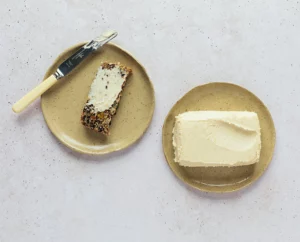
Simple Vegan Butter Made With Coconut + Almonds

TKTK TKTK TKTK TKTK

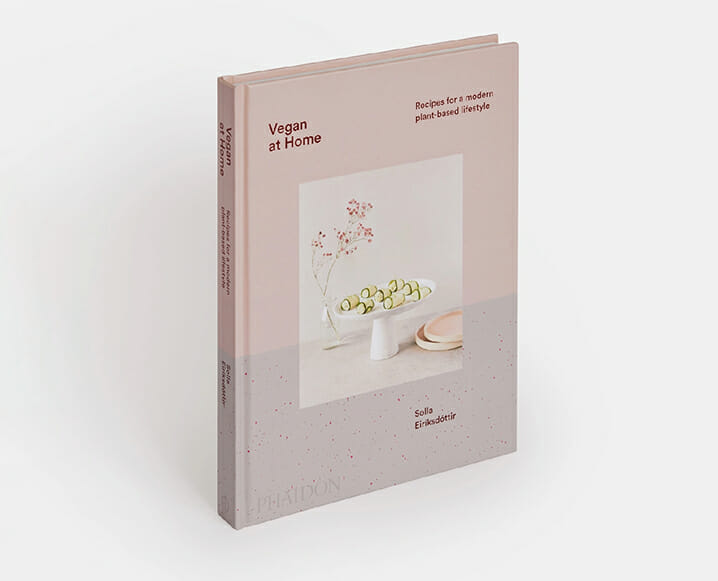
TKTK Vegan at Home: Recipes for a Modern Plant-Based Lifestyle by Solla Eiríksdóttir TKTKT (published in 2022 by Phaidon)
Vegan At Home cookbook
TKTKT

Vegan Butter With Coconut Oil And Almond Butter

This vegan butter recipe is smooth, rich, and creamy. It will never be identical to butter made from cow’s milk, but is a decent substitute. When making your own vegan butter, you can easily make it without having to use any artificial ingredients, unlike store-bought versions. This butter is excellent for spreading, baking, and frying.

Prep time: 15 minutes, plus 5 minutes standing, 5 minutes cooling, and 2 hours firming
Cook time: 5 minutes

Serving Size: Makes 2 cups plus 3 tbsp

Ingredients:
⅔ cup plant-based milk, such as almond or soy
2 tsp lemon juice
¼ cup avocado oil
1 cup minus 2 tsp coconut oil
3 tbsp almond butter
2 tsp nutritional yeast flakes
1 tsp sea salt flakes

Directions:
1. Bring the milk to a boil in a saucepan over medium heat, then reduce the heat and simmer for 3–4 minutes.
2. Turn off the heat and let stand for 5 minutes, then stir in the lemon juice. The milk will curdle when it cools down, about 5 minutes.
3. Put all the ingredients, including the curdled milk, into a high-speed blender and blend until smooth.
4. Pour the mixture into a 5 ½ x 3 ½ inch glass container with an airtight lid and chill, uncovered, in the refrigerator or freezer for 2 hours, or until firm and set.
5. If placed in the freezer, transfer to the refrigerator after 2–3 hours. This butter keeps for up to a month, covered, in the refrigerator.

TKTKT Photography © 2022 by Hildur Ársælsdóttir. Reproduced by permission of Phaidon

The post Simple Vegan Butter Made With Coconut + Almonds appeared first on The Chalkboard.


from The Chalkboard https://ift.tt/S4Mj0Lf
via IFTTT

Tuesday, January 3, 2023

9 Ways To Reduce Waste At Home This Year with Camilla Marcus of West~bourne

One part market-driven foodie, one part sustainability crusader, Camilla Marcus represents a groundswell in thoughtful consumerism happening in our culture now.

Can we eat well, dine out luxuriantly, and still quell the gobsmacking amount of waste produced in the process? Camilla is out to prove that it's possible, and help more of us make adjustments at home.

We asked Camilla to share this list of essential tips with us to help more of us reduce waste at home in 2023. Don't overlook their simplicity, and put  them to good use...

camilla marcus westbourne

9 Ways To Reduce Waste At Home with Camilla Marcus

SHOP LOCAL | Shop at your local farmer’s market, grow relationships with local vendors - support them and learn about the seasonal produce they grow. Be sure to carry extra tote bags in your car to avoid paper or plastic bags when out and about.

GET CREATIVE WITH LEFTOVERS | Repurpose your leftovers and create something entirely new (our west~bourne instant pie crust is naturally gluten-free and the perfect vessel for all of your veggie scraps!). Or, if you’re a restaurant, get creative with leftover produce to make a nutritious stock or soup special.

SHOP WITH A LIST | Take 5 minutes to draft up your shopping lists before heading to the market or store to eliminate waste when buying. Read: TCM Reader Poll: Your Top Healthy Grocery Shopping Hacks

BUY in BULK | Try bulk bin products and bring your own refillable containers. Read: The Sustainable Kitchen: 6 Incredibly Pretty Tools + Appliances We're Loving Now

CREATE AN EASY TO REACH COMPOST | Utilize a countertop compost bin for food scraps and recycle what you can’t. Read: Composting For Beginners: Everything You Need To Know To Get Started

DO YOUR RESEARCH | Support businesses that pride themselves on being sustainable – shop their products for healthy, local ingredients, formulations, planet-friendly packaging, etc.

UPGRADE FROM TUPPERWARE | Utilize reusable bags in the kitchen. I’m a big fan of Stasher bags to store leftovers or bring snacks on-the-go for my kids. Pro-tip: You can also store leftover wine in the freezer!  Read: How To Make Friends With The Freezer To Reduce Daily Food Waste

SHOP RESELLERS | Buy secondhand whenever possible, especially when it comes to children’s clothes as they grow out of things so quickly!

The post 9 Ways To Reduce Waste At Home This Year with Camilla Marcus of West~bourne appeared first on The Chalkboard.


from The Chalkboard https://ift.tt/b6vHSRK
via IFTTT

The First New Essential Fatty Acid Discovered In 90 Years – Meet C15:0

WE’VE COME A LONG way since skim milk dominated American fridges everywhere during the low-fat craze of the ‘80s. Our relationship with dietary fat has had a positive evolution over the years and scientific studies continue to improve our fundamental appreciation for the importance of this key macronutrient for our overall health. We’re big fans of the egg-yolk-loving, avocado-adoring and walnut-wellspring diet of 2022.

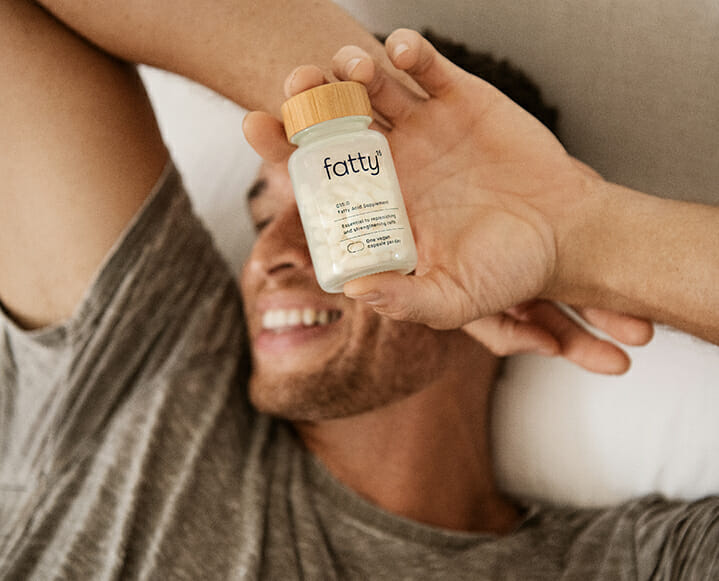
So say hello to a Pentadecanoic acid (C15:0) 2023. Just when we thought we had reached peak lipid, the first new Essential Fatty Acid (EFA) to be discovered after 90 years of the omegas (omega-3 and omega-6 to be specific) ruling nutrition guidance everywhere. Not only have studies shown this EFA to outperform omegas at the cellular level to reduce age-related breakdown, improve our immune function, and strengthen both our cardiovascular and immune systems, but it turns out C15:0 helps to repair mitochondrial function (the energy factories in our cells that can be a major cause of fatigue when they’re not working properly) AND has benefits for the endocannabinoid system (that wonderful world in our nervous system we’re just beginning to understand but celebrated for the benefits of stabilizing metabolism, mood and sleep patterns).
fatty 15 discount cod

With over 50 (and counting) peer-reviewed scientific publications consistently supporting the truly essential nature of C15:0 for actively repairing, restoring and revitalizing our long-term health at the cellular level, we’ve gone straight to the source to break this all down. We sat down with Dr. Stephanie Venn-Watson, DVM, MPH, the veterinary epidemiologist and public health scientist who made this discovery, strangely enough, through her work with dolphins.

We Have Dolphins To Thank For This Discovery

“Save the dolphins, save the world!” says Dr. Venn-Watson. “Older dolphins age a heck of a lot like older people. This includes things like high cholesterol, chronic inflammation, arthritis.” She was studying dolphins at the US Navy’s marine mammal program, specifically looking at how to help older dolphins live their longest, healthiest lives possible. Studying the diets of two cohorts in open ocean Florida and California, she discovered that one group of dolphins had less age-related disease than the other. As the fish in their diet was a little different due to the regions, Dr. Venn-Watson and her team were able to decipher that it wasn’t omega-3 that made the difference as they originally thought, but a specific fatty acid called C15:0. The molecule had been identified in 1942, but this was the first evidence that it could actually be an essential nutrient for mammals. C15:0 is naturally found in dairy, some fish and plants.

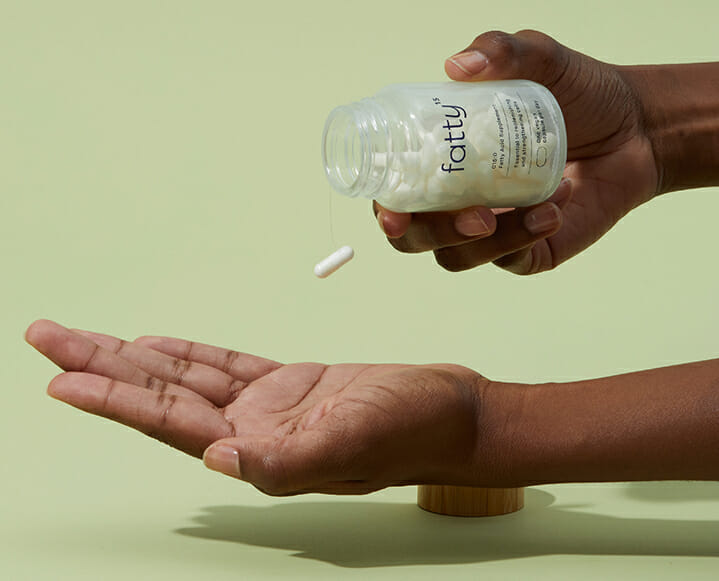
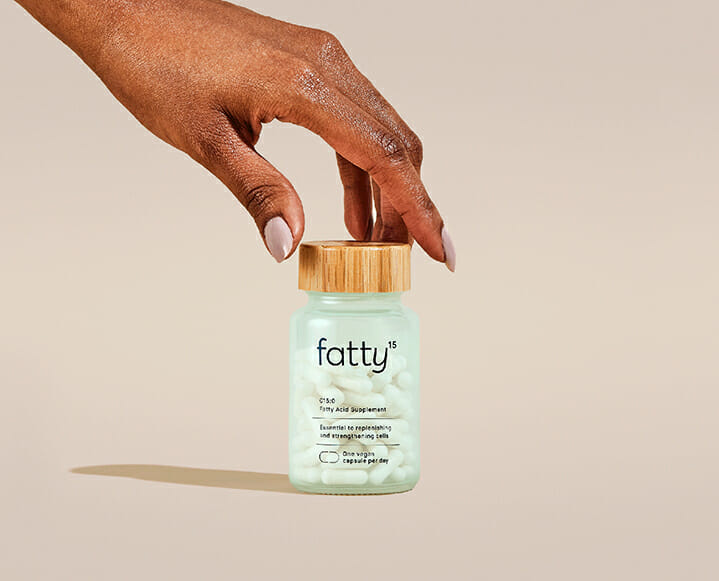
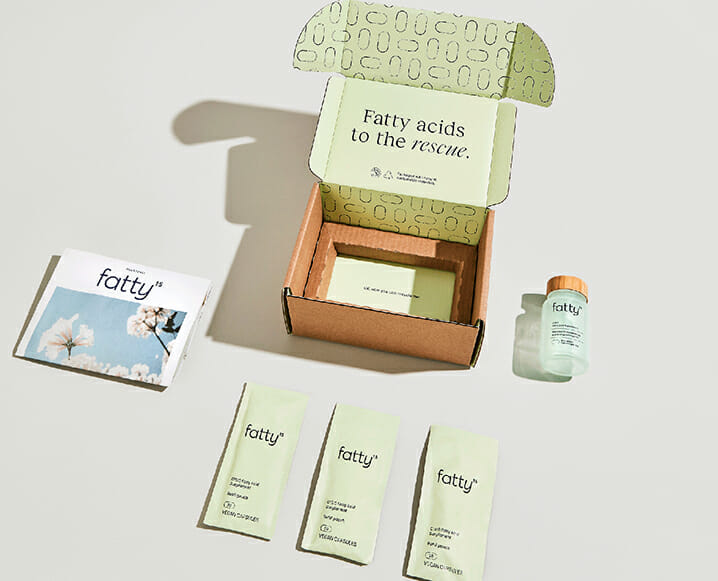
The next steps were clear for her, and her husband Eric, a Navy physician. They founded Seraphina Therapeutics and worked closely with the Navy to develop a pure, vegan-friendly C15:0 ingredient that they call FA15, and bring the first C15:0 supplement, fatty15, to the world.
C15:0 supplement

So What Makes A Fatty Acid Essential?

All of the macro and micro nutrients we consume in our diets are supportive of fueling the overall body process, but there are a couple of pretty important long chain fatty acids our bodies can’t manufacture on their own with just any lipid. This makes them essential and means our food is responsible for providing both omega-3 and omega-6, so it’s important for us to include things like salmon, walnuts, chia, and flax in our diets. Many of us don’t get enough in our diet so supplementing with things like fish oil is pretty common. But with this new discovery, that might not satisfy the complete picture. C15:0 has heart, immune, joint, tissue, tissue, lung benefits that omegas don’t have.

“Unfortunately, omegas are unstable polyunsaturated fatty acid oils, which are highly susceptible to lipid peroxidation—both in the bottle and your body. In comparison, C15:0 is a stable fatty acid that is resistant to oxidation and better protects your long-term health at the cellular level,” Dr. Venn-Watson explains. “When we tested our pure powder and vegan-friendly C15:0 ingredient against the purest and highest performing omega-3, we found that fatty15 had 3x the cellular benefits, repaired more cell types, and was safer for our cells compared to omega-3. As such, C15:0 is emerging as the essential, essential fatty acid we need to support our long-term health and wellness.”
fatty15 essential fatty acid

Our Cells Need Unsaturated And Saturated Dietary Fat

So that takes us back to the low-fat era, where general guidance was to cut back on full fat dairy and butter. “We are now understanding that C15:0 is critical to supporting our metabolic and mental health,” explains Dr. Venn-Watson. “In fact, a leading hypothesis is that nutritional deficiencies in C15:0 may be contributing to imbalanced metabolism, poor sleep, and higher anxiety. The great news is that replenishing our C15:0 levels can help us get back to our healthy baseline.”

But as we’ve all been embracing dietary fats more and more, the biggest fat myth we still need to bust is regarding saturated fat. “Not all saturated fats are bad for us. In fact some, like C15:0, are essential for our health. Numerous studies continue to show that proinflammatory even-chain saturated fats, like C16:0, are associated with an increased risk of metabolic and heart diseases. In contrast, C15:0 helps to calm our immunity and balance our metabolism, resulting in better long-term health.”

While this is great news for dairy lovers (Dr. Venn-Watson included: “I use 2% fat milk in my amaretto flat white every day, with a capsule’s worth of fatty15 melted in it (yum)!”), there are really only trace amounts in food and it’s even harder to get enough in a vegan or vegetarian diet. This is always where supplements come in handy, so fatty15 was created with this in mind. It’s vegan friendly, plus it’s pure C15:0 without any of the potentially harmful fatty acids like C16:0 that come along with the dietary sources. Plus, because food-based C15:0 is part of a more complex lipid structure it requires the right digestive enzyme mix to absorb. Fatty15 is ready to absorb and bioavailable.
new essential fatty acid discovered C15:0

C15:0 Has A Bonus Benefit For Our Mental Health

We’ve shared on the endocannabinoid system before, only recently discovered as a result of developments in cannabis use, and how it works to help regulate the body’s homeostasis and our nervous system. But this is the first time we’re seeing a relationship between C15:0 and the endocannabinoid system. “C15:0 helps our bodies make a second molecule, called PDC, which is the second-ever discovered full-acting endocannabinoid,” shared Dr. Venn-Watson. This ultimately supports the natural activation of receptors that regulate metabolism, immunity, mood, sleep and appetite. Initial reports have 3 out of 4 fatty15 customers finding deeper sleep, calmer mood, and even less cravings for snacks between meals.

So to recap, this new Essential Fatty Acid has an exciting laundry list of benefits:

+ Strengthening our cells (and us) against age-related breakdown
+ Repairing mitochondrial function, to keep our body’s energy-producers going
+ Naturally activating receptors that regulate our metabolism, immunity, mood, sleep and appetite
+ Supporting our DNA repair shops, which keep our cells functioning well, especially as we age
+ And so far reported long-term benefits include healthier skin and hair, as well as metabolic, heart, immune, red blood cell and liver supporting benefits.

fatty15 supplementSince it’s the first time in our lifetimes that a new supplement or vitamin has been the subject of such a game-changing discovery, we had to make sure you could try it for yourselves. Use code CHALKBOARD15 for 15% off a 90 day subscription. And please, report back! We can’t wait to watch the future benefits of this essential fatty acid grow.
fatty 15 discount codThese statements have not been evaluated by the Food and Drug Administration. This product is not intended to diagnose, treat, cure, or prevent any disease.

This story is brought to you in partnership with Fatty15. From time to time, TCM editors choose to partner with brands we believe in to bring our readers special offers. All material on The Chalkboard Mag is provided for educational purposes only. Always seek the advice of your physician or another qualified healthcare provider for any questions you have regarding a medical condition, and before undertaking any diet, exercise or other health-related programs.

The post The First New Essential Fatty Acid Discovered In 90 Years – Meet C15:0 appeared first on The Chalkboard.


from The Chalkboard https://ift.tt/dUhQqBJ
via IFTTT

Monday, January 2, 2023

Herbalism For Skeptics: 10 Impressive Plants According To Ethnobotanist Molly Helfend

Ethnobotany is the study of how people of a particular culture and region make use of indigenous, or native, plants. Molly Helfend is an herbalist with a Masters in Ethnobotany who travels the globe as a clinical herbalist using her cultural competency to influence work across the USA, Australia, New Zealand, England, Indonesia and beyond.

Whether through herbalism, the research of indigenous plants, or the healing practices of being a practitioner, Molly has educated countless people about how to improve their own health and work with plants. As there are many so many raised eyebrows about any healing modality outside the bounds of the prescription pad these days, we asked Molly to talk to us about herbalism for skeptics, beginners and the prescription-devoted....

Who hasn't sipped on a warming cup of ginger root or peppermint leaf tea when they have struggled with digestive ailments? Or perhaps tried a chamomile flower infusion to help drift into a nightly slumber? Or even sniffed the sweet floral scent of lavender essential oil, only to feel calm and tranquil afterwards?

These are not old wives tales. These are scientifically backed herbal remedies that help restore the human body. Those old healing stories passed down by grandmothers actually have science to silence those non-believers to actually believe in herbal medicine. And so, since this article is written for the skeptics—those who might reach for the Advil bottle before digging deeper into what the symptom is masking or trying to say, let's talk about...

Herbs In Western Pharmaceuticals

Before we get deeper, I do not want to discredit pharmaceutical drugs. I will never negate the advances of modern medicine and how they have shaped people’s lives for serious or life-threatening conditions. So, if you are happy and healthy taking your medication, please continue using. I encourage those to use this article as an educational tool to learn that there are natural alternatives that can promote health and wellness.

For those that rely heavily on Western science, did you know that there are over 100 active ingredients derived from plants that are used for modern drugs and medicines? Active plant compounds, or phytochemicals, are responsible for some of the most important medical advancements of our time. They have been synthesized with chemicals to create the drugs we all know and, well... sometimes... love.

“About 200 years ago, the first pharmacologically active pure compound, morphine, was produced from opium extracted from seed pods of the poppy Papaver somniferum. This discovery showed that drugs from plants can be purified and administered in precise dosages regardless of the source or age of the material (Rousseaux and Schachter 2003; Hartmann 2007). This approach was enhanced by the discovery of penicillin (Li and Vederas 2009).

With this continued trend, products from plants and natural sources (such as fungi and marine microorganisms) or analogs inspired by them have contributed greatly to the commercial drug preparations today. Examples include antibiotics (e.g., penicillin, erythromycin); the cardiac stimulant digoxin from foxglove (Digitalis purpurea); reserpine, an antipsychotic and antihypertensive drug from Rauwolfia spp.; and antimalarials such as quinine from Cinchona bark and lipid-lowering agents (e.g., lovastatin) from a fungus (Rishton 2008; Schmidt et al. 2008; Li and Vederas 2009)...” (Wachtel-Galor, S., & Benzie, I., 2011).
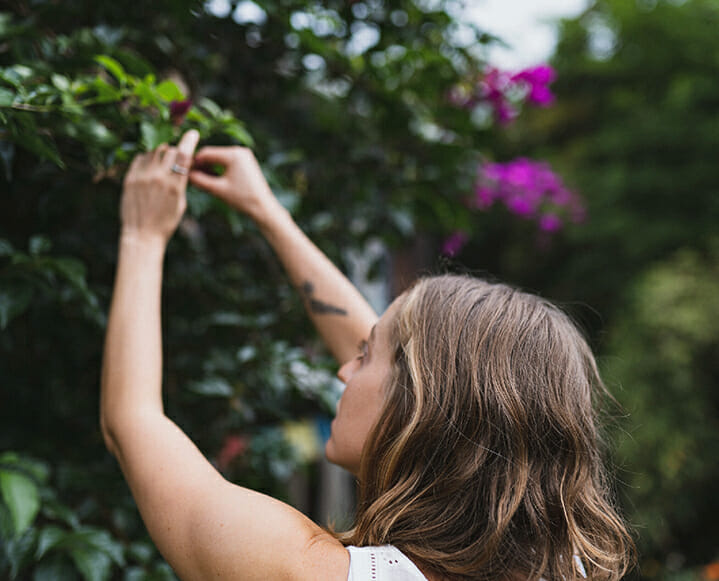
Herbalist Molly Helfund

So, why don’t we simply use herbs and stop the synthesizing of chemicals? Good question.

Plants have safely been used for thousands of years, with origin of use dating back to almost 60,000 years ago. But, the truth is with the advent of modern technology and capitalism, many herbs have been outlawed or ignored because they threaten the profits of transnational pharmaceutical corporations. And sadly, with this, has come the exploitation of plants and indigenous cultures.

But, if a skeptic is looking for hard facts, in many cases, herbs can be more easily assimilated in the body because they are biologically more natural complex compounds. This means the body can recognize and absorb them with fewer side effects compared to pharmaceuticals. “Herbs act on multiple targets, unlike some synthetic drugs that target only one molecule while their effects on other molecules in the pathways or systems are unknown.” (Tao, 2005). This is where the question of safety comes into play with prescription drugs since they can cause chemical imbalances and severe side effects in the body.

Another reason to trust herbal medicine is because it focuses on the overall chronic or acute condition of the individual. It gets to the root cause of an ailment, rather than the allopathic Western approach, which simply minimizes symptoms. A trained herbalist is able to uncover the root of a disease by addressing the entire human being, looking into the five components of a person’s health - physical, mental, social, emotional and spiritual. Herbs can then be used to gently support the body to boost immunity, manage stress, lower inflammation, support liver detoxification, and nourish tissues to name a few. Herbalism is a safe way to enhance the span and quality of life.

Here is a list of herbs that would quell any skeptic’s suspicion...

White Willow (Salix alba): Did you know that aspirin is derived from white willow tree bark? These trees grow a bark that contains the chemical called salicin, which has analgesic effects. Once salicin is absorbed in the body, the chemical breaks down to salicylate derivatives, which help to relieve pain and reduce inflammation. The effects of white willow take longer than aspirin to kick in, but they tend to last longer. The bark also causes fewer adverse reactions than aspirin’s severe side effects.

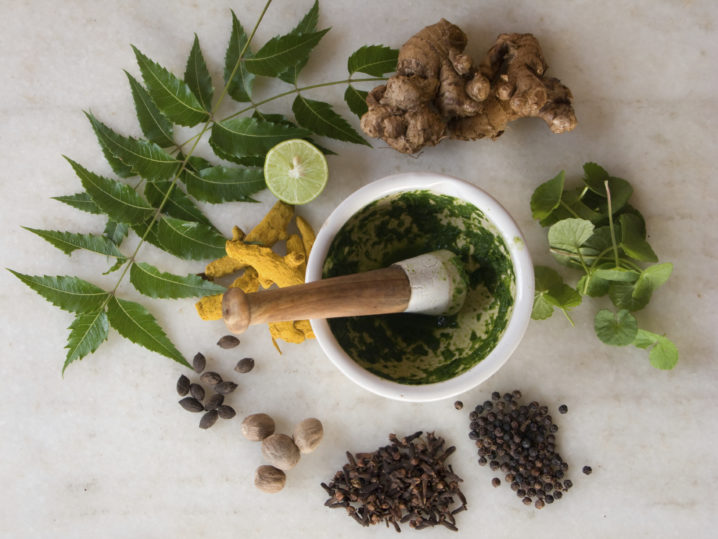
Turmeric (Curcuma longa): Turmeric root is not a new herb to be introduced. It has been proven to be incredibly useful for athletic recovery and overall inflammation. This is because of its main active ingredient called curcumin. It is a very strong antioxidant that is bioavailable when consumed with black pepper (Ciper nigrum).

Fun fact: black pepper contains an ingredient called piperine that enhances the absorption of curcumin by 2,000%. Overall, turmeric is great for anything in the body that’s inflamed and causing pain. Turmeric also can increase blood supply and oxygen flow throughout the body, making it a great option for those with poor circulation or sluggish organs.Herbs and Spices
Cannabis (Cannabis sativa, Cannabis indica): With the advent of recreational and medicinal legalization, cannabis is slowly unraveling its stigmatization. But, many forget that cannabis is more than “getting high”. It can be part of a healthy herbal routine and helpful for a variety of conditions. This is because cannabis is made up of more than 120 components, which are known as cannabinoids.

Cannabidiol (CBD) and tetrahydrocannabinol (THC), are the two most well-known and researched cannabinoids. Cannabis is incredible at treating nausea, reducing inflammation, preventing and controlling seizures, fighting cancer, promoting sleep, and managing pain and anxiety disorders. Nowadays, cannabis can be found in a variety of modern health products such as female sexual lubrication, sleep tablets, athletic pain cream, and nausea drops.

Maitake (Grifola frondosa): Commonly known as “hen of the woods”, many would recognize this mushroom for its umami cooking flavor and fruiting body resembling fluffed chicken feathers. However, like many medicinal mushrooms, maitake is renowned for its powerful immunomodulating properties. This mushroom contains polysaccharides that regulate the immune system and enhance the activity of T cells, B cells, and macrophages (Mayell, 2001). Maitake’s beta-glucans also act as immunostimulating and protective compounds. There also are ample studies that suggest that maitake possesses anti-cancer and anti-tumor benefits. In fact, the mycelium have been found to produce an array of low molecular weight sugars and exopolysaccharides, of which activate immune responses to kill lung and breast cancer cells (Helfend, 2021).

Senna (Cassia angustifolia): Struggling with constipation? Don’t reach for the Ex-Lax. The solution is senna. This ayurvedic herb is a natural alternative to chemical pharmaceutical laxatives. Senna leaf and pods contain compounds called sennosides, which activate peristalsis and direct water back into the large intestine. This lubricates the stool and can help produce a bowel movement in 6 to 12 hours after ingestion. Senna is considered safe with minimal side effects to consume for short periods and at moderate doses.

Feverfew (Tanacetum parthenium): For anyone that suffers from chronic headaches and migraines, feverfew is here to help. It has a proven track record of success as being more effective than many of the nonsteroidal anti-inflammatories on the market. For centuries, it has been used to cure fevers, headaches, stomachaches, toothaches, and much more. Feverfew contains compounds known as parthenolides, which ease migraine pain by combatting the widening of blood vessels in the brain. There are numerous scientific studies to back the data, including a systematic review completed by the School of Postgraduate Medicine and Health Science in the UK, which found that feverfew is not only effective in the prevention of migraines, but also doesn’t pose any major safety concerns.herbs
Ashwagandha (Withania somnifera): There are probably many seasoned health and wellness enthusiasts who are tired of being inundated with the buzzword adaptogen. But, for those who haven’t heard of this class of herbs, adaptogens help the body adapt to stress, with one of the finest being Ashwagandha. Its use dates back over 6,000 years ago in ancient text appearances as a rejuvenation cure-all herb, especially for its ability to enhance male fertility, benefit joint inflammation, and offer the strength and sexual virility of a horse. Its alkaloids, steroidal lactones, and saponins contribute to its many benefits not limited to managing stress and anxiety through reducing cortisol levels, healing adrenal fatigue, balancing hormones, regulating the sleep cycle, and improving oxygen flow. It also enhances immune function by increasing immunoglobulin production.

Arnica (Arnica montana): For centuries, Arnica has been a popular homeopathic herb remedy typically used as an external healing balm, typically in the form of liniments, poultices and salves. Although it can be taken internally as well, it is one of the best remedies to soothe sore muscles and joints, reduce pain and inflammation from sprains and strains, and to reduce bruising and edema due to bruises and fractures. Many athletes turn to this plant for its healing abilities, due to its anti-inflammatory compound sesquiterpene lactones, specifically helenalin.

Wild cherry (Prunus serotina): Just as delicious as it sounds, wild cherry bark, especially in syrup form, is actually one of the best natural cough and overall respiratory remedies. Wild cherry has expectorant, antispasmodic and anti-inflammatory properties especially from its cyanogenic glycosides, and more specifically prunasin. It works when prunasin and special sugar molecules enter the lungs to increase respiration, while the tannins loosen mucus to dry the sinuses and decrease phlegm. Get ready for a purple tongue from the deep cherry colors!

Plantain (Plantago coronopus): Ever been out hiking and someone cut themselves, wishing there was a way to stop the bleeding faster? Well, the answer is growing alongside almost any road. Simply chew up a good ol’ handful of plantain leaves and put it on the wound to create a natural poultice. This happens from its constituent called allantoin, which promotes tissue regeneration. Plantain are humble weeds that promote antiseptic, antimicrobial, germicidal and antibacterial properties. It's a go-to for any kind of bite, irritation, rash, sting, or wound. Plantain has a unique ability to draw poisons and toxins out of the body, making it an exceptional option for treating poisonous bites and stings when someone is stuck with no other treatments out in the wild.

Please consult your medical professional before treating yourself or others with this or any other herbal remedy.

Read Next: 8 Tips For Healing PCOS: How One Woman Reversed Her Diagnosis

The post Herbalism For Skeptics: 10 Impressive Plants According To Ethnobotanist Molly Helfend appeared first on The Chalkboard.


from The Chalkboard https://ift.tt/hHPOlEA
via IFTTT

Sunday, January 1, 2023

Herbivore Botanicals Founder Alex Kummerow On Skincare Trends + Moving To Kauai

Alex Kummerow is the co-founder of Herbivore Botanicals. Like so many on the West Coast this year, Alex just moved to the island of Kauai. We can't say we're surprised to find that Alex is after a deeper connection to nature, as his products have accomplished that for so many skincare devotees on their journey to 'detox' their personal care routines with natural products.

Herbivore is on the shortlist of skincare brands who really brought clean beauty into the mainstream over the last decade. Blame it on their eye-catching graphic packaging if you will, but it's the cult-obsession natural formulas that have given the brand staying power.

We talked to Alex about his journey with Herbivore, what's next in clean beauty, and his recent move to the Hawaiian Islands below...

Herbivore in a nutshell: A pioneering brand in the clean beauty category with a focus on active botanicals and a sensorial experience.

Herbivore product that would convert anyone: Our Lapis Facial Oil sparks intrigue with its natural deep blue hue derived from the blue tansy flower and works wonders to clear blemishes, reduce redness, and give the skin a fresh dewy look. I remember spending countless hours on the bench formulating this one to get it just right and it is my personal favorite to this day.hawaii based herbivore botanicals

My take on wellness: Wellness is a balance of mind and body health. I think as a society we focus a lot on exercise and a clean lifestyle but where I see us falling short is mental capacity, awareness and dealing with societal pressures. There is this 'grind mentality' and pressure to be successful that is slowly breaking us down.

For many years I overworked myself, and though I took good care of my body, I suffered. I couldn't say no to an opportunity and I would beat myself up if I wasn't working hard around the clock. Taking a step back from the grind for a better life-work balance to me was more powerful than any exercise routine or diet modification I have ever made.

the Health need that inspired you to build the brand: Though Herbivore was started out of a love to create and a passion for plants, I was amazed to find that my eczema, which I had been struggling with for years, completely went into remission after using our initial products. I had tried so many OTC treatments to no avail. It was at this moment that I truly understood a less is more philosophy when it comes to the skin and to include only high-quality and naturally-sourced ingredients in our formulas.

Aesthetic has played such a huge role in clean beauty going big. Agreed? Talk to us about that… I like to think that we played a part in this movement. When we started our journey in beauty, skincare felt so sterile and uninspired. Products were designed in a way that felt like something you would want to throw in a drawer where nobody would see it. We wanted to make something beautiful that someone would be excited to use and display. It was about creating an elevated experience beyond the benefits that would please each and every one of the senses.

we are devoted to the Blue Tansy Mask! Anything you'd like to say about the product? I remember getting my hands on Blue Tansy oil almost ten years ago. It had not yet hit the US market and we had to have it imported in from Morocco where it natively grows. We had been experimenting with a few different blue oils which contain a powerful anti-inflammatory component, azuline, when formulating Blue Tansy mask and Lapis oil. They were all quite impressive with their performance but when we received the blue tansy oil, we knew it would be a game changer. It reduces redness and calms the skin like nobody's business!herbivore botanicals founder

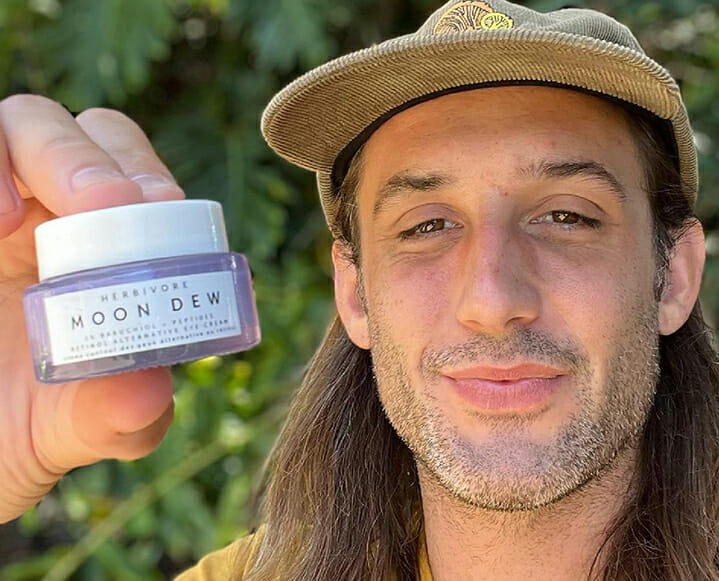
And the new eye cream. There are so many eye creams out there, why this formula? Our new Moon Dew eye cream contains anti-aging powerhouse bakuchiol which is an ingredient that shares the same performance data as retinol. The best part is that bakuchiol is gentle enough to use around the eyes but retinol is not. It has been helping a lot of people with crows feet, puffiness and even dark circles. The reviews have been awesome -- I’m very proud with how Moon Dew turned out.

Other wellness products you're a big fan of: I’ve recently been using Cult + King's Hair Tonik which is a lightweight leave-in conditioner and treatment that leaves your scalp with a minty tingle. It’s so refreshing before bed on hot Hawaii nights.

What inspired the move to Kauai? After spending my whole adulthood in Seattle, I was ready to try something new. I had been coming to Kauai for about four years prior to moving here in the winters to formulate products. There is just so much plant life that one can not help but be inspired. When the pandemic hit, we decided we should go remote with the company. We hired talent in LA, SF and NYC and one day it hit me that I could live anywhere I want. I took the plunge and left everything I knew, just to be surrounded by plants.

So many of our West Coast friends have moved to Hawaii as well. What do you think this is all about, really? It is a place that truly allows you to slow down. Pair that with organic farmers markets seven days a week, spiritually rich communities, and the ability to be active outdoors 365 days a year and you have something really unique. Apparently, when people from the West Coast come here, although they initially see it as their idea of Eden, ultimately they do not last more than a year -- they get island fever and want to be back in the hustle of the mainland.

Best/worst part of Kauai so far: The best part of living on Kauai is the beauty I get to experience every single day. It gives me such an appreciation for our beautiful planet and ignites the fire within me to do what I can to continue to create change through environmentally conscious initiatives. I’m expecting a baby in a few short weeks and I can not wait to spend as much time as I can with them outdoors and to share my love for nature with them.

The worst part has to be a toss up between the giant centipedes, which I do appreciate until they are in the house, and how early everything closes.

What are your thoughts on the clean beauty space currently? Are you concerned about green washing? Do you think the movement will become the new norm? I do believe that clean beauty is here to stay. Now that we know the dangers of the many ingredients used in previous decades, I do not believe that we will go back to using dangerous toxins on our bodies.

I do see green washing happening in the beauty space today. The reality is that high quality, clean ingredients are expensive for brands to use and formulate with. Some companies do not want to pay that premium to maximize profits. I often see it in trend-focused brands that target Gen Z with marketing around clean and sustainable missions while packaged in plastic bottles and underselling competitors by 50%. Use your gut when questioning a brand's integrity, you are probably right.

Important trends in skincare + wellness: We have always chosen to use natural ingredients when formulating our products which means ingredients derived from natural sources whether that be plants or minerals, not synthetically made in a lab. We feel confident in the safety of the ingredients that we use and the biocompatibility these ingredients have with our body seeing that we too are from nature. That said, I am excited to see technology evolving to create bioidentical synthetics that perfectly mimic these ingredients found in nature and made through sustainable manufacturing practices. This could minimize the footprint on the natural world and reduce the amount of resources used to bring these ingredients from plant to product. I am still deep in research about these processes but I am open to anything if it is safe for our customers and better for the planet.

The post Herbivore Botanicals Founder Alex Kummerow On Skincare Trends + Moving To Kauai appeared first on The Chalkboard.


from The Chalkboard https://ift.tt/6PtsiNd
via IFTTT