Wednesday, March 23, 2022

A Santa Barbara Citrus + Avocado Salad With Pistachio Dukkah

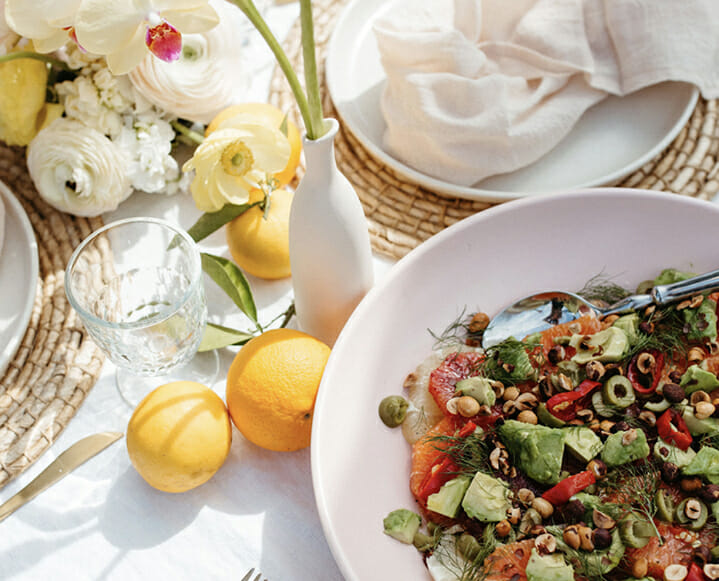
Spring has sprung and we're reveling in the mood. Earlier this month, manifestation coach, Jessie de Lowe hosted the beautiful lunch shown here that gave us all the feels for the coming season. The menu, made by west-bourne's Camilla Marcus (shown above), showcases the best that Santa Barbara has to offer in this transitional season. Using her own pistachio dukkah as inspiration, Camilla whipped up this simple, but stunning salad, reflecting her sustainable approach to food overall.

santa barbara patio

Much of the produce used in this drool-worthy spread was provided by Apeel, a sustainable brand we first met at this delicious event. Apeel makes an innovative edible 'peel' for produce that helps avocados and the like stay fresher longer, reducing food waste and elongating shelf life in a way that's both natural and safe. 
spring party decorations
Because we know you'll ask, this incredible picnic set-up -- tassled umbrellas included -- was provided by Santa Barbara Picnic Co. The stunning, modern florals are by  Forma Floral.

Camilla's recipe proves that fresh, whole produce can stand (nearly) on its own. We adore this dish's unique combination of citrus fruit and olives dressed in herbs and spices that only inspire our condiment obsession further! Try it at home as the weather warms and let us know what you think...

spring avocado salad

A Citrus + Avocado Salad with Pistachio Dukkah Salsa Verde

Ingredients: 2 blood oranges (rind removed, sliced into rounds) 2 Cara Cara oranges (rind removed, sliced into rounds) 1 Oro Blanco grapefruit (rind removed, sliced into rounds) 1/4 cup Castelvetrano olives, rough chopped 1/2 cup avocados, cut 1 Meyer lemon (juice + zest) 1/2 cup chopped herbs (chives, mint, basil, fennel fronds) 1 tbsp dukkah (I used west~bourne pistachio dukkah!) 1 tbsp pickled Calabrian chiles 1/2 cup olive oil 1 small shallot, minced 1 head garlic, finely grated salt + pepper Instructions: To make the dukkah salsa verde: Combine garlic, shallot, lemon juice and zest and let sit for a few minutes. Slowly whisk in olive oil to combine and then fold in chopped herbs (save a pinch full for garnish). Season with salt and pepper to taste. Add in 1 tbsp west~bourne pistachio dukkah and set aside. Layer the sliced citrus along the bottom of your plate. Sprinkle chopped olives, avocado, and pickled chiles around. Spoon over the dukkah salsa verde and top with herbs and cracked black pepper.

Want more? Grab host, Jessie de Lowe's ridiculously delicious toasted hazelnut milk here! 

The post A Santa Barbara Citrus + Avocado Salad With Pistachio Dukkah appeared first on The Chalkboard.


from The Chalkboard https://ift.tt/CKcgLV3
via IFTTT

Tuesday, March 22, 2022

Candice Kumai’s Green Lasagna With Kale Marinara Sauce

Plans to Cozy up this weekend? Before you dive headfirst into a vat of mac 'n cheese (unless it's this insanely healthy version), consider cleaned up comfort food recipes like this one from Candice Kumai's Clean Green Eats. Candice's nutrient-dense, kale marinara sauce is a wonder-working recipe we're relying on to keep us cozy.

We also love the idea of making this clean, green lasagna even healthier by swapping out the ricotta for cashew cheese! Nom nom...

Candice Kumai's Clean, Green Lasagna

Serves 6

INGREDIENTS:

olive oil cooking spray, for the baking dish
2 Tbsp extra-virgin olive oil
1⁄2 yellow onion, finely chopped
4 cups sliced cremini mushrooms
2 cups shredded lacinato kale leaves
2 cups part-skim ricotta cheese (or try making cashew cheese!)
3 cups Homemade Kale Marinara Sauce (recipe below)
6 no-boil lasagna sheet noodles

DIRECTIONS:

Preheat the oven to 375 ̊F. Lightly spray a 9×13-inch baking dish with olive oil cooking spray and set aside.

In a large sauté pan, warm the olive oil over medium-low heat. Add the onion and cook until translucent, 6 to 8 minutes. Add the mushrooms and shredded kale, and cook for an additional 5 minutes, stirring occasionally. Remove from heat, and let cool slightly.

Put the ricotta cheese in a large bowl, and, using a spatula, gently fold in the cooled mushroom-kale mixture until completely incorporated.

Assemble the lasagna

Using the prepared baking dish, assemble the lasagna in six layers as follows: 1 cup Homemade Kale Marinara, spread evenly; 3 lasagna noodle sheets (arranged in a single layer); 3⁄4 cup of the kale-mushroom-and ricotta mixture, spread evenly. Repeat the layering a second time, then top with the remaining kale-mushroom-and ricotta mixture, and finish with the grated Pecorino or Romano on top. Cover with aluminum foil, and bake in the preheated oven, on the middle rack, for about 25 minutes.

After 20 minutes have passed, remove the foil from the baking dish and move the baking dish to the top rack. To finish, bake, uncovered, for another 5 to 10 minutes, depending on how you love your lasagna finished.

Remove the lasagna from the oven and cool for 5 to 10 minutes before cutting and serving.

Candice's Kale Marinara Sauce

Yields 4 cups


INGREDIENTS:

2 Tbsp extra-virgin olive oil
1 yellow onion, finely chopped
4 garlic cloves, finely minced
Two 28-ounce cans unsalted organic crushed tomatoes
1⁄4 cup fresh oregano leaves
1⁄4 tsp sea salt
2 Tbsp balsamic vinegar
1 cup finely julienned lacinato kale leaves

DIRECTIONS:

In a large stockpot, warm the extra-virgin olive oil over low heat. Add the diced onion and cook for about 10 minutes, or until soft. Add the garlic and sauté for another 3 minutes on low heat.

Add the crushed tomatoes and fresh oregano leaves and give the sauce a good stir. Cook on low for about 2 hours, stirring occasionally to prevent burning.

When the sauce has reduced and thickened, finish with the sea salt, balsamic vinegar, and julienned kale. Simmer for an additional 5 minutes and serve or use in recipes as needed.

Recipe adapted from Candice Kumai’s book, Clean Green Eats

This story first ran a few years back, but we loved it so much we brought it back. Why stop here? Keep the cozy going all week with a few more cleaned up comfort foods like this Vegan Mac N Cheese, a Dairy Free Mushroom Risotto or this Breakfast Bake  

The post Candice Kumai’s Green Lasagna With Kale Marinara Sauce appeared first on The Chalkboard.


from The Chalkboard https://ift.tt/nNxlSJq
via IFTTT

How To Build A Meal In A Bowl: Fridge-To-Face In 7 Steps

There are days for Ottolenghi tarts and gluten-free baking experiments and then there are the other 364 in which we're building bowls and smoothies based on just one equation: what's in the fridge. Elise Museles of Kale & Chocolate is on the exact same page, and is dishing out perfect tips on building a meal in a bowl quicker and easier than ever...

Creating simple and beautiful meals is my passion.

I’m certainly not a gourmet chef. I don’t wield a knife like the culinary greats. I don’t care about the difference between bâtonneting & chiffonading. I’ve never spent years sweating it out as a sous chef in a Michelin-starred restaurant.

The truth is that most of the time I don’t even cook with a recipe. Collecting new ingredients and precisely following instructions is a complete drag. 

Instead of feeling strained with my overloaded schedule, I decided to hop on life’s roller coaster and find a way to create nourishing meals that fit seamlessly into the day-to-day madness. The secret? A “no recipe” approach to assembling beautiful meals.

natural harry nourish bowl

the natural harry nourish bowl

All you need is to set aside some time to shop and then prep your food in advance. (I proclaim Sunday “kitchen fun day” – good music, good conversation, and lots of chopping, steaming, stirring, grilling and roasting.) When you're exhausted, hungry and ready to eat throughout the week, all your food is waiting for you to be thrown together into a bowl. You’ll never have to wonder, “what’s for dinner” again.

Here’s my simple guide to building balanced, nourishing and delicious meals in a bowl that will be your saving grace:

How To Build A Meal In A Bowl: Fridge-To-Face In 7 Steps

Bowls are like the “little black dress” of meal planning. Your bowl is filled with staples like whole grains, protein, healthy fats and tons of veggies. Then you add a few key “accessories” to spice it up.

To make sure that the bowls are balanced in flavor, texture and nutrition, choose at least one ingredient from each category. (Bonus points for going heavy on the veggies.)

START WITH A BASE OF LEAFY GREENS:

Spinach, kale, shredded Brussels sprouts, Swiss chard, Mustard greens, arugula, bok choy, pea shoots

ADD UNLIMITED RAW, ROASTED, STEAMED OR GRILLED VEGGIES:

Carrots, peppers, beets, roasted eggplant, asparagus, Brussels, broccoli, cauliflower, bean sprouts, green beans, mushrooms, zucchini, tomatoes, shredded cabbage, onion

TOSS IN A GRAIN OR STARCH:

Quinoa, brown rice, wild rice, faro, butternut squash, sweet potatoes, soba (buckwheat) noodles

INCLUDE PROTEIN:

Chickpeas, black beans, lentils, salmon, tuna, grilled chicken, edamame, veggie burgers, hard-boiled eggs

DON’T FORGET THE HEALTHY FATS:

Seeds, nuts, avocado, drizzle of pumpkin, coconut or olive oil

TOP IT OFF WITH DRESSINGS + SAUCES:

Hummus, lemon/lime squeeze & olive oil, tahini, salsa, pesto, miso ginger sauce, tamari

EXTRA CREDIT FOR SOME NUTRITIONAL BOOSTS:

Fresh herbs, hemp seeds, sesame seeds, a fried egg (it’s a thing!), nutritional yeast, seaweed

The post How To Build A Meal In A Bowl: Fridge-To-Face In 7 Steps appeared first on The Chalkboard.


from The Chalkboard https://ift.tt/dheA3UK
via IFTTT

Monday, March 21, 2022

5 Ways to Prevent Mold in the Kitchen According To the Mold Medic

Mold toxicity can be tough to diagnosis and even more difficult to treat, especially if mold in your own home is at fault. As always, prevention is key -- and learning to properly care for your home's kitchen could help. 

Michael Rubino specializes in working with people who are immunocompromised or have acute and sustained reactions to mold exposure, helping thousands of families heal, working to bring broader awareness to the medical systems and is the the author of an accessible book on the topic, The Mold Medic

In his piece below, Rubino details practical tips to help prevent mold in the one of the home's most vulnerable spaces, the kitchen....

Even for those who hate cooking, kitchens are happy places within the home. They’re the places we go hunting down a midnight snack, make lunch for the family, and let's not forget, the keeper of that beautiful coffee machine. We’re not the only ones in love with these indoor spaces, though. Mold, that fungus among us, loves these rooms as well, and there just so happens to be a million and one places for it to sneakily start growing.

With its ability to impact our health from prolonged exposure, knowing where to look for mold and how to prevent it from growing in the first place are phenomenal ways to help make sure the hearts of our homes remain safe and healthy spaces.

The Health Impact of Mold at Home

There’s a common misconception that since mold is everywhere, exposure to this indoor contaminant isn’t a big deal. Yes, it’s true that the average individual will encounter a few moldy particles throughout the day while driving to pick up the kids from school or walking into work. With so many species and the ability for spores to zip anywhere, it’s an impossible encounter to avoid. However, experiencing indoor mold growth isn’t quite the same as encountering mold in nature.

Keep in mind that the particles in question are tiny. Mold spores can range from 2–4 microns, a unit of measurement that’s one-millionth of a meter. Some species of mold also release microscopic toxins called mycotoxins when they feel threatened, which are even smaller and average around 0.1 microns. Their teeny size means that they’re not only ingestable, but they can also fly right into our respiratory system when we breathe.
mold toxicity at home

In an everyday encounter, the immune system will quickly and efficiently get rid of any of these foreign particles that enter the body. When mold is growing in locations such as our kitchens, though, our bodies aren’t just facing a few particles throughout the day. As soon as that mold starts growing, it releases spores and sometimes mycotoxins into that indoor space, many of which remain trapped within the walls of the home.

This situation lowers the indoor air quality, contaminates the surfaces within, and constantly batters the body of anyone living inside with foreign particles. The body will attempt to keep up, but the immune system can eventually get run down and malfunction, leading to a long list of potential adverse health reactions. Not everyone responds to mold exposure the same way, though. While one person may have the occasional runny nose, another may develop 11 symptoms. Factors such as genetics, preexisting conditions, species of mold, and the presence of mycotoxins all play a role.

The health implications of living in a toxic environment are why it’s so important to actively work to prevent mold from taking root in places like the kitchen. That involves removing the opportunities for growth, checking the places that can allow for hidden colonies, and actively eliminating mold spores as well.

5 Important Ways to Prevent Mold in the Kitchen

The 100,000 species of mold in the world reproduce by creating microscopic spores and releasing them into the air. These spores ride the air current to wherever that leads, oftentimes right through our own front door. Like the seeds of a plant, these spores will remain tiny particles until they land on a surface with the elements they need to transition into a living colony.

The two main components needed for a spore to begin living are food and moisture. Both of which happen to be in abundance in our kitchen. Food sources abound, from dust and particles from cooking to other random organic matter introduced every day. Moisture gets added to the picture by things such as cooking, the sink faucet, dishwasher, cooking, coffee pot, and/or tea kettle.

If these elements are available on a surface for 24–48 hours, a mold spore can start to grow. Once it begins to colonize the space, it will start the reproduction cycle and begin releasing spores into the surrounding area.

Here are the top five places to get started on mold-proofing any kitchen...

01. Underneath the Sink and Cabinets

Chances are, underneath the sink and inside cabinets don’t get a whole lot of time in the spotlight. This can allow for a small hidden leak to go undetected for some time, or moisture from high humidity to build up, giving a lucky mold spore the perfect place to call home. Particles such as dust and all sorts of yummy organic matter can also build up, providing the perfect food source.

Regularly inspecting and cleaning these spaces can help prevent a moldy problem from occurring. To check this off of that kitchen maintenance list, follow the steps below every month or so:

Remove all items from the cabinets
Check the entire interior with a flashlight
Throw on some gloves
HEPA vacuum all surfaces inside (these machines are required to remove at least 99.7% of particles up to 0.3 microns in size)
Spray white vinegar or a botanical cleaning product onto a microfiber rag (these are 100 times better at wiping away small particles than regular rags)
Wipe all surfaces inside and outside of the cabinet
Allow the interior to dry completely before replacing everything and closing the door

Extra tip: To further prevent mold in cabinets, be sure to keep indoor humidity levels around 30-50% and focus on creating airflow by turning on the exhaust fans while cooking. Also, never use bleach to get rid of or prevent mold growth. It won’t properly remove particles from the surfaces, leaving contamination behind and allowing exposure to continue.

02. The Sink Faucet

Sink faucets are the rockstars of the kitchen, but they create a constant water source for mold spores. Between that, particles floating around the kitchen, and mineral buildup, these can become hotspots for mold growth. Not only is that an active mold factory in the kitchen, but it’s also adding contamination to any water that comes through the facet, all of which is a health no-no.

To avoid this fiasco, try this:

Clean the faucet head by tying a plastic bag filled with vinegar to it and allowing it to soak for a few hours. Overnight is even better. Vinegar is a descaler and will break up any mineral buildup that can support mold. After the soak, spray the entire fixture with vinegar and then wipe everything thoroughly with a microfiber towel; you can gently use a small brush like a toothbrush for any hard-to-reach areas. For the aerator, gently clean it with vinegar once every six months.

If there are any existing leaks, fix them ASAP so there aren’t any additional watery opportunities that will allow mold to grow.

03. The Coffee Maker

Unfortunately, this fungus among us loves that coffee maker just as much as we do. Between the coffee grinds, the million and one particles kicked up during kitchen use, mineral buildup, and frequent water use, they’re oases for mold growth. The gaskets inside the machine can also trap moisture, leading to unwanted moldy problems.

To keep that bean water machine mold-free, the goal is to keep the machine as dry and clean as possible. This includes daily washing of any removable parts, including the water reservoir, filter, carafe, and landing tray. Allow these to dry completely before placing them back. While these are drying, spray the surface of the coffee machine with a botanical cleaner like Benefect Decon 30 and wipe it down with a microfiber towel.

At least once a month, deep clean these machines with a descaler. Every machine is different, so make sure to check the manufacturer’s instructions on the best cleaning product to use and what steps to take. Typically, you can fill the reservoir with a mixture of white vinegar and water, let it brew halfway, and then allow that mixture to sit inside the machine for about an hour. Finish the cycle, dump that water, spray everything down with the white vinegar, and wipe it with a microfiber rag. Refill the reservoir with water, and run a few brews to get rid of the excess vinegar.

04. The Refrigerator Water Spout

These can allow for hidden mold growth for some time before the problem is discovered, leading to seriously contaminated drinking water. Like many kitchen appliances, they’re the perfect dream home for a lucky mold spore: water is in abundance and edible options come in the form of food particles, dust, organic matter, and mineral buildup, all of which allow for mold growth.

Preventing this scenario means a deep clean of that water spout at least once a month. Before getting started, though, check their manufacturer’s manual to get a full breakdown of which parts can be removed and their suggestions on cleaning; every refrigerator is different.

From there:

Turn the water dispenser and ice maker (if applicable) off.

Tackle any removable pieces and wash them. This includes spraying them down either with white vinegar or a botanical cleaner, then wiping everything with a microfiber cloth. Afterward, wash with warm water and soap, rinse, and air dry. Use a small brush like a toothbrush if needed to thoroughly clean all of the little cracks and crevices. If the ice maker is connected, remove and clean the box and the area where the ice enters the fridge too.

From there, spray down the entire unit. Wipe every reachable area, including the water nozzle itself. A small brush or pipe cleaner can help get into the hard-to-reach places that mold loves. Some dispensers can click out and allow more access, but double-check that manual before attempting to remove it.

Allow everything to dry completely before replacing any removable parts.

For even more anti-mold power, clean the water line once every 6–12 months.

05. The Dishwasher

These are a pretty obvious bet to become an icky, moldy spot in the kitchen. Their main function involves a barrage of water, and they blast food particles everywhere. Without proper maintenance, mold can easily grow within the machine, which means all of those clean dishes are being covered in all sorts of harmful particles every time the machine turns on.

To prevent this, deep clean the machine at least once a month. Again, check the manufacturer’s instructions for their cleaning recommendations as each machine is different.

Typically, steps to deep clean the machine include:

Remove all the removable pieces of the machine.

Spray each piece with white vinegar or a botanical cleaner, scrub, rinse, and wipe with a microfiber towel. Leave them out to air dry when finished.

Next, clean the dishwasher filter next; rely on the manufacturer’s manual for a removal and cleaning guide.

Spray all of the corners, parts, and crevices inside of the dishwasher and scrub with a small brush. This includes the area that houses the filter and the drain opening. Use a larger brush and take care of the sides, top, and bottom as well.

Wipe every part down, inside and out, with microfiber towels.

Move on to the interior and exterior of the door next. Spray with your cleaning product and wipe with a microfiber towel.

Replace all of the parts.

Place 1-2 cups of vinegar in a dishwasher-safe bowl, place this on the top rack, and run a dishwashing cycle on the hottest setting.

When this cycle is finished, leave the door open so that it can dry completely.

A few other tips for a clean dishwashing machine include rinsing off dishes before putting them inside, checking the filter once a week for built-up particles, wiping the door gaskets and rubber parts weekly, and leaving the door open when not in use to make sure the interior remains dry.

A Clean and Healthy Kitchen

At the end of the day, when the average person breathes 20,000 breaths a day and most of those inhalations are taken right within our own homes, it’s important to actively work on keeping these spaces safe. That way, we can focus on what matters most: making memories and spending quality time with friends and family. Since kitchens are at the top of the moldy hotspot list and common areas we hang out in the most, they are fantastic places to start to ensure your indoor environment is contaminant-free and promoting ongoing health.

Want to learn more? Read Dr. Hyman's How To Spot Symptoms Of Mold Toxicity (It's More Common Than You Think) and this story on indoor air pollution at home.

The post 5 Ways to Prevent Mold in the Kitchen According To the Mold Medic appeared first on The Chalkboard.


from The Chalkboard https://ift.tt/KINFXAS
via IFTTT

A Citrus Avocado Salad with Pistachios + Salsa Verde

Spring has sprung and we're reveling in the mood. Earlier this month, manifestation coach, Jessie de Lowe hosted the beautiful lunch shown here that gave us all the feels for the coming season. The menu, made by west-bourne's Camilla Marcus (shown above), showcases the best that Santa Barbara has to offer in this transitional season. Using her own pistachio dukkah as inspiration, Camilla whipped up this simple, but stunning salad, reflecting her sustainable approach to food overall.

santa barbara patio

Much of the produce used in this drool-worthy spread was provided by Apeel, a sustainable brand we first met at this delicious event. Apeel makes an innovative edible 'peel' for produce that helps avocados and the like stay fresher longer, reducing food waste and elongating shelf life in a way that's both natural and safe. 
spring party decorations
Because we know you'll ask, this incredible picnic set-up -- tassled umbrellas included -- was provided by Santa Barbara Picnic Co. The stunning, modern florals are by  Forma Floral.
Camilla's recipe proves that fresh, whole produce can stand (nearly) on its own. We adore this dish's simply dressed and unique combination of citrus fruit and olives that only inspires our condiment obsession further! Try it at home as the weather warms and let us know what you think...
spring avocado salad

A Citrus + Avocado Salad with Pistachio Dukkah Salsa Verde

Ingredients: 2 blood oranges (rind removed, sliced into rounds) 2 Cara Cara oranges (rind removed, sliced into rounds) 1 Oro Blanco grapefruit (rind removed, sliced into rounds) 1/4 cup Castelvetrano olives, rough chopped 1/2 cup avocados, cut 1 Meyer lemon (juice + zest) 1/2 cup chopped herbs (chives, mint, basil, fennel fronds) 1 tbsp dukkah (I used west~bourne pistachio dukkah!) 1 tbsp pickled Calabrian chiles 1/2 cup olive oil 1 small shallot, minced 1 head garlic, finely grated salt + pepper Instructions: To make the dukkah salsa verde: Combine garlic, shallot, lemon juice and zest and let sit for a few minutes. Slowly whisk in olive oil to combine and then fold in chopped herbs (save a pinch full for garnish). Season with salt and pepper to taste. Add in 1 tbsp west~bourne pistachio dukkah and set aside. Layer the sliced citrus along the bottom of your plate. Sprinkle chopped olives, avocado, and pickled chiles around. Spoon over the dukkah salsa verde and top with herbs and cracked black pepper.

Want more? Grab host, Jessie de Lowe's ridiculously delicious toasted hazelnut milk here! 

The post A Citrus Avocado Salad with Pistachios + Salsa Verde appeared first on The Chalkboard.


from The Chalkboard https://ift.tt/CqMWVvd
via IFTTT

Friday, March 18, 2022

Ask Dr. Will Cole: How Many Glasses of Wine Is Too Many?

Some health experts claim that the healthiest daily drink count is zero, but leading functional medicine pro, Dr. Will Cole says there is no “one-size-fits-all” when it comes to alcohol.

Most wellness-attuned foodies live a life of moderation somewhere between sobriety and a second glass of sauvignon blanc on a Thursday night. We've partnered with Surely to talk about the potential advantages of drinking less alcohol, while still pairing good meals and friendly hangs with something satisfying, fun and elegant to drink. Surely is the maker of low-sugar and alcohol-free wines crafted by from award-winning California winemakers.

Surely wine reviewSurely Non-Alcoholic Wine | How Many Glasses of Wine Is Too Many? 

Whether you’re looking to cut back on your evening glass of wine ritual or want to go completely dry, Surely has options that are health-conscious, but still delicious (and dry!).  

Read through Dr. Will’s notes on alcohol and your gut health, then consider trying the Surely bottles that appeal to you most. Chalkboard readers can shop for 20% off with the code TCM20! Our favorite is the dry sparkling rose — just as fun to pop open as a regular bottle of bubbles! See also the Sauvignon Blanc, Cabernet Sauvignon, and Sparkling White, all made by expert winemakers, delicious and alcohol free. 

Dr Will Cole On Wine + The Health Hazards of Too Much Alcohol

Cutting back on anything we enjoy can be challenging. Kudos to you if you love an evening glass of wine and have even read this far! To inspire and inform our journey cutting back on wine consumption, we asked Dr. Will Cole to explain the potential health hazards of over-imbibing.  
 
What he had to say about alcohol and gut health especially, may surprise you...

dr will cole
Dr. Will Cole, leading functional medicine expert, IFMCP, DNM, DC,
and author of Ketotarian, The Inflammation Spectrum, and Intuitive Fasting

Just like everything else in functional medicine, there is no “one-size-fits-all” when it comes to alcohol. Some people can handle a higher alcohol consumption while others would be better off avoiding it altogether. But for the most part, alcohol can be enjoyed in moderation. Just listen to your body and take note of how you feel.

There's nothing wrong with enjoying a glass or two of alcohol with friends, but if you are health conscious, you've probably wondered what kind of impact it can have on your health. In my telehealth functional medicine clinic, I consult patients all the time on how much alcohol is too much and why it can be harmful to your health, particularly your gut. Yes, your gut, which just happens to be the foundation of your overall health. Here are a few ways that alcohol overconsumption can impact your gut health:

01. Increases inflammation levels Studies have shown that drinking too much can actually increase levels of the endotoxin, lipopolysaccharide (LPS) in the gut, which is known to contribute to leaky gut syndrome and increased inflammation.  In fact, research has shown that people who regularly consume alcohol have higher levels of the inflammatory C-reactive protein.
02. Inhibits nutrient absorption | When your gut lining is damaged, it also inhibits your body's ability to properly absorb and utilize important nutrients from food. That is why a lot of people who have leaky gut syndrome can also be deficient in everyday nutrients.
03. Disrupts microbiome balance |  If you aren't able to properly absorb nutrients from foods or supplements, your gut isn't getting the necessary fuel to feed the good bacteria in your gut, leading to imbalances in the microbiome and conditions like SIBO and candida overgrowth that can contribute to autoimmune conditions and other gut health problems.
04. Hinders cognitive function |Chances are, if you have leaky gut syndrome you are more likely to struggle with brain fog, anxiety, or other brain health problems due to what is known as the gut-brain axis. The same proteins that govern gut permeability also control the permeability of your blood brain barrier, so if your gut lining is damaged, the blood brain barrier is also likely damaged. Studies have shown that even moderate alcohol intake can affect your memory.

A Fun + Healthy Way To Cut Back On Your Wine Consumption

If Dr. Will's concerns surrounding gut health and alcohol consumption resonate with you, consider cutting back or going dry for a season. This is where having a case of Surely on hand can be so practical!

+ Use Surely to moderate your wine intake | Lets say you're thirsting for a glass of white wine at the end of a long workday on a Friday. Open a bottle of Surely's Sauvignon Blanc and enjoy a crisp glass while winding down and making dinner. You won't experience a blood sugar crash or waylay plans for an evening workout. Want to open a wine with alcohol at dinner? Move on to that bottle of wine knowing you greatly reduced your intake earlier for a more balanced evening!

surely rose

+ Use Surely to eliminate alcohol entirely | If you're considering an alcohol-free period to care for your gut health, keep a few chilled bottles of Surely in the house to keep things simple, easy and festive. Pop a bottle of Surely's non-alcoholic sparkling rose for celebratory moments or try a bottle of their non-alcoholic Cabernet for a satisfying accompaniment to a weeknight dinner at home sans alcohol! 

surely non alcoholic wines

Whatever your goals around alcohol consumption, Surely deserves a place in every wellness-mind foodies' home. Cut back on or eliminate drinking without missing your favorite glass of wine.  

TCM Readers can try Surely for 20% off with code TCM20 at checkout! Every non-alcoholic wine offered is vegan, keto-friendly, gluten free, and low sugar. No more choosing between health and enjoyment! 

surely wine offer code

The post Ask Dr. Will Cole: How Many Glasses of Wine Is Too Many? appeared first on The Chalkboard.


from The Chalkboard https://ift.tt/Au5Wy3g
via IFTTT

Thursday, March 17, 2022

Drop Acid: Dr. Perlmutter On Uric Acid, Tart Cherries + Your Metabolism

In his new book, Drop Acid, board-certified neurologist and six-time New York Times bestselling author, Dr. David Perlmutter delivers a compelling look at uric acid. Having reviewed over 400, peer-reviewed, high quality scientific studies, Perlmutter extracts what we really need to know about managing our uric acid levels day to day and convinces us of just how key this metric can be for our overall health.

In our interview below, Dr. Perlmutter shares a few key takeaways from the book. Like most wellness proponents we admire, he urges readers to adjust their perspective on healthcare, prioritizing personal lifestyle adjustments over medical finger-crossing:

"We live in a world where the messaging seems to be that when we develop a threatening health situation, there will be a medical fix readily available. Unfortunately, that mentality is deeply flawed. Each of us holds the cards that can determine our health destiny and we should feel empowered by that. Controlling our uric acid levels offers us another powerful tool to accomplish this goal."

Enter to win Dr. Perlmutter's VIP gift from the book launch -- including a signed copy of Drop Acid, plus uric acid monitor and bookmark. Details below...

drop acid book
Congratulations on the new book, Dr. Perlmutter. What's the core message you want people to understand in the book and because of this new research?  The biggest threats to human health, globally, are diseases that result from abnormal metabolism.
Yes, exercise, diet and other lifestyle choices are important in terms of keeping our metabolism in check. But, controlling our uric acid levels offers us a powerful new tool for regaining metabolic health. Frequently overlooked as a “waste product” of metabolism, high levels of uric acid actually threatens so many aspects of our health
You mention that managing uric acid levels is now proven to be key in managing our overall health. Who should be especially interested in this? Uric acid, when elevated, has now been shown to threaten health in virtually everyone, young and old, male or female. And those with chronic conditions like high blood pressure, elevated blood sugar, overweight or obesity, coronary heart disease, and even dementia are especially at risk to the health threats brought on by uric acid elevation.
Let's talk about tart cherry juice. Why is tart cherry so helpful in managing uric acid levels? Why cherries and not pomegranate or other red fruits? Tart cherry juice, specifically, has been recommended to lower uric acid for at least two decades, and with good reason. There is excellent scientific data that shows its effectiveness. Tart cherries contain bioflavonoids that target an important enzyme that makes uric acid in the body.
What  are the top 5 lifestyle of dietary habits people should takeaway from the book? For regaining metabolic health:

+ Measure: Get into the habit of either measuring your uric acid regularly, or have your healthcare practitioner make this happen for you.

+ Reduce, dramatically, fructose consumption.

+ Consider time-restricted eating.

+ Add quercitin, a dietary supplement, 500mg daily.

+ Consider a wearable device to help you learn more about the quality and quantity of your sleep.

What's one of your favorite facts or takeaways from the book? Our hard-core audience will read it cover to cover, but why should skeptics be interested in this topic? Drop Acid was written based on my review of over 400, peer-reviewed, high quality scientific studies. Much of the world has been aware of the central role of uric acid elevation in metabolic mayhem for many years. It’s time that everyone gains the advantage of this knowledge.

There is a rumor that green bean juice can fight uric acid? True? Green been juice is not on the top of the list in terms of helping lower uric acid. The most effective vegetable is probably red onion!

Is there anything else you'd like to share that we've left out? We live in a world where the messaging seems to be that when we develop a threatening health situation, there will be a medical fix readily available. Unfortunately, that mentality is deeply flawed. Each of us holds the cards that can determine our health destiny and we should feel empowered by that. Controlling our uric acid levels offers us another powerful tool to accomplish this goal.

Enter To Win A Signed Copy of Drop Acid

Enter to win Dr. Perlmutter's VIP gift from the book launch -- including a signed copy of Drop Acid, plus uric acid monitor and bookmark. Share your email and we'll select a winner by April 1st.

By entering to win, you agree to receive communication from Dr. Perlmutter and The Chalkbaord, if you don't already!

The post Drop Acid: Dr. Perlmutter On Uric Acid, Tart Cherries + Your Metabolism appeared first on The Chalkboard.


from The Chalkboard https://ift.tt/mBz67WE
via IFTTT