Monday, March 23, 2026

6 Everyday Habits That Are Quietly Damaging Your Eyes, According to an Eye Surgeon

Your skincare routine is dialed. Your hair routine, curated. Your supplements, stacked.

Your eye health? Probably running on vibes.

Somehow, the same people who won’t skip SPF or sleep in makeup are still rubbing their eyes, staring at screens for hours without blinking, and calling it “just being tired.” Meanwhile, ophthalmologists are seeing a whole new wave of issues that used to show up much later in life, now becoming part of everyday complaints.

Dr. Julie Chung sees it all. As an eye surgeon at UCLA and co-founder of T3, she lives at the intersection of health and beauty, which means she not only understands the science behind what’s happening, but also the real life habits causing it.

Below, she shares the everyday habits she sees most often and what to do instead.

1. Staring at your screen all day

When I started practicing medicine, dry eye was something I saw in patients in their 50s and older, or those with underlying medical conditions. Now? It's an epidemic and screens are the culprit. When you stare at a screen, you blink less, which leads to evaporative dry eye. My advice is simple: blink. Purposefully. I call them "blink breaks." Stop every 15 to 30 minutes, blink deliberately, and look at something far away. Add artificial tears as needed.

2. Not removing your eye makeup thoroughly

This also leads to dry eye and worse. Makeup debris that accumulates at the base of your lashes blocks the meibomian glands, which secrete the oil your tear film needs to stay intact. No oil, no tear film. No tear film, dry eye.

It always gets a reaction when I ask a patient "did you wear glitter makeup last weekend?" when they swear they have no makeup on. I can see everything under a microscope. Remove your eye makeup every night, thoroughly, preferably with micellar water.

And one more thing, makeup buildup leads to demodex infestation. A mite that overproliferates on your lashes. We all have a little demodex unfortunately, but poor makeup removal really lets it thrive.

3. Skipping sunglasses

UV exposure leads to cataracts and pterygiums, a fleshy overgrowth that literally creeps onto your cornea. Wear your sunglasses. Especially if you live somewhere sunny like Southern California. This one is easy.

4. Semi permanent lash extensions

I'll just say it, they're gross. Doesn't matter if you go to the best salon and spend a fortune. You will never be able to clean your lash line properly while you have them. The buildup I see under a microscope is something I wish I could photograph and show every patient sitting in my chair. And yes, demodex loves them too.

They also contribute to dry eye. And over time, the weight and adhesive weaken the lash follicle, meaning you may lose lashes permanently. Use daily temporary lashes instead, though honestly, even those will weaken the follicle over time.

5. Sleeping in your contacts and other contact lens sins

Sleeping in your contacts causes microabrasions on the cornea. Those tiny abrasions become entry points for bacteria, and that can lead to a severe infection that may require a corneal transplant. Take it seriously.

Swimming or soaking in a jacuzzi with contacts in is a separate danger entirely. This is where a terrifying organism called Acanthamoeba thrives. The infection it causes can be devastating. And please, never rewet your contacts with faucet water or spit. I have seen the consequences and I promise you, you do not want to. Dailies are your best option overall, and they significantly reduce your infection risk.

6. Using lash growth serums without knowing the risks

Latisse and other prostaglandin analog lash serums have become incredibly popular and I understand why. But there are side effects that most women are not told about, and they need to be. Hyperpigmentation around the eye, a change in eye color to brown, inflammation, and perhaps most concerning, periorbital fat atrophy. That last one happens slowly and quietly over years, and what it leads to is a hollow, sunken eye appearance. By the time you notice it, it has been building for a long time.

Please, never let your child or teenager use these serums. Not ever. And if you choose to use one yourself as an adult, here is what I will tell you as both a physician and someone who has used it on occasion. You really only need it once a week, maybe even once every other week, to see an effect. Less is genuinely more. Your eyes will thank you.

The post 6 Everyday Habits That Are Quietly Damaging Your Eyes, According to an Eye Surgeon appeared first on The Chalkboard Mag.


from The Chalkboard Mag https://ift.tt/pJth8Ba
via IFTTT

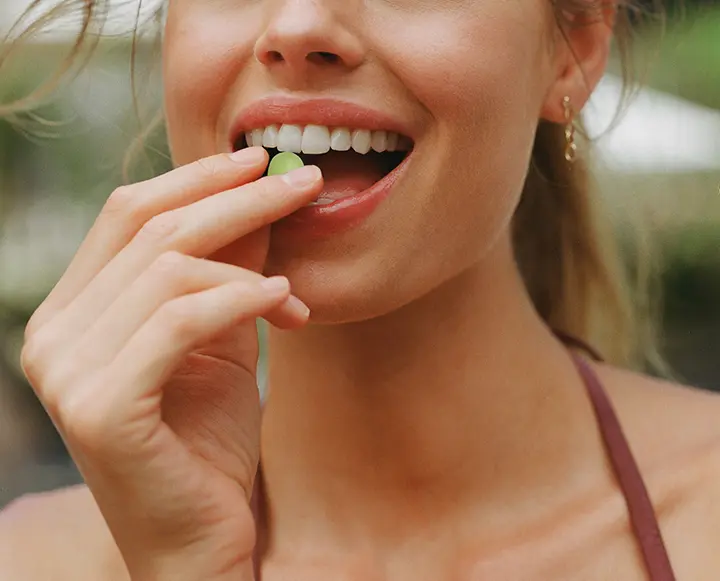
The One Anti-Aging Supplement We’ve Been Taking for Over 4 Years. Now It Comes in a Gummy

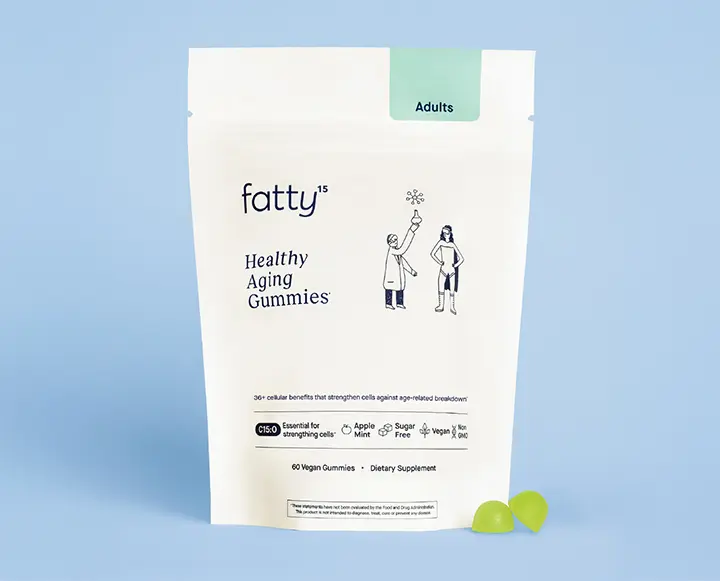
fatty15 gummy

Working in wellness has its perks. One of the biggest is that we get to try a lot of supplements. Like… a lot. Capsules, powders, tinctures, tonics. Some earn a permanent place in the routine, while others quietly disappear once they don’t quite live up to the promise.

And trust me, when you cover the wellness world long enough, you start to develop a healthy skepticism. Everyone claims they’ve found the next fountain of youth. But very few things actually earn a permanent place in the lineup.

That’s what made fatty15 different for us.

We first heard about fatty15 back in 2022. At the time, the buzz around the supplement centered on something pretty intriguing: the discovery by researchers that a fatty acid called C15:0 might play a key role in cellular health and healthy aging. Naturally, we did what we always do. We dove into the science, spoke to the founder, and tested it ourselves.

Long story short, we were hooked. 

Fast forward more than four years and fatty15 is still part of our routine. So when we heard the brand just launched a gummy version of the supplement, we were immediately intrigued. Because if you’re going to commit to fighting the effects of aging from the inside out, it certainly doesn’t hurt if it’s easier and enjoyable to take.

Wait… This Anti Aging Discovery Came From Dolphins?

Yes. Really.

The origin story behind fatty15 is one of the more unexpected ones we’ve come across in wellness.

The key ingredient in fatty15 is C15:0, also known as pentadecanoic acid. It’s an odd chain saturated fatty acid that researchers now believe may qualify as an essential fatty acid, the first new one identified in more than 90 years.

The discovery came from the work of Dr. Stephanie Venn Watson, a veterinary epidemiologist who spent years studying how to continually improve the health of older dolphins in the U.S. Navy’s marine mammal program. Her goal was to understand why some dolphins seemed to age better than others.

What she and her team found was surprising.

The dolphins that showed the healthiest aging profiles had higher levels of a particular fatty acid in their blood. It wasn’t omega 3, which many scientists initially assumed would be the key factor. Instead, it was C15:0.

From there, the research expanded. Over time, studies began to suggest that this small but powerful fatty acid may help support cellular stability, metabolic health, and healthy aging pathways.

Which brings us back to fatty15.

The supplement contains a pure, patented, and bioavailable form of C15:0 designed to help replenish levels of this fatty acid in the body. Because while C15:0 naturally occurs in small amounts in dairy, certain fish, and plants, modern diets often don’t provide enough to meaningfully support our cells.

Already Taking a Shelf Full of Longevity Supplements? Here’s Where C15:0 Fits In

If you’re anything like us, your supplement routine probably didn’t stop at one bottle.

Omega 3s? Check.
Collagen for skin and joints? Of course.
Maybe NMN or another NAD booster once you started hearing about mitochondrial health and longevity.

At some point the question becomes less about what else to add and more about what actually matters inside the stack.

This is where C15:0 comes in.

Most anti aging supplements focus on processes happening inside the cell. NMN supports cellular energy. Omega 3s help regulate inflammation. Collagen supports skin and connective tissue.

C15:0 works a little differently. It supports the cell membrane itself.

Over time, cell membranes become more fragile due to stress, inflammation, and simply getting older. Research suggests C15:0 helps strengthen those membranes and protect them from lipid peroxidation damage, supporting healthier cellular function as we age.

So if you already take omega 3s, collagen, or NAD supporting supplements, C15:0 isn’t replacing those. It simply helps support the cellular foundation that allows the rest of your longevity routine to work better. And now that fatty15 comes in a gummy, it’s a much easier way to actually keep it in your routine. If you’re curious, you can explore fatty15 gummies here.

fatty15 gummy

Why C15:0 Matters For Healthy Aging

Aging doesn’t really start with wrinkles. It starts much deeper, at the cellular level.

Up until our early 30s, our bodies are mostly in building mode. Cells repair themselves efficiently, energy production runs smoothly, and the systems that regulate metabolism and immunity tend to work without much effort. Over time, though, things start to shift. Cell membranes become more fragile, mitochondria get a little less efficient, and the body becomes more vulnerable to everyday stressors like inflammation and oxidative damage.

This is where C15:0 comes in.

Independent researchers throughout the world have now published more than 100 peer reviewed studies looking at how this fatty acid supports cellular health. One of its key roles appears to be strengthening the membranes that protect our cells, helping shield them from the kind of damage that can accelerate cellular aging. C15:0 has also been shown to interact with longevity pathways like AMPK and mTOR, which help regulate how cells produce energy and repair themselves.

While much of the science focuses on long term cellular resilience and health, many people report noticing more immediate shifts as well. In a survey of more than 6,000 fatty15 customers, about 70 percent said they experienced benefits within 16 weeks, including better sleep, improved energy, a healthier mood, and an overall sense of feeling better day to day.

In other words, instead of chasing just one anti-aging benefit, C15:0 works where many of those changes begin: the cell itself, which is exactly why we were excited to see it finally available in a gummy.

Now It Comes In a Gummy

For years, fatty15 was only available as a capsule. Which worked perfectly well, but let’s be honest. Capsules can start to feel like a chore when your supplement routine is already doing the most.

The new fatty15 gummies make things a lot easier.

They deliver the same science backed C15:0 healthy aging nutrient in a portable gummy with a refreshing apple mint flavor, completely sugar free and designed to fit seamlessly into your daily routine. In other words, the same cellular support that made fatty15 a staple for us, now in a format that’s much harder to forget.

The gummies also include fructooligosaccharides, a prebiotic fiber naturally found in fruits and vegetables that helps support a healthy gut microbiome. Unlike sugar, these fibers aren’t fully digested by the body. Instead, they feed beneficial bacteria in the digestive system while adding a subtle sweetness.

They’re vegan, gluten free, dairy free, soy free, and made without artificial colors, preservatives, or animal byproducts. The C15:0 ingredient itself is produced in FDA registered, cGMP certified facilities and independently tested for purity and quality.

And from a practical standpoint, the biggest upgrade is consistency. Whether you’re traveling, heading to the gym, or just trying to simplify your supplement lineup, the gummy format makes it far easier to keep supporting your cells every day.

fatty15 gummy

Why This One Stuck Around

In a wellness world overflowing with new supplements, trends, and promises of longevity, very few products actually stand the test of time.

For us, fatty15 has been one of them.

After more than four years of taking it ourselves, it remains one of the simplest ways we support healthy aging from the inside out. The science behind C15:0 continues to grow, and the idea of supporting cellular health at the foundation just makes sense, especially for anyone already investing in a thoughtful longevity routine.

And now that fatty15 comes in a gummy, staying consistent just got a lot easier.

If you’ve been curious about C15:0, or looking for a way to round out your current supplement stack, the new fatty15 gummies make it a very easy place to start.

All material on The Chalkboard Mag is provided for educational purposes only. Always seek the advice of your physician or other qualified healthcare provider for any questions you have regarding a medical condition, and before undertaking any diet, exercise or other health-related programs. This story is brought to you in partnership with fatty15. From time to time, TCM editors choose to partner with brands we believe in to bring our readers special offers.

The post The One Anti-Aging Supplement We’ve Been Taking for Over 4 Years. Now It Comes in a Gummy appeared first on The Chalkboard Mag.


from The Chalkboard Mag https://ift.tt/69UqCv5
via IFTTT

Friday, March 20, 2026

Small Kitchen Upgrades That Make Everyday Cooking Better

kitchen upgrades

Some of the links in this story are affiliate links, which means we may earn a commission if you choose to purchase—helping us continue to share mindful, inspiring content.

The best kitchen upgrades are rarely the flashy ones. They’re the tools that quietly make daily life easier. A pan that lives permanently on your stove because you use it that often. A blender that can handle more than just a delicate smoothie. Storage that makes leftovers feel less like an afterthought.

Some of these are new launches, others are pieces we’ve already come to rely on. Either way, they’re thoughtful upgrades from brands we love that make the kitchen feel a little more functional and a little more beautiful.

Our Place’s Forget Me Not Blue

We’ve covered Our Place before, and it’s still one of those cookware brands we come back to again and again for pieces that balance thoughtful design with everyday functionality.

The brand recently introduced Forget Me Not Blue, a limited edition colorway that adds a fresh update to some of their most popular pieces. The soft, slightly muted blue feels calm and modern without being overly trendy, the kind of color that quietly brightens a kitchen.

The shade is available across several favorites including the Always Pan, Cookware Duo, Mini Cookware Duo, and the Cookware Set. Like all Our Place cookware, the pieces feature a non toxic ceramic nonstick coating made without PFAS, a detail many home cooks are paying closer attention to when it comes to everyday cooking.

If you’re already a fan of the brand, the new color is a beautiful addition. And if the Always Pan has been on your radar, this launch is a nice reminder of why it’s remained such a kitchen favorite.

Caraway Knife and Utensil Prep Set

An organized prep setup can make cooking feel noticeably calmer. Caraway’s Knife and Utensil Prep Set is a great example of that kind of upgrade.

The set includes four knives, five utensils, kitchen shears, and a modular organization system that keeps everything neatly stored and easy to access. It’s designed to replace the mix of random tools most of us accumulate over time.

Caraway is also known for its focus on cleaner materials. The knives feature German stainless steel blades, the utensils are made from FSC certified birch wood, and the handles are BPA free.

For anyone looking to simplify their kitchen tools without sacrificing design, it’s a smart, well considered set. 

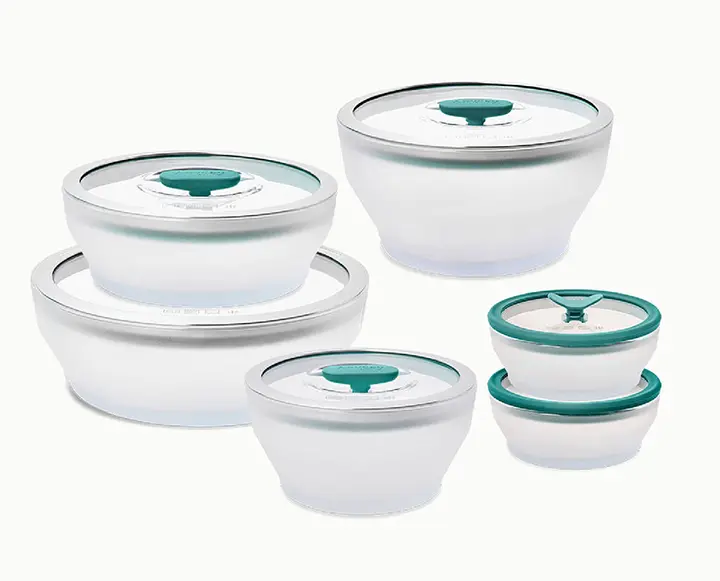
Anyday Glass Round Dish Set

We first tried Anyday’s square dish set and it quickly became a staple in our kitchen for reheating leftovers and quick meals. Their Glass Round Dish Set is another easy addition to the lineup.

Like the square versions, these dishes work as both microwave cookware and food storage, which means fewer containers and less plastic in the kitchen. The frosted glass dishes come with vented lids designed to trap steam while cooking, helping food heat more evenly and stay moist.

They’re ideal for reheating leftovers, cooking vegetables, or prepping simple meals during the week. Once you start using them regularly, they tend to become one of those dishes you reach for constantly.

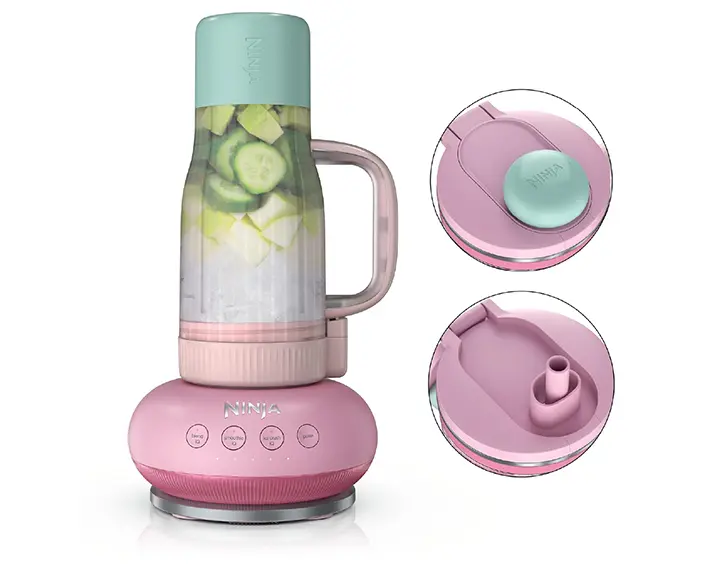
Ninja BlendBOSS Tumbler Blender


For anyone who likes a smoothie before heading out the door, the Ninja BlendBOSS Tumbler Blender focuses on convenience.

It’s powered by a 1200 peak watt motor and stainless steel blades that can crush ice easily. The blending vessel doubles as a 26 ounce leakproof travel tumbler, so once your drink is ready you simply swap the lid and go.

The blender also features One Touch Auto iQ programs, which automatically handle blending and ice crushing cycles without requiring much guesswork.

It’s a practical, countertop friendly blender that fits easily into busy routines.

The MK Free Board

A cutting board is one of the most used tools in the kitchen, which is exactly why the material matters.

The MK Free Board is made from a 100 percent plant based material that leaves behind no permanent microplastics, making it a thoughtful swap for traditional plastic boards.

It’s non porous, safe for handling raw proteins, and dishwasher safe, which makes cleanup easy. The lightly textured surface is gentle on knives, while a built in juice groove helps catch liquids during prep.


The post Small Kitchen Upgrades That Make Everyday Cooking Better appeared first on The Chalkboard Mag.


from The Chalkboard Mag https://ift.tt/QLjNzvl
via IFTTT

I Tried the Golden Facial Celebrities Book Before Red Carpet Events. Here’s What Happened to My Skin

golden facial review

Living in Los Angeles means you’re never more than five minutes away from a facial, a laser, or the next “it” treatment promising glass skin by the weekend. And while we’ve tried our fair share, we’re always on the lookout for the ones that actually make sense for real life. Something that feels elevated, delivers visible results, and doesn’t require hiding out for a week while your skin recovers.

Microneedling has been a longtime favorite. It works, and the results speak for themselves. But the downtime is where it starts to lose its appeal. If you have an event, a dinner, or honestly just want to look like yourself the next day, the recovery can feel like a bit of a gamble.

That’s what made this feel different.

Enter Dr. Mariana Vergara.

At her private luxury med spa, Beauty Villa Vergara in Beverly Hills, the approach is less about doing more and more about doing what actually works for your skin. The space itself feels more like a tucked away retreat than a clinical office, which immediately sets the tone. You’re not rushing in and out. You’re settling in.

The Experience

The villa is an experience in itself. Calm, elevated, and intentionally designed to feel removed from the chaos of LA. Upon arrival, I was greeted by her team and brought into the treatment room where I sat down with Dr. Mariana to talk through my skin, what I was looking for, and what I had coming up.

One thing that stood out immediately is how much she emphasizes customization. Nothing is one size fits all. Every treatment is tailored to what your skin actually needs in that moment, not just what’s trending.

We landed on her signature Golden Facial.

What Is the Golden Facial, Exactly?

The Golden Facial is essentially microneedling, but elevated in a way that makes it feel entirely different.

Instead of focusing purely on creating micro-injuries to stimulate collagen, this treatment uses a microneedling ampoule with tiny 24K gold plated needles to deliver a customized cocktail of active ingredients directly into the skin.

Think Botox, plasma, hyaluronic acid, PDRN, vitamins, antioxidants, exosomes, or PRP, depending on what your skin needs.

“The Golden Facial is a microneedling ampoule that delivers a cocktail of active ingredients directly into the dermal layer of the skin by using 24K gold plated microneedles,” says Dr. Mariana.

It takes everything we already love about microneedling and adds a layer of precision and personalization that makes the results feel more immediate.

What Makes It Red Carpet Ready

While Dr. Mariana keeps her client list discreet, she has worked with names like Miranda Kerr, Eva Mendes, and Lukas Gage for various treatments. The Golden Facial, in particular, has become a go-to before major events.

Why? Because it delivers what most treatments promise but rarely execute on. Immediate radiance, smoother texture, refined pores, and that hydrated, lit-from-within look without the heavy downtime.

“It’s one of my favorite treatments because it gives an instant natural glow while also improving skin over time,” she says. “It helps with fine lines, pores, mild redness, and overall skin quality.”

My Treatment

The entire process took about 45 minutes and surprisingly, there was little to no discomfort. If you’ve done traditional microneedling before, this feels noticeably lighter.

My customized cocktail included:

+ 25 units of Botox
+ Exosomes
+ Hyaluronic acid
+ VAMP, a powerhouse blend of vitamins, amino acids, minerals, PDRN, and hyaluronic acid

I was especially excited about the inclusion of PDRN and exosomes, two ingredients that have been everywhere lately for their regenerative and anti-inflammatory benefits. They’re not just buzzy, they actually do something.

And that’s really the point of this treatment. It’s not just about the technique, it’s about what you’re delivering into the skin.

The Results

Right after the treatment, my skin looked… normal. Which, if you’ve ever done deeper microneedling, you know is not always the case.

There was a slight flush, but nothing that made me want to cancel plans or hide out at home. No intense redness, no peeling, no “what did I just do to my face” moment.

By day three, everything shifted.

My skin looked smoother, more even, and noticeably more hydrated. That kind of glow where you can’t quite pinpoint what changed, but everything just looks better. Someone actually commented on my skin at an event, which is always the real test.

What Sets It Apart

The biggest difference comes down to intention. Traditional microneedling is about creating controlled injury to stimulate collagen over time. The Golden Facial is about delivering exactly what your skin needs, exactly where it needs it.

“For the Golden Facial, we don’t need to go as deep,” Dr. Mariana explains. “It’s more about micro delivery of active ingredients rather than just creating injury.” That’s also why the downtime is significantly lower. Less inflammation, less irritation, and a much quicker turnaround.

Breaking Down the Ingredients

There’s a lot of conversation right now around PRP, exosomes, and stem cells, and understandably so.

According to Dr. Mariana, it really comes down to your skin and your lifestyle. PRP is great for younger patients or anyone looking to use their body’s own resources for healing and rejuvenation. But certain medications or conditions can affect how effective it is. Exosomes, on the other hand, are more anti-inflammatory and often a better option for those who need a more controlled, consistent result.

And then there’s VAMP, her current favorite. “My favorite thing to add right now is VAMP,” she says. “It contains salmon DNA, peptides, vitamins, and hyaluronic acid. It helps with collagen production and gives the skin that refreshed, lit from within glow.”

So, Is It Worth It?

What I appreciated most about this treatment is that it feels realistic. It’s not asking you to disappear for a week or plan your life around recovery. It fits into your schedule, works with your skin, and delivers results that feel noticeable but still natural.

If you’re someone who loves the idea of microneedling but hates the downtime, this is the upgrade. It gives you that same skin improving effect, but with an immediate payoff. And in a city like LA, where there’s always something on the calendar, that kind of balance feels like the real luxury.

Would I do it again? Easily. Especially before an event.

Because sometimes the best treatments aren’t the most aggressive. They’re the ones that understand exactly what your skin needs and meet you there. 

Learn more about Dr. Mariana Vergara and her treatments at www.marianavergara.com

The post I Tried the Golden Facial Celebrities Book Before Red Carpet Events. Here’s What Happened to My Skin appeared first on The Chalkboard Mag.


from The Chalkboard Mag https://ift.tt/6urh1qV
via IFTTT

Tuesday, March 17, 2026

Living Well With Giada De Laurentiis: On Pantry Swaps, Morning Rituals, and La Dolce Vita at Home

Giada De Laurentiis pantry wellness

If your pantry is full but you still somehow have “nothing to eat,” this one’s for you.

Giada De Laurentiis is in a phase where it’s less about complicated recipes and more about getting the basics right. Less focused on complicated recipes, more focused on what’s actually worth keeping on your shelves. With her Giadzy pantry line, she’s dialing in on foundational ingredients, bronze cut, slow dried pasta that holds sauce properly, high polyphenol olive oil that brings both flavor and function, and tomatoes that taste like they were picked at the right time.

Because living well, for her, isn’t a full reset. It’s the small things that actually stick. What you make on a random weeknight. What you pour over your pasta. What you keep stocked without thinking twice.

In this edition of Living Well With, Giada shares the habits that anchor her mornings, the pantry swap she recommends to everyone, how motherhood has shaped her perspective on nourishment, and what la dolce vita looks like at home today.

If you love conversations with founders who are redefining wellness from the inside out,  read our latest Living Well With featuring Robin Berzin, founder and CEO of Parsley Health here.

Living Well with Giada

Do you have a morning ritual that sets the tone for your day? Yesss! I’m a creature of habit, and I’ve found that is what makes me feel good for the busy day ahead. I feed my dogs, take them for a stroll, and go right into an hour of yoga. I drink bone broth and collagen powder as my first food every day. All of that before I have any coffee or phone time.

Do you have a non-negotiable ritual that grounds you no matter how busy life gets? Being with my family (including the animals!). Sitting with them and really being present, hearing about my daughters day, cooking alone with no cameras. All therapy to me!

How has being a mom shaped the way you think about food and wellness? As a mom, it’s my job to make sure I’m feeding Jade food that has the nutrients she needs to grow. To me, that means making sure that the food that I’m feeding her is real. Now that she’s a teen, I don’t have as much control over what she eats, but she has a good baseline understanding of what works for her, and that’s all I can ask for.

What’s always stocked in your pantry? My Go-to vinaigrette 

Pre-making condiments and dressings is one of my favorite hacks to save time, and still consume the whole ingredient.

I use the Giadzy Organic Coastal Puglia Olive Oil because it’s high polyphenol so that I get an extra hit of antioxidants.

Your new pantry line highlights quality ingredients and thoughtful sourcing. Why do you think it’s important for people to rethink what’s in their pantry? Your pantry sets the tone for how you eat every day. If you stock it with high-quality ingredients then cooking becomes so much easier and healthier. It’s not about having a million specialty products, it’s about choosing a few really good basics that you can rely on.

What’s one thing most people don’t realize about the health difference between premium pantry staples and conventional ones? So much of what we consume is filled with fillers, dyes, additives. It can feel super overwhelming to tackle your pantry.

Taking the time to source your ingredients is one small action that  you can take to elevate your dishes and feel good about what you're eating. We tirelessly source the best ingredients, which goes all the way to where our pasta is cut and how it is dried. It’s a labor of love, so that you don’t have to do the thinking.

If someone could only swap one pantry item for a higher-quality option, where should they start? Pasta! It’s such an easy swap. Pick a pasta that is imported from Italy, bronze cut, and slow dried for a nutrient dense product to feed your whole family.

What do you hope people feel when they open their pantry and see your products? I want people to feel that they are getting a really transparent product so that they know that what they’re serving their family is the best it can be. Having grown up in Rome, these foods taste like home to me. We so often hear “pasta tastes so different abroad” and that is literally because it is. We are bringing that luxury into your everyday pantry. Shop Giada's Pasta here. 

What book or podcast are you loving at the moment? I love Elise Loehnen’s podcast Pulling the Thread. And I like to listen to books while I work out, and just finished Bobbi Brown’s new book. So good.

What does “living well” mean to you right now, in this season of your life? Taking the time to enjoy my life. Things get so hectic, and I love finding my slice of la dolce vita by spending time with my animals and family. I’m at my core an introvert, so being at home is.

The post Living Well With Giada De Laurentiis: On Pantry Swaps, Morning Rituals, and La Dolce Vita at Home appeared first on The Chalkboard Mag.


from The Chalkboard Mag https://ift.tt/5sMiEr7
via IFTTT

Monday, March 16, 2026

Why You Attract the Same Type of Partner (And How to Change It), According to a Therapist

If you have ever found yourself dating the same person in a different body, you are not alone. That frustrating feeling of thinking this time will be different, only to realize you are back in a familiar dynamic, is something many people quietly wrestle with.

To unpack why this happens and how to actually change it, we turned to Dr. Erin Pash, DBA, LMFT. Dr. Pash is an award winning mental health executive, licensed therapist, and founder of Ellie Mental Health.

In this conversation, she explains the psychology behind repeated relationship patterns and what it really takes to choose differently. You can also read her previous insights in What to Do When Stress Is Creating Distance in Your Relationship According to a Therapist.

Why do so many people feel stuck attracting the same type of partner, even when they want something different? Here's the thing nobody wants to hear: you're not just "attracting" these people. You're choosing them. Your brain has a pattern recognition system that was programmed in childhood, running in the background like an app you forgot to close. It whispers, "Ooh, this one feels familiar," and your body interprets familiar as safe, even when familiar is actually a dumpster fire.

This happens because of something called repetition compulsion. We unconsciously seek out relationships that mirror our earliest emotional experiences, not because they were good, but because they're known. The brain prioritizes predictability over happiness. So you keep swiping right on the same energy wearing a different outfit, from the emotionally unavailable musician to the emotionally unavailable finance guy, and think you've evolved, but your nervous system knows the truth. Until you get curious about WHY that pattern feels like home, you'll keep redecorating the same broken house.

What role do early relationships or childhood dynamics play in who we’re attracted to as adults? Massive. Your earliest relationships are your brain's first draft of what love looks like. If love looked like chaos, criticism, or emotional unavailability growing up, your nervous system filed that under normal. So when you meet someone who gives you that same cocktail of anxiety and longing, your brain goes, "Ah yes, love. I recognize you."

We develop what are called internal working models, mental blueprints for how relationships function. If a caregiver was inconsistent, you learned love requires hypervigilance. If a caregiver was critical, you internalized that love must be earned through performance. If a caregiver was emotionally absent, you learned that needing people leads to disappointment. These blueprints do not expire at eighteen. They follow you into every relationship until you consciously examine them. It is not that you're broken. It is that your internal GPS was calibrated by people who maybe should not have been driving. The good news? You can recalibrate.

How do attachment styles influence the types of partners we attract and tolerate? Attachment styles are your relationship operating system, and most people have never checked which version they're running. There are four primary styles, secure, anxious, avoidant, and disorganized, and each shapes not only who you're drawn to but what you'll tolerate.

If you're anxiously attached, you're drawn to avoidant partners like a moth to a very emotionally unavailable flame. Their distance activates your I must earn love programming. If you're avoidant, you might pick partners who need a lot from you so you always have a reason to pull away. If you're disorganized, you swing between craving closeness and panicking when you get it. The anxious avoidant pairing is the most common unhealthy dynamic I see in practice, and it's remarkably stable, not because it works, but because each person's behavior reinforces the other's worst fears. The shift happens when you start choosing partners who make your nervous system go "huh, this is different" instead of "OH GOD, HERE WE GO AGAIN."

Why do unhealthy dynamics often feel more attractive than healthier ones? Because unhealthy dynamics give you a neurochemical hit that healthy ones do not, at least not in the same way. When someone is hot and cold, your brain is on a slot machine. Intermittent reinforcement is the most addictive reward schedule that exists. That emotional whiplash creates a surge of dopamine, cortisol, and adrenaline that your brain interprets as passion.

There is also a trauma bonding component. When periods of stress are followed by relief or affection, it creates an intensely strong attachment. The reconciliation feels euphoric precisely because the conflict was painful. Meanwhile, the person who texts you back consistently? Your brain registers that as meh because there is no neurochemical roller coaster. We have confused anxiety for attraction, and it is the biggest scam in modern dating. Chaos is not chemistry.

Why can healthier relationships sometimes feel boring at first to people used to emotional highs and lows? Your nervous system is basically a retired adrenaline junkie. When you have been riding the emotional roller coaster for years, a calm relationship feels like sitting in a parked car. Neurologically, your baseline for arousal has been set artificially high by chronic relationship stress. When cortisol drops to where it should be, it feels flat, similar to how someone in a loud environment perceives normal volume as silence.

There is also an identity component. If you have built your sense of self around being the one who loves hard, fights for love, or handles difficult people, a calm relationship can feel like an identity crisis. Here is what I tell my clients: that boring feeling is actually peace. You just do not recognize it yet. Give your nervous system three to six months to recalibrate. Let your body learn that love does not have to hurt to be real.

How can someone tell if they are truly emotionally available? Most people think they are more available than they actually are. Some honest benchmarks: Can you make genuine space in your life for another person, not just in theory, but in practice? Can you sit with someone else's emotions without trying to fix, flee, or freeze? Are you actually over your ex, or just over them while still checking their Instagram at midnight? Can you tolerate being truly seen, including the messy parts?

Signs you might not be as available as you think: you are only attracted to unavailable people. You fill your schedule so completely there is no room for someone to fit. You lead with your representative rather than letting someone see the real you. You say you want commitment but feel panicky when it is offered. If you are constantly attracted to unavailable people, that is usually a mirror, not a coincidence. Emotional availability is not a switch you flip. It is a daily practice of staying open when every part of you wants to self protect.

What specific dating behaviors tend to reinforce old patterns? I see these on repeat. Moving too fast because intensity feels like connection, when speed actually bypasses your discernment. Ignoring red flags because they have potential, which is code for I am projecting the person I want them to be onto the person they are showing me they are. Over functioning, meaning you are doing 85 percent of the emotional labor and calling it love.

Choosing people based on chemistry alone while ignoring compatibility. Chemistry tells you there is a spark, compatibility tells you there is a future. You need both. Keeping someone around because you are afraid of being alone. Making excuses for behavior you would never tolerate from a friend, which is a great litmus test, by the way. And my personal favorite: the this time it is different mantra while doing absolutely nothing differently. Same picker, same patterns, shinier package.

What practical steps actually lead to different relationship outcomes? Get radically honest about your patterns. Look at your last three to five relationships and find the common thread, because there is one, and it is you. Not in a self blaming way, but in an empowered way. You are the variable you can change.

Slow down. Speed is the enemy of discernment. Give yourself a minimum of three months before making big relationship decisions. Get curious about what boring feels like and challenge yourself to go on at least five dates with someone who feels nice but not exciting before writing them off. Build a life you actually love being single in, because desperation is the worst dating strategy ever invented. When you are fulfilled on your own, you choose partners from desire instead of need, and those are fundamentally different relationships.

Learn your attachment style and study it like your emotional life depends on it, because it does. And get professional support, therapy, journaling, honest conversations with people who love you enough to tell you the truth. The goal is not finding the perfect person. It is becoming someone who can recognize a good thing when it shows up and not run from it.

What’s the most common mistake people make when trying to change who they attract? They make a new checklist without doing any internal work. They go from I want someone exciting to I want someone stable and think that is the whole job. But if you have not addressed WHY you were drawn to chaos, you will either pick the same person in different packaging or self sabotage the good thing because it does not feel right.

The second most common mistake is thinking awareness alone is enough. Insight without behavioral change is just interesting information. You have to practice choosing differently in real time, when your nervous system is screaming at you to go back to what is familiar. Changing your type without changing yourself is like putting a new address in the GPS but never leaving the driveway. The checklist is the easy part. The mirror is where the real work happens.

What advice do you find yourself giving over and over again to clients stuck in this cycle? Stop asking Why does this keep happening to me? and start asking Why do I keep participating in this? That reframe changes everything because it gives you your power back. You are not a magnet helplessly pulling in terrible partners. You are a whole human making choices, sometimes unconscious ones, but choices nonetheless.

Pay attention to how someone makes you feel in your body, not just in your head. If your stomach is in knots and you cannot eat and you are calling that butterflies, we need to talk. Real connection should make your nervous system feel regulated, not activated. Learn the difference between excitement and anxiety. They live in similar neighborhoods in your body, but they are not the same thing.

And finally, everybody sucks sometimes. You, me, the person you are dating. The goal is not perfection. It is finding someone whose imperfections you can work with, who is willing to grow alongside you, and who makes your nervous system feel like it can finally exhale. That is the real thing. And you deserve it.

The post Why You Attract the Same Type of Partner (And How to Change It), According to a Therapist appeared first on The Chalkboard Mag.


from The Chalkboard Mag https://ift.tt/8pymACN
via IFTTT

Friday, March 13, 2026

In Conversation: A Behavioral Scientist on the Cost of Constant Availability

cost of constant availability

There’s a kind of exhaustion a lot of us are carrying that doesn’t look dramatic. You’re getting through your day. You’re answering the emails, returning the texts, keeping up. On the surface, you’re fine.

But underneath, something feels overloaded.

In her new book Finding Focus, behavioral scientist Dr. Zelana Montminy explores what constant distraction is doing to our minds and nervous systems. Her message isn’t about productivity. It’s about what happens when we’re always available and never fully at rest.

When we asked her what she’s most passionate about helping people with right now, she didn’t hesitate: “Right now, I’m most passionate about helping people reclaim their attention in a world that constantly fragments it. Not as a productivity hack, but as a deeply human necessity.”

In Conversation with Dr. Zelana Montminy

Dr. Zelana Montminy

We’re Living in Continuous Input

“We are living in an era of continuous input with very little integration,” she explains. Historically, stress came in waves. Now it is ambient, chronic, and psychologically layered. News, notifications, social comparison, global uncertainty, and personal responsibilities all coexist in the same cognitive space.

“The nervous system was not designed for perpetual vigilance.”

It’s not just the volume of information that strains us. It’s what she calls the emotional ambiguity of it. We are constantly processing micro-threats, micro-decisions, and micro-interruptions. Over time, that creates “a baseline state of low-grade activation that people normalize as ‘just being busy,’ when in reality it is nervous system fatigue.”

Constant availability keeps that low-grade activation running in the background. We interpret it as productivity, when it’s often depletion.

Focus Is Not a Discipline Problem

One of the most important shifts in her work came from noticing a pattern. People would come in describing anxiety, overwhelm, burnout, and lack of motivation. Beneath those symptoms was fractured attention. “Not because they were weak,” she says, “but because they were emotionally and cognitively overloaded.”

That realization changed how she understands focus. Attention, she explains, is “a physiological and emotional state.” When your nervous system feels unsafe, attention splinters. When it feels regulated, attention naturally stabilizes.

Instead of asking why you can’t focus, the better question may be whether your system feels supported. Focus is not something you force. It is something you support.

The Illusion of Being Responsive

Culturally, we reward availability. One norm she believes should be retired is the expectation of constant availability. “It creates the illusion of responsiveness while quietly eroding depth, creativity, and psychological recovery.”

Human cognition thrives in cycles of engagement and disengagement. When availability becomes continuous, “the mind never fully resets. We end up responsive but not truly present.”

That distinction is subtle but significant. Responsiveness can look productive. Presence is what restores.

The Burnout We Miss

Burnout rarely announces itself dramatically at first. More often, it shows up quietly. She describes early signs as “subtle cognitive fog, increased irritability, loss of enthusiasm for things that once felt meaningful, and a sense of emotional numbness rather than dramatic breakdown.”

It appears as a disconnection long before collapse. Many people miss it because they are still functioning on the surface. But functioning and feeling well are not the same thing.

If You Can’t Step Away

For many people, stepping away from responsibilities isn’t realistic. Life remains full. She acknowledges that “exhaustion and responsibility often coexist, especially in seasons of full life.”

The goal is not to escape your responsibilities. It is to reduce unnecessary nervous system strain within them. That might mean fewer transitions, more realistic expectations, micro-recovery throughout the day, and protecting small pockets of cognitive space. “You don’t need a full life overhaul. You need moments of physiological exhale. Sustainable resilience is built in increments, not dramatic resets.”

It’s a steadier, more humane approach to resilience.

Constant availability asks us to be everywhere. Her work, and Finding Focus, invite a different question: what would it look like to protect your attention instead of constantly offering it away? 

To keep up with Dr. Zelana Montminy’s work, follow her on Instagram at @dr.zelana.

The post In Conversation: A Behavioral Scientist on the Cost of Constant Availability appeared first on The Chalkboard Mag.


from The Chalkboard Mag https://ift.tt/Bs7rODg
via IFTTT

Thursday, March 12, 2026

7 Signs Your Home Might Have a Hidden Mold Problem

indoor air quality symptoms

We spend a lot of time thinking about what we eat, the supplements we take, and the routines we follow in the name of wellness. But there’s one factor that quietly affects our health every single day that almost no one talks about: the air inside our homes.

That’s exactly the space Michael Rubino has built his career around. An indoor air quality expert and environmental wellness advocate, Rubino is the founder of HomeCleanse and co-founder and Chair of Change the Air Foundation, organizations focused on helping people understand how their living environments impact long term health.

“The average person breathes around 20,000 breaths per day,” Rubino explains. And because most of us spend roughly 90 percent of our time indoors, the air inside our homes ends up being a much bigger part of the wellness equation than we realize.

When that air contains things like mold spores, VOCs, pesticides, or bacteria, those exposures can quietly add to the body’s toxic load over time. The tricky part is that the signs are often subtle, even in homes that look perfectly clean.

7 Signs Your Home May Have Hidden Mold

1. A Persistent Musty Odor

Musty odors are one of the most common signals that something may be happening behind the scenes in a home.

A persistent smell can indicate microbial growth or mold somewhere in the environment, even if it is not immediately visible.

Because mold often grows in hidden spaces such as inside walls, under flooring, or within HVAC systems, the smell may be the first noticeable clue that something is off.

2. Chronic Respiratory Problems

Rubino notes that chronic symptoms can sometimes include respiratory problems.

If someone is experiencing ongoing congestion, irritation, or respiratory discomfort without a clear cause, indoor air quality may be worth investigating.

Airborne contaminants such as mold spores or other particles can circulate through a home and continuously expose the body.

3. Brain Fog, Fatigue, or Headaches

Poor indoor air quality can also show up in ways that feel less obviously environmental.

Rubino points to chronic symptoms that can include brain fog, fatigue, and headaches. These symptoms are often attributed to stress, sleep, or lifestyle factors, which can make environmental exposure easy to overlook.

When contaminants are present in indoor air, they can add to the body’s toxic load and affect how someone feels day to day.

4. Skin Issues or Hair Loss

The skin can also reflect what is happening in the surrounding environment.

Rubino notes that skin issues and hair loss are among the chronic symptoms that may occur when indoor air quality is compromised.

When the body is repeatedly exposed to environmental contaminants, it can sometimes manifest through inflammatory responses that affect the skin or scalp.

5. Digestive Issues, Anxiety, Depression, or Hormonal Imbalances

One of the reasons indoor air issues can be difficult to identify is that symptoms may appear unrelated at first.

Rubino explains that chronic symptoms can include digestive issues, anxiety or depression, and hormonal imbalances. Because these issues affect different systems of the body, they may not immediately point someone toward an environmental cause.

6. Feeling Better When You Leave Your Home

One of the clearest clues is how someone feels when they step outside their usual environment.

Rubino notes that people sometimes experience noticeable improvement when they are away from home. If symptoms improve while traveling or spending time elsewhere and then return after coming back home, it may indicate that something within the indoor environment is contributing to the issue.

7. Consistently Waking Up and Feeling Unwell

Sleep environments matter more than many people realize.

Rubino points to consistently waking up and feeling unwell as another potential indicator that indoor air may be affecting someone’s health.

Because bedrooms are spaces where people spend many continuous hours breathing the same air, any contaminants present can have a more concentrated impact overnight.

He also notes that many people dealing with indoor air quality issues experience what feel like seemingly unconnected or “random” symptoms, which can make the underlying cause harder to identify.

Why Modern Homes Can Make Air Quality Worse

Ironically, modern construction has not necessarily improved indoor air quality.

“Tighter built homes mean there is less airflow between indoor and outdoor spaces,” Rubino explains. As a result, contaminants that make their way inside often remain trapped until they are actively removed.

When this is combined with modern building materials, potential moisture issues that allow microbial growth, and inconsistent industry standards around indoor air quality, it can create what Rubino describes as a perfect storm for unhealthy indoor environments.

The encouraging news is that improving indoor air quality can have a meaningful impact.

By reducing contaminants in the home, you lower the body’s toxic load and allow it to operate more efficiently throughout the day.

Sometimes, the most important wellness changes are not about adding more supplements or routines, but about improving the environment we live in every day.

The post 7 Signs Your Home Might Have a Hidden Mold Problem appeared first on The Chalkboard Mag.


from The Chalkboard Mag https://ift.tt/yb9rxRO
via IFTTT

Wednesday, March 11, 2026

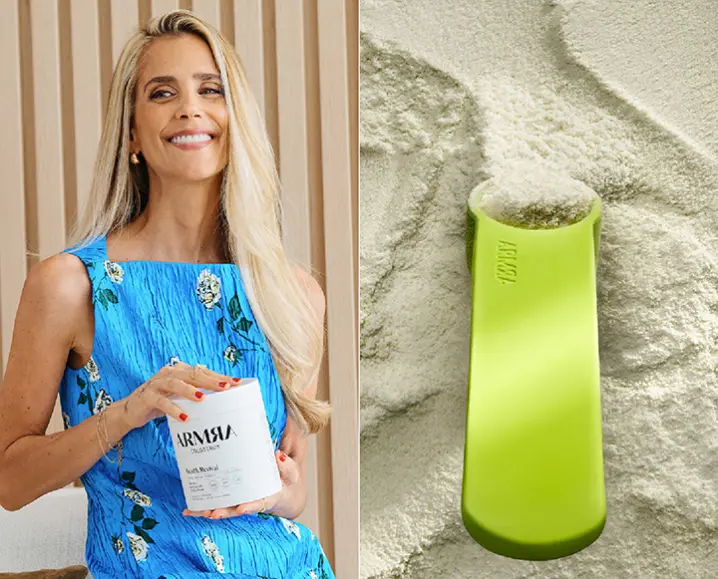
Living Well with Dr. Sarah Rahal, Founder and CEO of ARMRA: On Resilience, Colostrum, and the Foundations of Health

Living Well with Dr. Sarah Rahal

Dr. Sarah Rahal began her career inside traditional medicine, training as a double board-certified pediatric neurologist and working at the forefront of complex neurological care. But over time, her focus widened. Chronic illness was rising. Resilience felt harder to come by. And after facing her own prolonged health crisis, the questions became personal.

What actually sustains the body? What strengthens it before it breaks? That inquiry eventually led her beyond clinical practice and into building ARMRA. Still grounded in science, her perspective today is less about intervention and more about foundation.

In this conversation, she shares the thinking that shaped her transition, the rhythms she protects in her own life, and why she believes living well is often about restoring signal in a world that constantly adds noise.

Living Well with Dr. Sarah Rahal
Dr Sarah Rahal ARMRA

You made a bold transition from double board-certified pediatric neurologist to wellness entrepreneur. What sparked that shift, and how has your clinical background shaped your approach to holistic health? It wasn’t ambition that pulled me out of medicine. It was a growing discomfort I could not rationalize away.

As a pediatric neurologist, I watched more and more children walk into my office with chronic issues that used to be rare. Digestive problems. Behavioral challenges. Autoimmune diagnoses. Constant fatigue. It stopped feeling like bad luck. It felt like a pattern.

I was trained in a model that views the body like a machine. Something breaks, you identify the part, you medicate or remove it. And in acute situations, that model is lifesaving. But when it came to chronic illness, it felt incomplete. We were managing breakdowns without asking why the system was so vulnerable in the first place.

Then my own body collapsed.

I was hospitalized for nearly a year and a half. I followed every protocol I had been taught to trust. I did everything by the book. And I kept unraveling. There is nothing like losing your own health to strip you of certainty. It forced me to admit that the framework I had been operating in was too small.

The body is not a machine made of isolated parts. It is a living network. A dynamic field of light, frequency, and magnetism, constantly responding to the signals around it. Every cell is listening. To food. To light. To stress. To sleep. To connection. To the environment. Health is not about swapping out broken pieces. It is about the quality of the signals the body receives and how coherently it can respond.

Once I saw that, everything shifted.

I stopped asking, “What drug matches this diagnosis?” and started asking, “What is disrupting the conversation inside this body?” What is weakening its resilience? What is interfering with its ability to adapt? That is what led me to colostrum. Not as a wellness trend, but as something foundational. It is the first nourishment we are designed to receive. It supports the gut, which is one of the primary interfaces between us and the outside world. It helps reinforce the body’s internal boundaries so it can respond intelligently rather than overreact or shut down.

My clinical background shapes everything I do. I am rigorous. I read the research. I question the data. But I no longer see the body as a collection of parts to be managed. I see it as an intelligent, responsive system that thrives when the right signals are restored.

I did not leave medicine to reject science. I left because I wanted a model of health that was big enough to hold the truth of how the body actually works.

ARMRA is rooted in science but designed for everyday people. Can you walk us through the research and philosophy that underpins your product formulations? ARMRA is grounded in science, but built for real life.

Colostrum is the first nourishment every mammal receives. It contains over 400 naturally occurring compounds, including immunoglobulins, lactoferrin, peptides, growth factors, and prebiotics that support the gut lining, tissue development, recovery, and overall resilience.

Controlled human trials in healthy adults and athletes suggest bovine colostrum may support gut barrier function, exercise recovery, and aspects of immune health. The research is promising and still evolving, as it should be.

My philosophy is preservation, not enhancement.

Most commercial dairy processing uses high heat, which can damage fragile bioactives. If colostrum’s power lies in its complexity, that complexity has to be protected. I spent two years developing our Cold-Chain BioPotent Technology to preserve colostrum at low temperatures and maintain its molecular integrity from start to finish.

We do not isolate or fortify. We preserve the full biological matrix as close to its natural state as possible. To me, science is about protecting what biology already perfected.

There’s a lot of noise in the wellness space. How do you ensure that ARMRA’s products are truly evidence-based and effective? First, we have a robust Science team with deep expertise, and we trust and lean on that guidance in everything we do. We build and communicate around the most up-to-date scientific research available, and we make decisions based on biology and evidence, not marketing trends.

Second, quality control is non-negotiable. ARMRA is produced in FDA-registered, GMP-certified facilities, and every batch undergoes rigorous third-party testing for heavy metals, glyphosate, and microbiological contaminants. Scientific integrity is not just about what you say. It is also about how you source, manufacture, and verify what you make.

Third, we welcome scientific curiosity and thoughtful skepticism. The research on colostrum and its bioactive compounds continues to evolve, and we are committed to communicating that science responsibly. When we reference the broader body of literature, we are speaking to established biological mechanisms and the growing research base, while remaining transparent about where the science is still developing.  If you're curious to explore ARMRA for yourself, you can shop it here.

What are a few simple, evidence-backed and doable daily habits that you believe make the biggest impact on long-term metabolic and hormonal health? The fundamentals still win.

Morning light. Get outside within 30 to 60 minutes of waking. Natural sunlight sets your internal clock and anchors your hormones for the day. It is one of the most powerful metabolic signals we have, and it is free.

Darkness at night. Real darkness. No overhead lights, no glowing screens in your face. Even low levels of artificial light can blunt melatonin and disrupt deep repair. Protect your nights as much as you optimize your days.

Preserve muscle. Resistance training is nonnegotiable if you care about metabolic and hormonal health. Muscle is metabolic currency. It drives insulin sensitivity, stability, and long-term resilience. It does not have to be extreme. It has to be consistent.

Calm your nervous system. Chronic stress, constant notifications, artificial light, nonstop input, it all adds up. Daily walks outside, quiet time, simple breathwork, even ten minutes without stimulation, restore regulation.

Health is rhythm. Light and dark. Stress and recovery. Effort and stillness. When your rhythms are intact, your biology follows.

How do you recommend incorporating ARMRA products into a daily wellness routine for someone who’s brand new to supplementation? I encourage simplification first. ARMRA is a whole food, not a synthetic supplement stack.

For most people, I recommend taking it first thing in the morning on an empty stomach. I personally dry-scoop four scoops of ARMRA Colostrum Unflavored. It is also a seamless addition to any cool beverage or food, like shakes, smoothies, yogurt, cottage cheese, iced coffee, or simply water.

Consistency matters more than complexity. ARMRA is designed to support foundational habits, not replace them.

How do you define impact in the wellness space? Impact is upstream. We are moving out of an era of maximalism: constant tracking, stacking, and optimization. If a brand helps people simplify and restore trust in their biology instead of micromanaging it, that is impact.

ARMRA was built not as another intervention, but as a reminder that the intelligence for resilience already exists within the body. To me, true impact changes how people relate to their health, from control to coherence.

What are you listening to lately? Any podcasts you’re loving right now? No. Right now I am not filling my head with more input. I spend so much of my life researching, building, thinking, creating. Silence feels more valuable than another voice in my ear. Sometimes the most productive thing you can do is turn down the noise long enough to hear yourself again.

Outside of ARMRA, what supplements do you personally take? Sunlight. It is the only true source of deficiency most of us share and the only one I am interested in supplementing.

We live indoors under artificial light, disconnected from the primary input that shaped human biology. Light regulates sleep, hormones, mood, metabolism. When that signal is missing, everything downstream feels it.

No supplement charcuterie board. No 38 pill launch sequence. My stack rises in the east. I look up.
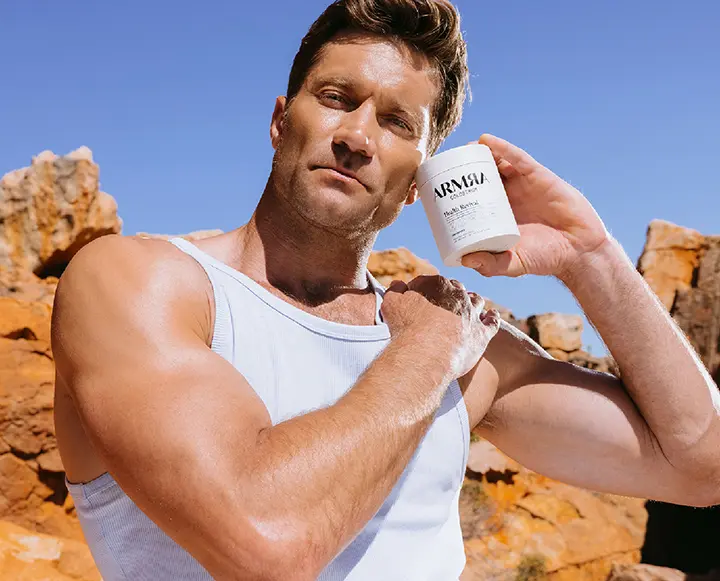
Is there a nonnegotiable ritual in your day that keeps you grounded? Morning light is nonnegotiable. Before I do anything else, I step outside. A few quiet minutes in the sun, feet on the ground, breathing. It sounds simple because it is. That is the point.

I also protect stillness. Twice a day, I disconnect from noise and notifications. And at night, I sleep in total darkness. If you do not create quiet intentionally, your nervous system never recalibrates.

What advice would you give to physicians or researchers who are thinking about stepping into entrepreneurship? I can only speak from my own experience.

Entrepreneurship is not a choice you make. It takes hold of you. It is caring so deeply about bringing something into the world that staying where you are feels like a betrayal. It is not logical. It is not safe. It is an obsession you are willing to risk your comfort, your reputation, even your stability for.

You leave the structure, the credentials, the predictability. You step into something relentless and indifferent. There is no safety net. No one is coming to save you. You fall, and you trust you will find a way to climb back out.

You also have to be slightly delusional. You believe in a future that does not exist and hold it long enough for reality to bend toward it.

If you can walk away from it, walk away.

If you cannot, it has already chosen you.

Wellness means something a little different to everyone. How do you define “living well,” and how has that definition evolved throughout your career and life? Early in my career, I defined wellness as the absence of disease.

I was trained to believe that health was something you managed. Optimize it. Track it. Stay ahead of it.

Then life humbled me.

After my own health collapsed, everything shifted. Living well is not about control. It is waking up with energy. Sleeping deeply. Feeling clear in your body. Being present in your relationships. Handling stress without breaking.

It is not about doing more. It is about needing less.

Today, living well means returning to the basics our biology expects: light, movement, strength, real food, connection, purpose. When those are in place, the body works.

My career taught me how to treat disease. My life taught me how to live in health.

The post Living Well with Dr. Sarah Rahal, Founder and CEO of ARMRA: On Resilience, Colostrum, and the Foundations of Health appeared first on The Chalkboard Mag.


from The Chalkboard Mag https://ift.tt/lUdV7ws
via IFTTT

Monday, March 9, 2026

Why Dermatologists Are Rethinking the 10 Step Skincare Routine

Skincare used to be simple. Then somewhere along the way, our bathroom shelves turned into full on skincare wardrobes. Toners, essences, exfoliating acids, serums layered on serums. Suddenly everyone seems to have a 10 step skincare routine, making it feel like more products meant better skin.

But in dermatology offices, the story often looks very different. Many people are dealing with irritation, breakouts, and stressed out skin from routines that have simply become too much.

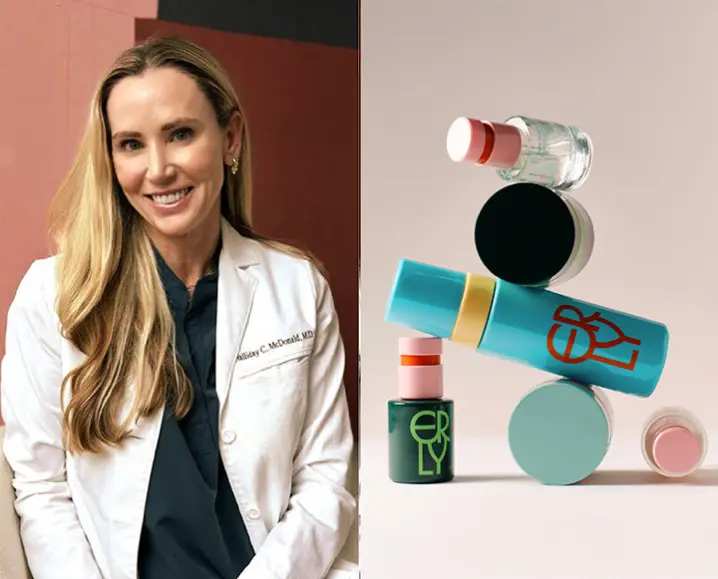
Dermatologist Dr. Hallie McDonald has seen this shift firsthand. After treating a growing number of patients experiencing reactions from overly complicated regimens, she helped co found ERLY, a derm founded skincare line built around a much simpler philosophy: fewer, smarter products that support the skin barrier instead of overwhelming it. We asked Dr. McDonald to break down why complex routines became so popular, what they’re actually doing to our skin, and how to build a routine that truly works.

Our Conversation With Dr. Hallie McDonald

Over the past decade, elaborate multi step skincare routines became widely popular. From a dermatologist’s perspective, why do you think people became so drawn to these complex routines in the first place? I think several forces converged at a similar time like a perfect storm. The rise of social media made the concept of skincare more aspirational. When people showcase 10 step routines, it looks luxurious, and skincare becomes almost meditative and a part of self care. Along those lines, there was an increase in ingredient transparency and consumer interest. However, as consumers learned more about ingredients, many assumed that more ingredients equaled better results. As influencer culture rose, so did the globalization of beauty trends, especially K beauty. Skincare shifted from basic hygiene to a hobby and identity for many people. Lastly, the COVID 19 pandemic accelerated the skincare boom because people had more time at home to experiment with routines, heightened stress that drove self care rituals, and constant video calls that made them more aware of their appearance. 

From a skin health perspective, what actually happens when someone overloads their skin with too many actives? The skin barrier is designed to protect against water loss, infections, and environmental irritants.  When you layer multiple actives like retinoids, exfoliating acids, and brightening agents, you disrupt that barrier.  There is an increase in transepidermal water loss, redness, stinging, acne, perioral dermatitis, and eczema.  Ironically, many people try to correct these adverse effects by reaching for more products, which worsens the cycle.  I see this in my office every single day.  People come in with adverse side effects from their skincare routines and show me the 10 products that they have been using to try to correct it.  The solution is often to just simplify their routine and bring everything back to basics, and this is the reason I co-founded ERLY.

We see new skincare trends constantly emerging online. How can consumers tell the difference between a helpful trend and one that might be excessive? This is a tricky one because there is so much misinformation out there, and I think it is very important to get your skincare advice from a reputable source.  What an influencer recommends might not be best for you and your skin.  What works for your friend might not work for you. Make sure you are checking to see whether there is real science behind a recommendation.  A lot of social media skincare trends are created to capture attention, often prioritizing dramatic visuals or extreme results over science and safety.  Any promises of dramatic changes overnight should be a red flag.  

Are there any current trends that concern you as a dermatologist? By far the most concerning trend to me is chasing the UV index.  It has become very popular to follow the UV index readings on a weather app to try to optimize tanning.  This is incredibly dangerous.  What was designed to help people understand when the risk of sunburn is the highest is now being used to get deliberate sun exposure.  A tan is a sign of skin damage, and UV is a known carcinogen.  If you really want to look tan, then use a sunless tanner.

Recently we’ve seen the rise of trends like “skin flooding,” where people layer multiple hydrating toners, essences, and serums. From a dermatologist’s perspective, what’s your take on this approach? Hydration is certainly important, but your skin can only absorb so much at a time.  Beyond a certain point, you are just increasing cost and complexity.  Excessive layering can potentially lead to pilling or clogged pores.  A well-formulated serum with hyaluronic acid followed by a moisturizer to seal it in is usually sufficient. 

What would you say are the core products every skincare routine should include? A gentle cleanser, a daytime moisturizer with at least SPF 30, and a moisturizer without SPF for night should be in everyone’s routine.  That foundation addresses cleansing, barrier support, and UV protection, which are the non-negotiable pillars of long term skin health. 

What inspired you to create ERLY, and what gap did you see in the skincare market? As a dermatologist, I saw an exponential rise in patients coming into my office with adverse effects from their overly complicated and inappropriate skincare routines.  Social media was driving a market saturated with products with harsh ingredients and heavy fragrances, and trends that did not prioritize barrier health.  As a mother, I also became concerned about these influences on my own children.  I co-founded ERLY to simplify skincare and bring it back to evidence-based essentials.  The gap I saw was for hypoallergenic, fragrance-free, multitasking products that support the skin barrier while still delivering visible results.  I wanted the products to be appropriate for all ages and skin types. 

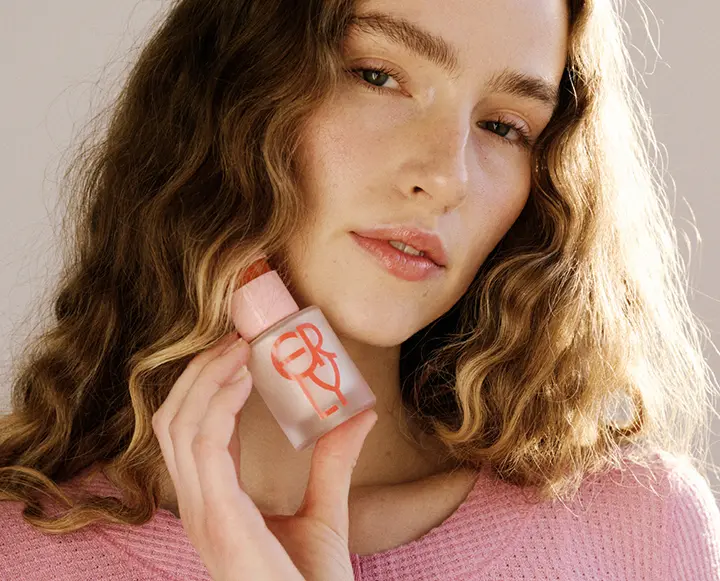
ERLY is built around the idea of simplifying and personalizing routines. What does that philosophy mean to you as a dermatologist? To me, simplification means understanding the science behind the products and thoughtfully choosing our ingredients but also purposefully excluding potential allergens and irritants.  As a physician, each patient is unique, and I am trained to tailor treatment plans to my patients’ individual needs.  Our product lineup is tightly curated intentionally because skincare does not need to be complicated to be effective.  We created the serums to target specific skincare concerns to give people an opportunity to personalize their routine.  Each serum addresses different things.  Daily Dew is an illuminating serum with niacinamide and phloretin that brightens the skin and fights hyperpigmentation.  Daily Splash has three forms of hyaluronic acid to hydrate, plump, and minimize fine lines.  Daily Soothe has niacinamide to fight inflammation, redness, breakouts, and minimize pores.  With this tight lineup, we can target a wide array of skincare needs in a gentle, barrier-supporting way that is appropriate for all skin types.

When formulating ERLY products, what ingredients or formulation principles were non negotiable for you? Fragrance-free formulations were totally non-negotiable because fragrance is one of the most common causes of contact dermatitis and irritation, and I wanted products that even sensitive, young, or barrier-compromised skin could use every day. I also focused on barrier-supporting ingredients like hyaluronic acid, niacinamide, and peptides.

One product that’s gotten a lot of attention is Daily Dew Illuminating Serum (also a personal fav!), which gives skin that lit from within glow. What ingredients in Daily Dew help support skin health while also creating that luminous finish? I am so glad you love it! I love it, too.  Daily Dew is formulated with niacinamide and phloretin. Niacinamide is a true ingredient overachiever- it acts as an antioxidant, fights free radicals, strengthens the skin barrier, improves redness, reduces breakouts, and minimizes pores.  Phloretin is great for improving hyperpigmentation and brightening the skin. 

If someone wanted to build a simple routine using ERLY products, what would that look like from morning to night? The core lineup would be as follows: 

Morning:
Cleanse with ERLY Face Foam
Apply an ERLY serum (if needed)
Apply ERLY Start Moisturizer with SPF 40 (bonus- it also has peptides) 

Evening:
Cleanse with ERLY Face Foam
Apply an ERLY serum (if needed)
Apply ERLY Night Moisturizer with Peptides 

For the serums, I use the Daily Dew in the morning to give my skin that glow and act as an antioxidant.  It is a great substitute for Vitamin C for sensitive skin.  In the evening, I use the Daily Soothe for my redness and pore minimization and Daily Splash for extra hydration and plumpness.  The serums are meant for personalization, so everyone can decide what their skin needs on any particular day. 

Which product do you feel best represents ERLY’s philosophy of simple but effective skincare? ERLY Night Moisturizer with Peptides is a powerhouse product that is still safe for all skin types. Many people cannot tolerate retinoids, and peptides are a great alternative for antiaging benefits.  Peptides help support collagen and elastin in the skin to improve fine lines and support the skin barrier.  It also has Vitamin E that acts as an antioxidant, promotes skin healing, and fights inflammation.  Hyaluronic acid is included for extra moisture and barrier boosting.  It is non-comedogenic and safe for all skin types, including acne-prone and sensitive skin.  Using this one product can target multiple skincare concerns at once, thus simplifying your routine without compromising results. 

If someone could make just one change to their skincare routine today that would benefit their skin long term, what would you recommend? Wear a broad spectrum sunscreen every single day, even when it is cloudy and even when you are mostly indoors.  Up to 80% of visible aging is due to cumulative sun exposure over time.  Consistent sun protection preserves collagen, prevents pigmentation, and most importantly reduces skin cancer risk. I love ERLY Start Moisturizer with SPF 40 because it also a great multitasker.  It is packed with peptides to support collagen and elastin, improve fine lines, and support the skin barrier all while providing broad spectrum UV coverage.

The post Why Dermatologists Are Rethinking the 10 Step Skincare Routine appeared first on The Chalkboard Mag.


from The Chalkboard Mag https://ift.tt/H8Vk4AW
via IFTTT